This post contains affiliate links. As an Amazon Associate, I earn from qualifying purchases at no extra cost to you.
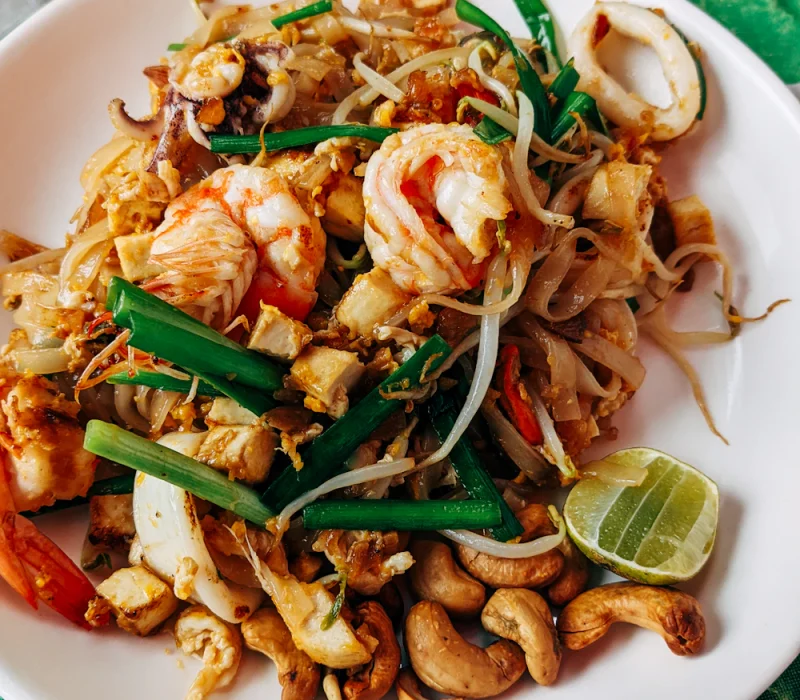
Jump to RecipeThis easy pad Thai recipe brings the famous Thai street food dish into your kitchen in about 30 minutes. Chewy rice noodles are stir fried with shrimp or chicken, scrambled egg, garlic, bean sprouts and green onions in a tangy, sweet and savory sauce made with tamarind, fish sauce and brown sugar. Finished with crushed peanuts, fresh lime and a sprinkle of chili, it tastes just like your favorite Thai restaurant, and it is simple enough for a weeknight.
If you love Thai flavors, try my Thai chicken lettuce wraps, Thai green curry with gingery chicken or slow cooker Thai peanut chicken.
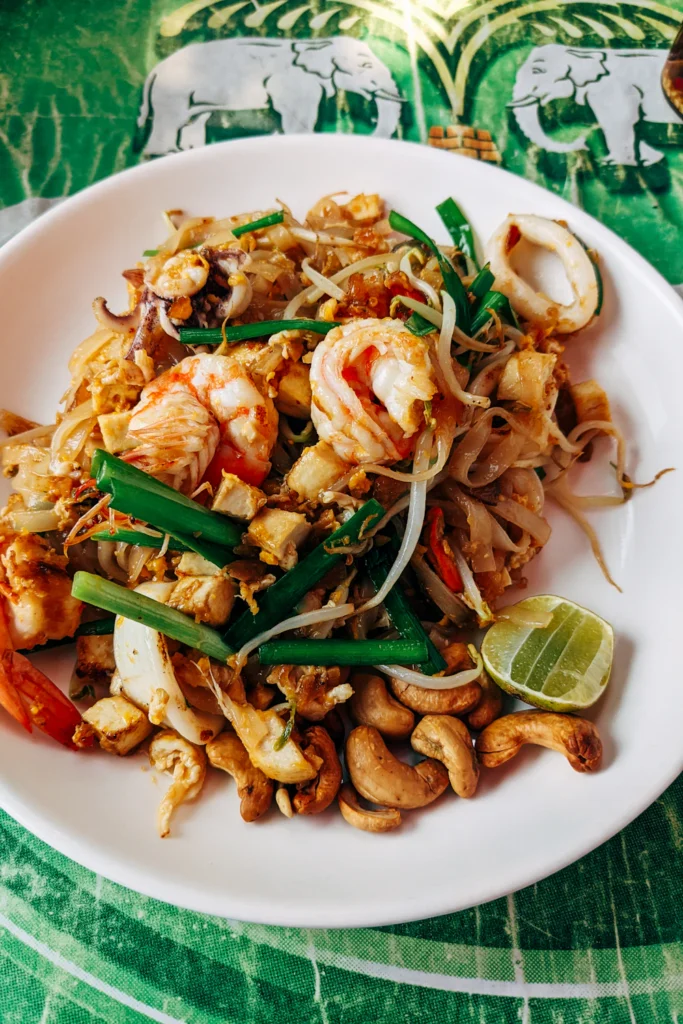
Why You Will Love This Pad Thai
- Restaurant flavor at home. Tangy, sweet, salty and nutty.
- 30 minutes. Faster than delivery.
- Simple sauce. Just four main ingredients.
- Flexible protein. Shrimp, chicken, tofu or a mix.
- Naturally gluten free. Made with rice noodles.
What Is Pad Thai?
Pad Thai, which simply means stir fried Thai style, is one of Thailand’s best known dishes. It became popular in the 1930s and 1940s, when the Thai government promoted it as a national dish and encouraged the use of rice noodles. Today it is sold everywhere from street carts in Bangkok to restaurants around the world. Traditional pad Thai combines flat rice noodles, tamarind, fish sauce, palm sugar, dried shrimp, preserved radish, tofu, egg, bean sprouts and garlic chives, and is served with peanuts, lime and chili flakes on the side so everyone can season it to taste. This easier version uses ingredients you can find in most grocery stores while keeping the classic flavors.
Ingredients You Will Need
Exact amounts are in the recipe card below.
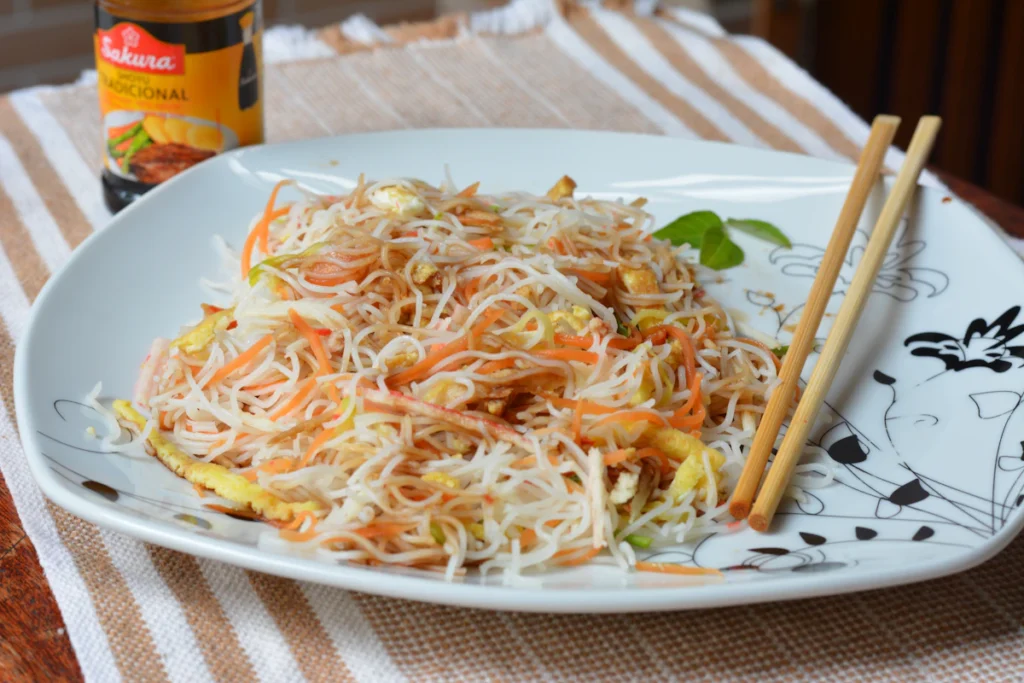
For the pad Thai sauce
- Tamarind paste or concentrate: the key to pad Thai’s signature tang.
- Fish sauce: salty, savory depth.
- Brown sugar or palm sugar: balances the sour and salty flavors.
- Soy sauce: optional, for extra color and savoriness.
- Sriracha or chili flakes: for heat.
For the noodles
- Flat rice noodles: medium width, about 1/4 inch.
- Shrimp or chicken: peeled shrimp or thinly sliced chicken breast or thigh.
- Extra firm tofu: optional, cubed and pan fried.
- Eggs: scrambled right in the pan.
- Garlic and shallot: aromatic base.
- Bean sprouts and green onions or garlic chives: for crunch and freshness.
- Neutral oil: peanut or vegetable oil.
For serving
- Roasted peanuts: chopped.
- Lime wedges, cilantro and chili flakes.
How to Make Easy Pad Thai
1. Soak the noodles
Place the rice noodles in a large bowl and cover with hot tap water, not boiling water. Soak for 8 to 10 minutes, until the noodles are flexible but still slightly firm in the center. Drain in a colander. They will finish cooking in the pan.
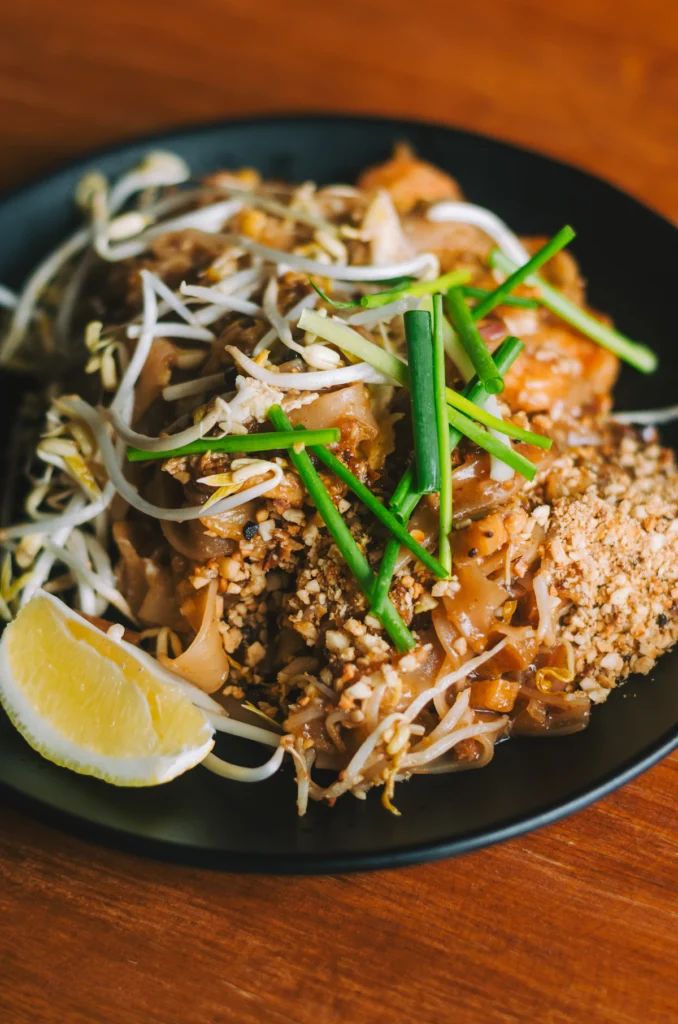
2. Mix the sauce
Whisk together the tamarind, fish sauce, brown sugar, soy sauce and sriracha until the sugar dissolves. Taste it: it should be tangy, sweet and salty all at once.
3. Cook the protein
Heat a tablespoon of oil in a large wok or skillet over medium high heat. Add the shrimp or chicken and cook until done, about 2 minutes per side for shrimp (145°F) or 4 to 5 minutes for chicken (165°F). Transfer to a plate.
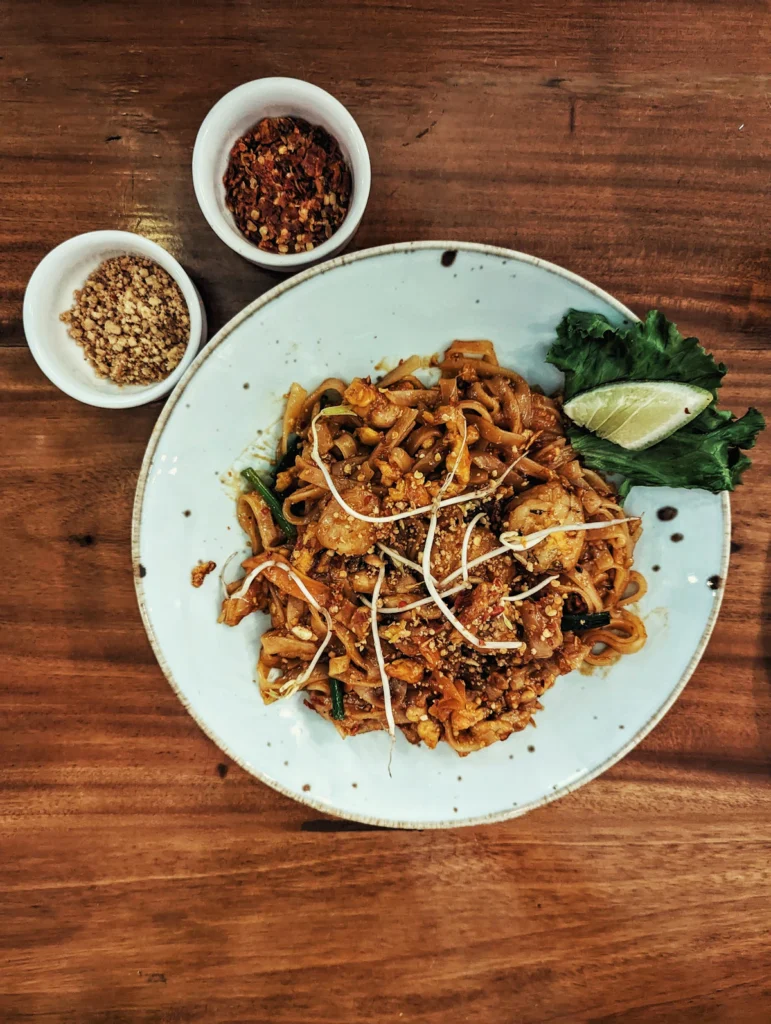
4. Scramble the eggs
Add a little more oil, then the garlic and shallot, and stir for 30 seconds. Push them to the side, crack in the eggs and scramble until just set.
5. Stir fry the noodles
Add the drained noodles and pour the sauce over the top. Toss continuously with tongs for 2 to 3 minutes, until the noodles absorb the sauce and become tender. Add a splash of water if they seem dry or sticky.
6. Finish and serve
Return the shrimp or chicken to the pan with the bean sprouts and green onions and toss for 1 minute. Serve immediately topped with peanuts, cilantro, chili flakes and lime wedges.
Tips for Perfect Pad Thai
- Do not over soak the noodles. They should be pliable but firm; they soften more in the pan.
- Cook in batches. Pad Thai is best made two servings at a time in a home wok.
- Keep things moving. Toss constantly so the noodles do not stick or clump.
- Balance the sauce. Adjust tamarind, sugar and fish sauce to taste.
- Prep first. Stir frying is fast, so have everything ready by the stove.
What Is Tamarind and Where to Find It?
Tamarind is a tropical fruit that grows in long brown pods. Its sticky pulp has a unique sweet and sour flavor, a little like a mix of dates and lemon, and it is what gives pad Thai its signature tang. Look for tamarind concentrate or paste in jars in the international aisle, at Asian grocery stores or online. Tamarind blocks need to be soaked in hot water and strained before use. If you cannot find tamarind, mix 2 tablespoons of lime juice with 1 tablespoon of rice vinegar and 1 tablespoon of brown sugar for a quick substitute. The flavor will be brighter and less fruity, but still delicious.
Choosing Rice Noodles
Pad Thai is made with flat rice noodles, sometimes labeled rice stick or pad Thai noodles. Medium width noodles, about 1/4 inch wide, are the most traditional. Thinner noodles cook faster and can break, while wide noodles are better for dishes like pad see ew. Always soak dried rice noodles in hot water instead of boiling them, since boiling makes them soft and sticky before they hit the wok. Fresh rice noodles can be used too; simply rinse them in warm water to loosen them.
Common Mistakes to Avoid
- Boiling the noodles. They turn mushy and break apart in the pan.
- Crowding the wok. Too many noodles at once become gummy.
- Adding too much sauce. The noodles should be glossy, not swimming.
- Skipping the toppings. Peanuts, lime and chili make the dish complete.
Is Pad Thai Healthy?
Pad Thai can be part of a balanced diet, especially when made at home. It provides protein from the shrimp, chicken, tofu and eggs, while bean sprouts, green onions and optional vegetables add fiber and vitamins. Homemade versions usually contain far less oil and sugar than restaurant pad Thai, which is often cooked with generous amounts of both. To lighten it further, reduce the sugar to 2 tablespoons, use a little less oil, bulk up the dish with extra vegetables such as shredded carrots, cabbage and bell peppers, and go easy on the peanuts. Rice noodles are naturally gluten free, making this a great option for anyone avoiding wheat.
How to Stir Fry Like a Pro at Home
Home stoves are not as powerful as restaurant woks, but a few techniques help you get closer to street food flavor. Preheat your wok or skillet until it is very hot before adding the oil. Cook in small batches, about two servings at a time, so the pan stays hot and the noodles fry rather than steam. Keep the noodles moving with tongs or a wok spatula, lifting and tossing rather than stirring. If the noodles start to stick, add a tablespoon of water rather than more oil. Finally, taste and adjust at the end with an extra squeeze of lime, a pinch of sugar or a dash of fish sauce.
Variations
- Chicken pad Thai: use thinly sliced chicken thighs.
- Tofu pad Thai: use crispy tofu and soy sauce in place of fish sauce for a vegetarian version.
- Vegetable pad Thai: add shredded carrots, red cabbage and bell peppers.
- Spicy: add fresh Thai chilies or extra chili flakes.
- Peanut lovers: stir a spoonful of peanut butter into the sauce.
What to Serve With Pad Thai
Pad Thai is a complete meal on its own. Serve it with fresh spring rolls, chicken satay, a crisp cucumber salad or a bowl of tom yum soup. For a seafood feast, add my easy shrimp stir fry.
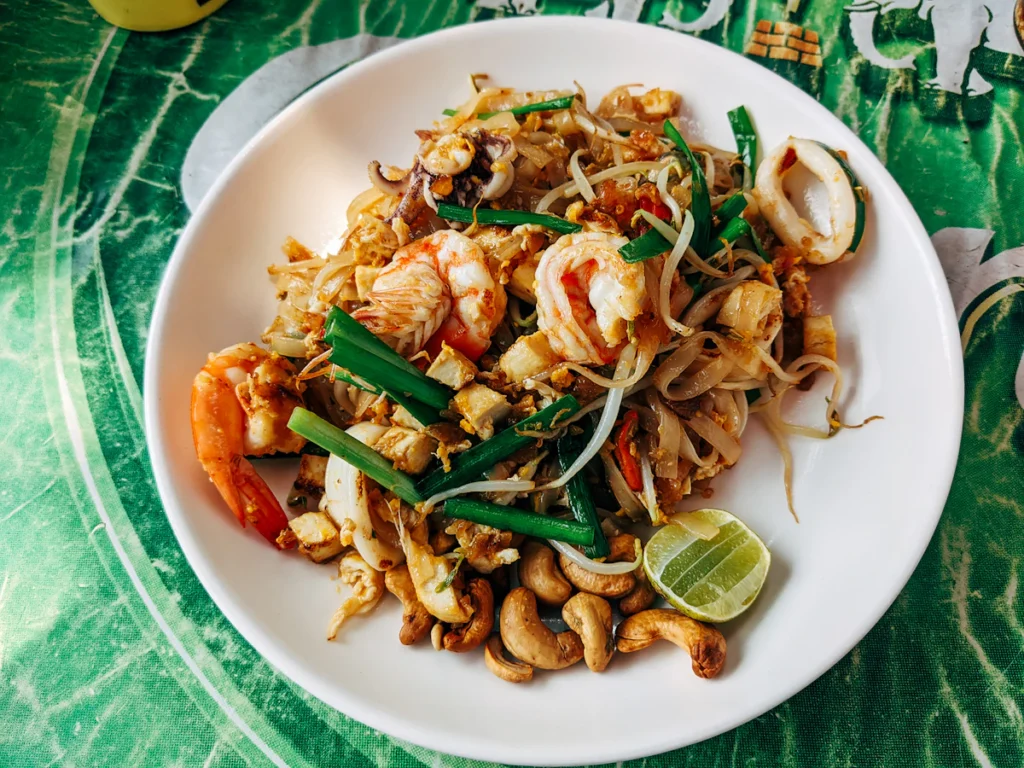
Storage and Reheating
- Refrigerator: store in an airtight container for up to 3 days.
- Reheating: sprinkle with a little water and reheat in a skillet over medium heat, tossing until warm. Add a squeeze of fresh lime.
- Freezing: not recommended, as rice noodles become mushy.
Frequently Asked Questions
Can I make pad Thai without tamarind?
Yes. Use lime juice, rice vinegar and brown sugar, although the flavor will be slightly different.
Why are my noodles sticky?
They were soaked too long, boiled or overcrowded in the pan. Soak in hot water and cook in small batches.
Is pad Thai gluten free?
Yes, when made with rice noodles, gluten free fish sauce and tamari instead of soy sauce.
Can I use chicken instead of shrimp?
Yes. Thinly sliced chicken works perfectly.
Can I make it vegetarian?
Yes. Use tofu and soy sauce or vegetarian fish sauce.
Is pad Thai spicy?
It is usually mild, with chili served on the side.
Final Thoughts
This easy pad Thai delivers the tangy, sweet and savory flavors of Thailand’s most famous noodle dish in about 30 minutes. With a simple tamarind sauce, chewy rice noodles and plenty of fresh toppings, it is a takeout favorite you can make any night.
Nutrition Per Serving
| Nutrient | Amount |
|---|---|
| Calories | 480 kcal |
| Protein | 27 g |
| Carbohydrates | 62 g |
| Fat | 14 g |
| Saturated Fat | 2 g |
| Fiber | 3 g |
| Sugar | 14 g |
| Sodium | 1250 mg |
Nutrition values are estimates calculated from standard ingredient data and will vary with the brands and exact amounts you use.
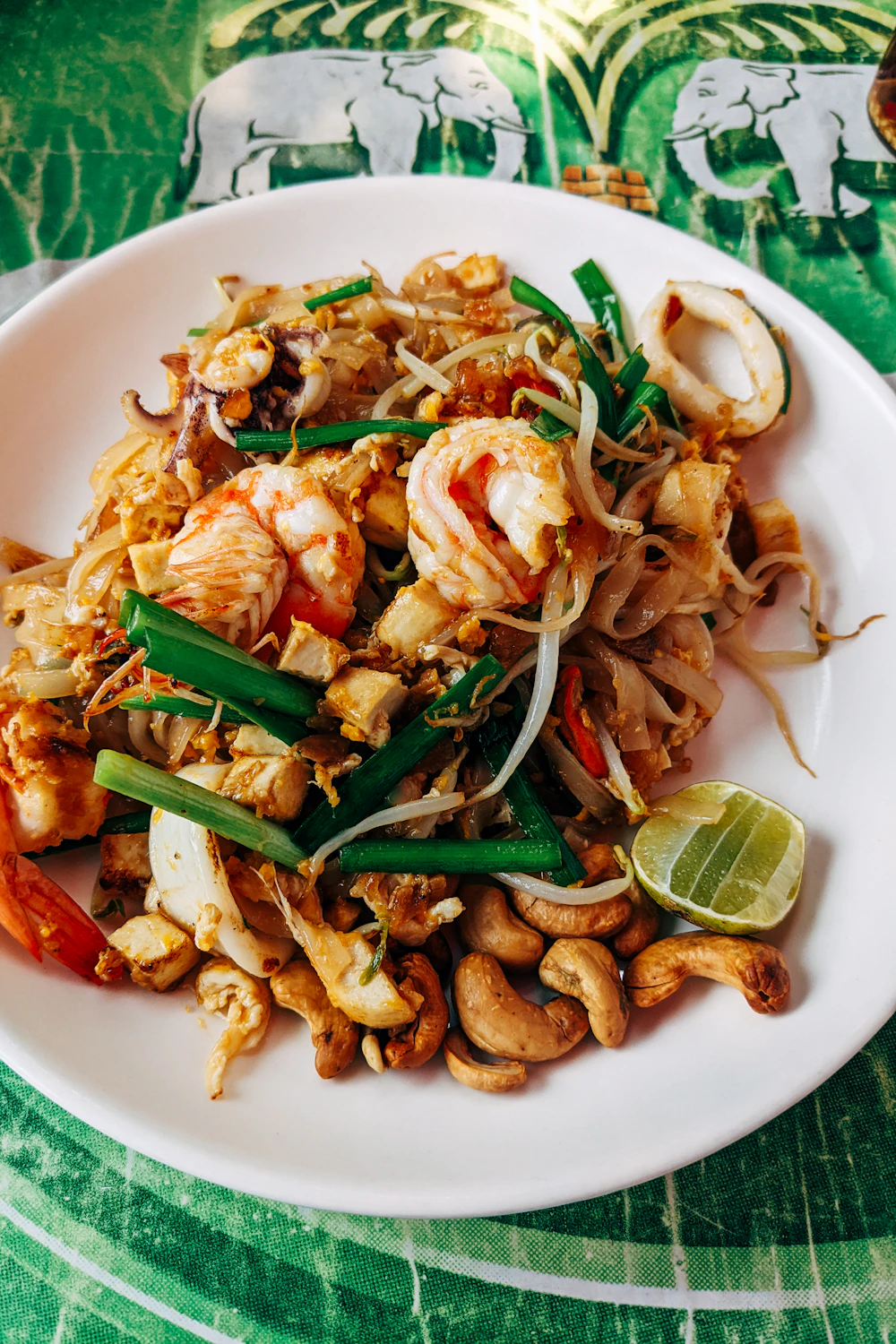
Easy Pad Thai
Ingredients
Method
- Soak the noodles in hot tap water 8 to 10 minutes until pliable. Drain.
- Whisk the sauce ingredients together.
- Cook the shrimp or chicken in oil until done. Remove.
- Saute the garlic and shallot 30 seconds, then scramble the eggs.
- Add the noodles and sauce and toss 2 to 3 minutes until tender, adding a splash of water if needed.
- Return the protein with the bean sprouts and green onions, toss 1 minute and serve with peanuts, lime and chili.