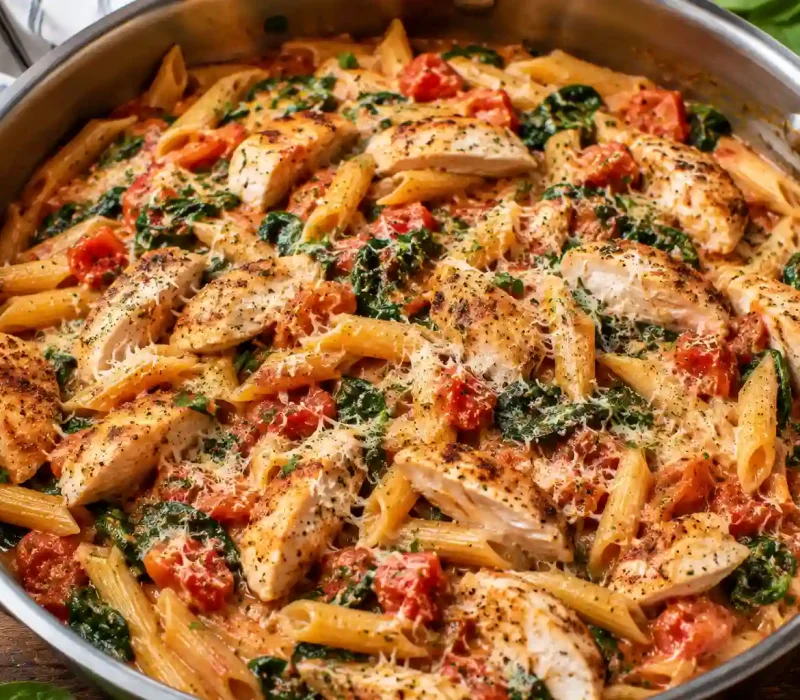
The secret to a great one pan pasta is simple. Cook the pasta directly in the sauce instead of boiling it separately. This method creates deeper flavor. As the pasta cooks, it releases starch into the sauce. The starch naturally thickens the mixture and creates a silky texture. No flour or roux is needed. This One-Pan Tomato and Spinach Chicken Pasta uses that technique to create a rich and satisfying meal in about 30 minutes.
I was skeptical the first time I tried this method. Cooking pasta directly in tomato sauce seemed unusual. I expected the pasta to become gluey or cook unevenly. Instead, the results were impressive. The sauce coated every piece of pasta. It did not pool at the bottom of the bowl. Cleanup was also much easier.
A few details make a big difference. Sear the chicken well before adding it back to the pan. Use enough liquid so the pasta cooks evenly and does not stick. Add the spinach at the very end. This keeps it tender and fresh instead of overcooked.
Why You’ll Love This Recipe
- It’s a genuine onepan meal protein, pasta, sauce, and vegetables, no extra pots to boil or drain.
- The sauce thickens naturally from the pasta’s starch, without needing cream, flour, or a roux (though a splash of cream is a great optional addon).
- It’s ready in about 30 minutes, making it a solid weeknight goto.
- It’s easy on the wallet canned tomatoes, broth, pasta, and a bit of chicken go a long way.
- It reheats well, and leftovers make an easy nextday lunch.
- It’s endlessly adaptable swap the pasta shape, add extra vegetables, or make it dairyfree without changing the core technique.
What Is OnePan Tomato & Spinach Chicken Pasta?
One-Pan Tomato and Spinach Chicken Pasta is a simple stovetop meal. It combines seared chicken, pasta, and a tomato-based broth in a single skillet. The pasta cooks directly in the sauce instead of being boiled separately. Fresh spinach is stirred in at the end. This cooking method creates a flavorful and cohesive dish. It also reduces the number of dishes to wash.
The tomato sauce can be made in different ways. A lighter version uses canned diced tomatoes and chicken broth. This creates a fresh and simple flavor. A richer version includes cream, Parmesan cheese, or cream cheese. These ingredients turn the broth into a creamy tomato sauce. Both options work well. This recipe uses the lighter broth-based version as the default. You can easily make it creamy if desired.
Spinach is added at the very end of cooking. It wilts quickly in the hot pasta. Adding it too early can cause it to become soft and overcooked. Stirring it in last helps it stay tender and vibrant.
Ingredient Breakdown
Chicken (breast or thigh, cut into pieces)
Boneless, skinless chicken breast is lean and cooks quickly once cut into bitesized piecesthighs are a bit more forgiving and stay juicier if they sit in the pan a minute or two longer than planned. Either works well here.
Olive oil (and optionally butter)
Used to sear the chicken and sauté the onion and garlic. A touch of butter added alongside the oil rounds out the flavor of the base, though olive oil alone works fine too.
Onion and garlic
The aromatic base of the sauce. Diced onion cooked until softened builds sweetness that balances the acidity of the tomatoes, while garlic added just before the liquid goes in keeps its flavor from turning bitter or burnt.
Canned diced tomatoes
The backbone of the sauce. Diced tomatoes with basil, garlic, and oregano already built in are a genuine timesaver, though plain diced tomatoes plus your own Italian seasoning work just as well if that’s what you have.
Chicken broth
Forms the majority of the cooking liquid for the pasta. A goodquality broth carries a lot of flavor directly into the pasta as it absorbs the liquid, so it’s worth using a broth you actually like the taste of.
Short pasta (penne, rotini, or fusilli)
Short pasta shapes hold up well to simmering directly in sauce and are easy to portion evenly in a skillet. Penne is a classic choice since its ridges and hollow center help trap sauce in every bite.
Baby spinach
Added at the very end so it wilts gently in residual heat rather than overcooking. Fresh spinach is preferred for texture, though frozen works in a pinch if thawed and welldrained first.
Heavy cream or Parmesan (optional)
Not required for a good sauce, since the pasta’s starch does plenty of thickening on its own, but either addition turns the dish creamier and richer if that’s the direction you want to take it.
Red pepper flakes (optional)
A pinch adds background heat without overwhelming the tomato flavor easy to leave out entirely for a milder dish.
Equipment Needed
- A large, deep skillet with a lid (or a wide, shallow pot)
- A wooden spoon or spatula for frequent stirring
- A cutting board and sharp knife
StepbyStep Instructions
1. Season and sear the chicken
Cut the chicken into bitesized pieces and season with salt, pepper, and Italian seasoning. Heat olive oil in a large, deep skillet over mediumhigh heat, and sear the chicken until golden brown on the outside, about 5 to 6 minutes total. It doesn’t need to be fully cooked through at this stage it will finish cooking in the sauce later. Remove to a plate.
2. Sauté the onion and garlic
In the same skillet, add the onion and cook until softened and just starting to turn translucent, about 2 to 3 minutes. Add the garlic and cook for another 30 seconds, just until fragrant, scraping up any browned bits left behind from the chicken as you stir those bits carry a lot of flavor into the sauce.
3. Build the sauce and add the pasta
Stir in the canned diced tomatoes (with their juice) and chicken broth, along with any additional seasoning. Bring the mixture to a boil, then add the dry, uncooked pasta directly into the skillet, making sure it’s mostly submerged in liquid.
4. Simmer until the pasta is tender
Reduce the heat to a gentle simmer, cover, and cook, stirring occasionally to prevent sticking, for about 12 to 15 minutes, until the pasta is tender and the sauce has thickened naturally from the released starch. If it looks like it’s drying out before the pasta is fully cooked, add a splash more broth or water.
5. Return the chicken
Add the seared chicken back into the skillet, along with any juices that collected on the plate, and stir to combine. Let everything simmer together for another 2 to 3 minutes to finish cooking the chicken through and let the flavors meld.
6. Stir in the spinach
Fold in the fresh baby spinach and stir gently until it wilts, which should take less than a minute given the residual heat. If using cream or Parmesan, stir it in now as well, off high heat, until fully incorporated.
7. Season and serve
Taste and adjust salt, pepper, and red pepper flakes as needed. Serve hot, straight from the skillet.
Expert Tips for Best Results
- Sear the chicken properly before setting it aside. Those browned bits left in the pan build real depth into the sauce don’t skip this step even though the chicken finishes cooking later.
- Stir occasionally while the pasta simmers. Since it’s cooking directly in the sauce rather than a large pot of water, it’s more prone to sticking to the bottom if left completely undisturbed.
- Add the spinach last, off high heat. It wilts almost instantly in a hot pan stirring it in too early or leaving it too long turns it soggy and dull instead of vibrant.
- Keep extra broth on hand. Pasta absorbs liquid at slightly different rates depending on the brand and shape, so having a bit more broth ready to splash in if the sauce looks too thick partway through saves you from a dry, sticky result.
- The sauce thickens further as it sits. If it looks a touch thin right off the heat, give it a minute or two it firms up as the pasta continues absorbing liquid.
Common Mistakes to Avoid
- Not stirring the pasta while it simmers. Since it’s cooking in a shallower amount of liquid than a boiling pot, pasta can stick to the bottom of the skillet if left alone too long.
- Adding the spinach too early. It cooks down dramatically and turns mushy if it sits in the hot sauce for more than a minute or so.
- Skipping the sear on the chicken. Going straight to simmering raw chicken pieces in the sauce misses out on the flavor those browned edges add.
- Not deglazing the pan after searing. The browned bits stuck to the skillet are pure flavor scraping them up as the onion cooks makes a real difference in the final sauce.
- Using too little liquid for the amount of pasta. If the pasta isn’t mostly submerged when it goes in, it cooks unevenly and can turn gummy on top while undercooked underneath.
- Overcooking the pasta. Since it continues absorbing liquid even after the heat is off, pulling it while just shy of fully tender (with a slight bite) helps avoid mushiness by the time it’s plated.
Variations and Customizations
- Creamy version: stir in ½ cup heavy cream or a few tablespoons of cream cheese along with the spinach for a richer, creamy tomato sauce.
- Extraveggie version: add sliced mushrooms, bell peppers, or zucchini along with the onion for a more vegetableforward dish.
- Spicy version: increase the red pepper flakes, or stir in a spoonful of chili oil at the end for a sharper heat.
- Sundried tomato twist: add chopped sundried tomatoes along with the canned tomatoes for a more intense, slightly sweet tomato flavor.
- Whole wheat or glutenfree version: substitute whole wheat or glutenfree short pastaglutenfree varieties may need slightly more liquid and a shorter simmer time, so check a couple of minutes early.
- Dairyfree version: skip the cream and Parmesan additions, or use a plantbased cream alternative and nutritional yeast for a similar richness without dairy.
- Different pasta shapes: rotini, fusilli, or shells all work well in place of pennejust watch the cook time closely, since different shapes absorb liquid at different rates.
Best Side Dishes / What to Serve With It
This dish is a complete meal on its own, but a few sides round it out nicely:
- Garlic bread or a crusty baguette, for scooping up extra sauce
- A simple green salad with a light vinaigrette
- Roasted vegetables like broccoli or asparagus
- A Capresestyle tomato and mozzarella salad
- Extra grated Parmesan and a drizzle of good olive oil at the table
Storage Instructions
Let leftovers cool before transferring to an airtight container. Store in the refrigerator for up to 3 to 4 days. This dish isn’t an ideal candidate for freezing, since the pasta’s texture tends to soften further once frozen and thawed, though it’s not unreasonable if you don’t mind a slightly softer bite.
Reheating Instructions
Reheat gently on the stovetop over low heat, or in the microwave in short intervals, adding a splash of broth or water to loosen the sauce, since the pasta continues absorbing liquid as it sits in the fridge. Stir occasionally while reheating for even warming.
Make Ahead Tips
You can chop the onion, mince the garlic, and cut the chicken into pieces up to a day ahead, storing them separately in the fridge to speed up active cooking time. The dish as a whole, though, is best made fresh and served right away, since the pasta’s texture is at its best straight out of the pan and softens the longer it sits.
Frequently Asked Questions
Why does the pasta cook directly in the sauce instead of separately?
Cooking pasta directly in the sauce lets it absorb flavor as it cooks and releases starch that naturally thickens the sauce, so you get a more cohesive, flavorful result without needing a separate pot or a flourbased thickener. It also means fewer dishes to wash.
Can I use a different pasta shape?
Yes, most short pasta shapes like rotini, fusilli, or shells work well in place of penne. Cooking times can vary slightly by shape and brand, so check for doneness a couple of minutes before the recipe’s suggested time.
Can I use frozen spinach instead of fresh?
Yes. Thaw it fully and squeeze out as much excess liquid as possible before adding it to the skillet, since frozen spinach holds a lot of water that can thin out the sauce if it’s not welldrained.
Can I use chicken thighs instead of chicken breast?
Yes, boneless, skinless chicken thighs work well and tend to stay juicier, especially since they finish cooking in the sauce alongside the pasta. Cut them into similarly sized pieces as you would chicken breast for even cooking.
What if my sauce turns out too thick or too thin?
If it’s too thick, stir in a splash of extra broth or water until it loosens to your preferred consistency. If it’s too thin, let it simmer uncovered for another minute or two it will also continue thickening slightly as it cools and the pasta keeps absorbing liquid.
Can I make this dish creamy?
Yes. Stir in heavy cream, a few tablespoons of cream cheese, or extra Parmesan along with the spinach at the end for a richer, creamier version of the sauce, without changing anything else about the technique.
How do I keep the spinach from turning mushy?
Add it at the very end, off high heat, and stir just until it wilts this usually takes less than a minute given residual heat from the pan. Adding it too early or leaving it in too long causes it to overcook and lose its vibrant color and texture.
Can I make this recipe glutenfree?
Yes. Substitute a glutenfree short pasta for the regular pasta. Glutenfree pasta can behave a bit differently when simmered directly in sauce, so it may need slightly more liquid and a shorter cook time check a couple of minutes early.
How long does this dish keep in the fridge?
Stored in an airtight container, leftovers keep for 3 to 4 days in the refrigerator. Expect the pasta to continue absorbing liquid as it sits, so a splash of broth when reheating helps bring the sauce back to a good consistency.
Is this dish a full, balanced meal on its own?
Yes. Between the chicken, pasta, tomatoes, and spinach, the dish covers protein, carbohydrates, and vegetables in one skillet, making it a genuinely complete dinner without needing much else, though a side salad or bread rounds it out nicely.
Final Thoughts
What makes this dish special is not a long ingredient list. The key is using a few simple techniques. Sear the chicken properly. Let the pasta cook directly in the flavorful sauce. Add the spinach at the end so it stays fresh and vibrant.
Once you make this recipe once, it becomes easy to remember. It is a great option for busy weeknights. The steps are simple and straightforward. Despite the minimal effort, the finished dish tastes rich, comforting, and full of flavor.
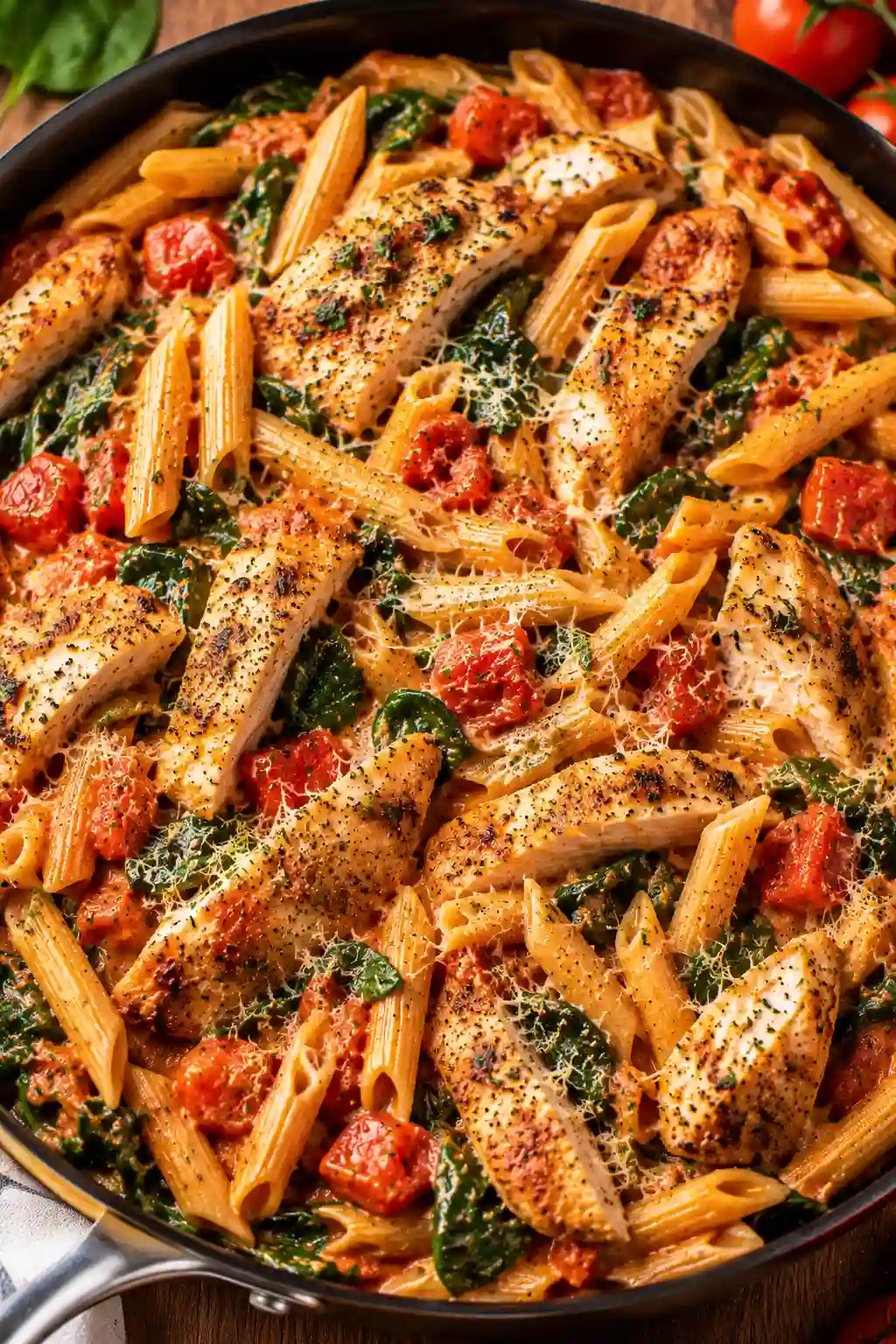
One Pan Tomato & Spinach Chicken Pasta
Notes
Ingredients
- 1 lb boneless, skinless chicken breast or thighs, cut into bite sized pieces
- Salt, black pepper, and 1 teaspoon Italian seasoning, to taste
- 2 tablespoons olive oil
- 1 medium onion, chopped
- 3 cloves garlic, minced
- 1 (14.5 oz) can diced tomatoes with basil, garlic, and oregano (undrained)
- 2½ cups chicken broth
- 8 oz uncooked penne pasta (or other short pasta)
- 4 cups baby spinach
- Pinch of red pepper flakes (optional)
- ¼ cup heavy cream or grated Parmesan (optional, for a creamy version)
Instructions
- Season chicken with salt, pepper, and Italian seasoning. Heat olive oil in a large, deep skillet over medium high heat and sear chicken until golden, about 5–6 minutes. Remove to a plate.
- In the same skillet, sauté onion until softened, 2–3 minutes. Add garlic and cook 30 seconds, scraping up browned bits.
- Stir in diced tomatoes and chicken broth. Bring to a boil, then add uncooked pasta, making sure it’s mostly submerged.
- Reduce heat, cover, and simmer 12–15 minutes, stirring occasionally, until pasta is tender and sauce has thickened. Add more broth if it looks dry before the pasta is done.
- Return chicken and any juices to the skillet. Simmer 2–3 minutes until chicken is cooked through.
- Stir in spinach until just wilted, less than a minute. Stir in cream or Parmesan now, if using.
- Season to taste and serve hot, straight from the skillet.
Notes
- Stir occasionally while the pasta simmers to prevent sticking to the bottom of the skillet.
- Add the spinach at the very end, off high heat, so it wilts without turning mushy.
- Keep extra broth on hand in case the sauce thickens faster than the pasta cooks.
Storage
Refrigerate leftovers in an airtight container for up to 3–4 days. Reheat gently with a splash of broth to loosen the sauce. Not ideal for freezing, as pasta texture softens further after thawing.Nutrition Estimate (per serving, approximate)
Calories: 480 | Protein: 38g | Fat: 14g | Carbohydrates: 52g | Sodium: 640mgNutrition values are estimates and will vary based on specific ingredients and optional additions used.