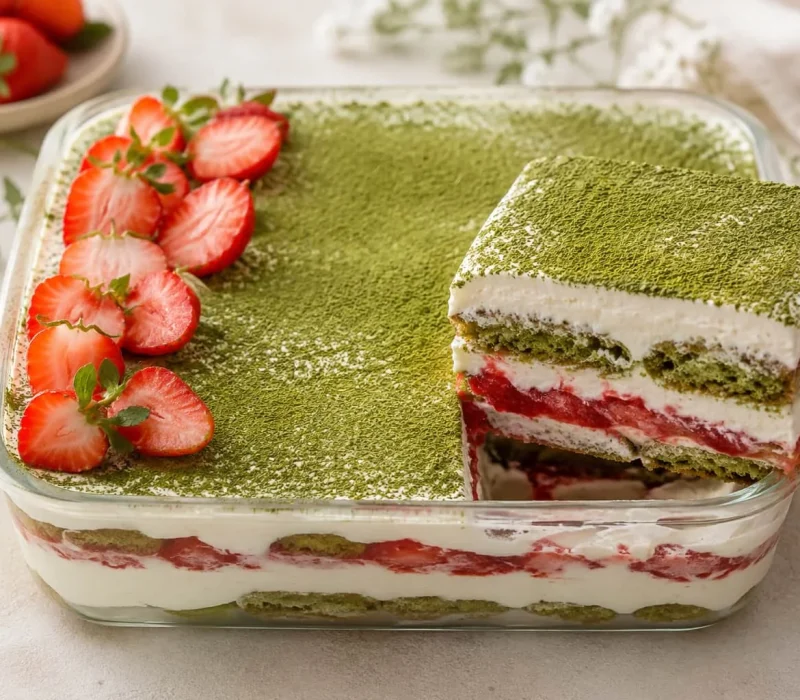
Strawberry matcha tiramisu Recipe layers matcha dipped ladyfingers with mascarpone cream and strawberries instead of the classic coffee flavor.
KEY TAKEAWAYS
- Cooking the strawberries into a light, cornstarch-thickened compote instead of using them fresh and sliced is the single best way to avoid a soggy tiramisu
- Whisking matcha into hot, not boiling, water keeps it from turning bitter or clumping
- A quick 1 to 2 second dip per side is all the ladyfingers need, they keep absorbing moisture from the cream while the dessert chills
- This version uses an egg-free mascarpone cream for simplicity and food safety; if you want the traditional raw egg yolk method, use pasteurized eggs
- This needs at least 4 hours in the fridge, but an overnight chill gives a noticeably better texture as the ladyfingers fully soften
Strawberry matcha tiramisu Recipe layers matcha dipped ladyfingers with mascarpone cream and strawberries instead of the classic coffee flavor.
This is tiramisu with a fresh, spring appropriate twist, earthy matcha standing in for espresso, and strawberries adding a bright fruit layer the original never had. It’s a genuinely easy no-bake dessert once you understand two things: control the moisture, and don’t over-soak the ladyfingers. Get those two right and the rest comes together in about half an hour of active work, then the fridge does the rest.
A Short History of Tiramisu
Tiramisu’s exact origin is genuinely disputed, but its broad strokes are well documented. According to Wikipedia, tiramisu originated in northeastern Italy, in the Veneto and Friuli-Venezia Giulia regions, and modern versions of the dessert were popularized in restaurants starting in the late 1960s. The name itself, tiramisù, comes from the Venetian dialect for “pick me up,” a reference to the espresso (and, in some tellings, the calorie dense richness) that gives the dessert its energizing reputation.
Matcha, the finely ground green tea powder used here in place of coffee, comes from a much older tradition, central to the Japanese tea ceremony for centuries before it ever met a ladyfinger. Pairing the two is a fairly recent fusion, but it’s one that makes sense: both ingredients bring a slightly bitter, grounding contrast to a rich, sweet dessert.
Why This Recipe Works
Most soggy tiramisu problems trace back to one thing: too much uncontrolled liquid. Fresh sliced strawberries release juice as they sit, and that juice has nowhere to go except into the ladyfingers and cream below it. Cooking the strawberries briefly with sugar and a little cornstarch turns them into a thickened compote that still tastes fresh but won’t turn the layers underneath into mush. astringent than it needs to.
The same logic applies to the matcha soak: a quick dip, not a long soak, gives the ladyfingers just enough moisture to start softening, and they’ll finish the job on their own while the dessert chills. Whisking the matcha into hot (not boiling) water also matters, water that’s too hot can make matcha taste more bitter and
Ingredient Notes For Strawberry Matcha Tiramisu Recipe
Matcha: Culinary grade matcha is the right choice here, not ceremonial grade. Ceremonial matcha is meant to be whisked with plain hot water and tasted on its own, culinary matcha is made to hold up when mixed with sugar and dairy, and it costs significantly less.
Ladyfingers: Also called savoiardi. Look for a dry, slightly firm biscuit, they’re designed to absorb liquid without falling apart.
Mascarpone: Bring it to room temperature before mixing so it folds in smoothly. Avoid overbeating once it’s combined with the whipped cream, mascarpone can turn grainy or start to separate if it’s mixed too long or too vigorously.
Heavy cream: Cold cream whips faster and holds its structure better than room-temperature cream. Whip it before folding in the mascarpone, not after.
Strawberries: Fresh, ripe strawberries work best. Wash and dry them thoroughly before cooking, any surface water just adds more liquid you’ll need to cook off.
How to Make Strawberry Matcha Tiramisu Recipe
Step 1: Make the strawberry layer. Chop the strawberries and cook them with sugar and lemon juice over medium heat for about 5 minutes, until they soften and release their juices. Stir the cornstarch with a splash of cold water, whisk it in, and simmer another minute until visibly thickened. Let this cool completely before assembling, warm compote will melt the cream layer.
Step 2: Bloom the matcha. Whisk the matcha powder into hot (not boiling) water until no clumps remain, sifting the matcha first helps it dissolve smoothly. Let it cool to room temperature.
Step 3: Make the mascarpone cream. Whip the cold heavy cream and sugar to soft-medium peaks. In a separate bowl, gently stir the room-temperature mascarpone with the vanilla until smooth, then fold in the whipped cream in two additions, just until no streaks remain. Stop as soon as it’s combined.
Step 4: Dip the ladyfingers. Working one at a time, dip each ladyfinger in the cooled matcha liquid for about 1 to 2 seconds per side, just enough to moisten, not soak. Arrange in a single layer in your serving dish.
Step 5: Layer. Spread half the mascarpone cream over the ladyfingers, then half the cooled strawberry compote. Repeat with a second layer of dipped ladyfingers, the remaining cream, and the remaining strawberries.
Step 6: Chill. Cover and refrigerate for at least 4 hours, though overnight gives the best texture as the ladyfingers fully soften and the layers settle.
Step 7: Finish. Just before serving, dust the top with a light layer of matcha powder and garnish with a few fresh strawberry slices. Matcha powder absorbs moisture from the cream over time and can darken, so add it close to serving rather than hours ahead.
Common Problems and Fixes
| Problem | Likely Cause | Fix |
| Tiramisu turned soggy or watery | Fresh strawberries used without cooking down, or ladyfingers over-soaked | Cook the strawberries into a thickened compote; dip ladyfingers for only 1 to 2 seconds per side |
| Matcha tasted bitter or astringent | Water was boiling instead of hot, or too much matcha was used | Use hot, not boiling, water; start with less matcha and adjust to taste |
| Mascarpone cream turned grainy or loose | Overbeaten, or mascarpone was too cold when mixed | Bring mascarpone to room temperature before mixing; fold gently and stop as soon as it’s combined |
| Ladyfingers stayed dry and crunchy in the center | Not enough contact with matcha liquid, or not enough chill time | Make sure each side gets dipped; chill for a full 4 hours minimum, ideally overnight |
| Dessert wouldn’t hold its shape when sliced | Not chilled long enough, or too much liquid in the strawberry layer | Chill overnight for the cleanest slices; make sure the compote is fully cooled and thickened before layering |
Storage and Food Safety
This version uses an egg-free mascarpone cream, which keeps things simple and avoids raw egg safety concerns entirely. If you’d rather make a more traditional tiramisu with whipped raw egg yolks, Food Safety gov specifically names tiramisu as a dish that should be made with pasteurized eggs when the eggs are raw or only lightly cooked, since standard shell eggs can carry Salmonella. Pasteurized shell eggs are widely available and work the same way in a recipe as regular eggs.
Because this dessert contains dairy, keep it refrigerated and don’t let it sit out longer than 2 hours at room temperature. Stored covered in the fridge, it keeps well for 2 to 3 days, the flavor if anything improves as it sits, though the ladyfingers will continue to soften the longer it’s stored. Freezing isn’t recommended, the mascarpone cream can separate and the strawberries turn watery once thawed.
Variations to Try
- Individual servings: Layer in small glasses or jars instead of one large dish, trimming ladyfingers to fit
- Traditional egg method: Whisk pasteurized egg yolks with sugar until pale, then fold in the mascarpone, followed by whipped cream or whipped egg whites, in place of the egg-free cream
- Sponge cake swap: Thin slices of sponge cake can replace ladyfingers, though they absorb liquid differently, adjust dipping time accordingly
- A splash of alcohol: A small amount of white rum or a fruit liqueur in the matcha soak is optional and not part of the traditional structure of this version
- Other berries: Raspberries work well in the same cooked-compote method if you want a change from strawberries
If you like the idea of a dessert built around a soaked, moisture-absorbing layer, our Tres Leches Cake uses a similar principle with cake instead of ladyfingers. For another light, fruit-forward option, our Lemon Blueberry Pound Cake is a good pick for the same kind of spring dessert table.
Serving Suggestions
Serve chilled, straight from the fridge, in slices or spooned from the dish. This works well as a make-ahead dessert for a dinner party since it needs to chill anyway, just finish it with the matcha dusting and strawberry garnish right before guests arrive.
Frequently Asked Questions
Does strawberry matcha tiramisu contain coffee?
No, matcha replaces the coffee entirely in this version. If you want a hint of coffee flavor alongside the matcha, that’s a variation rather than a requirement.
Do I need alcohol for this recipe?
No, alcohol is entirely optional. Traditional tiramisu sometimes includes a splash of Marsala wine or rum, but this recipe works completely fine without it.
Can I use frozen strawberries?
Yes, though thaw them first and expect a bit more liquid to cook off. The cooking step that thickens the compote handles this fine, just simmer a couple minutes longer if needed.
How long does this need to chill?
At least 4 hours for the ladyfingers to soften properly, but overnight gives noticeably better texture and cleaner slices.
Is this recipe safe if I want to avoid raw eggs?
Yes, this recipe as written uses an egg-free mascarpone cream, no raw eggs at all. If you switch to the traditional egg-yolk method, use pasteurized eggs, which is the food-safety guidance for any tiramisu made with raw or lightly cooked eggs.
Can I freeze strawberry matcha tiramisu?
It’s not recommended. The mascarpone cream can separate and the strawberries release extra water once thawed, both of which affect texture more than flavor.
Conclusion
The difference between a strawberry matcha tiramisu Recipe that holds together beautifully and one that turns into a soggy mess comes down to moisture control cook the strawberries down instead of using them raw, keep the ladyfinger dip brief, and give the whole thing enough time in the fridge to set properly. Once you’ve got that down, this is a genuinely easy, make-ahead dessert that looks far more impressive than the actual effort it takes.
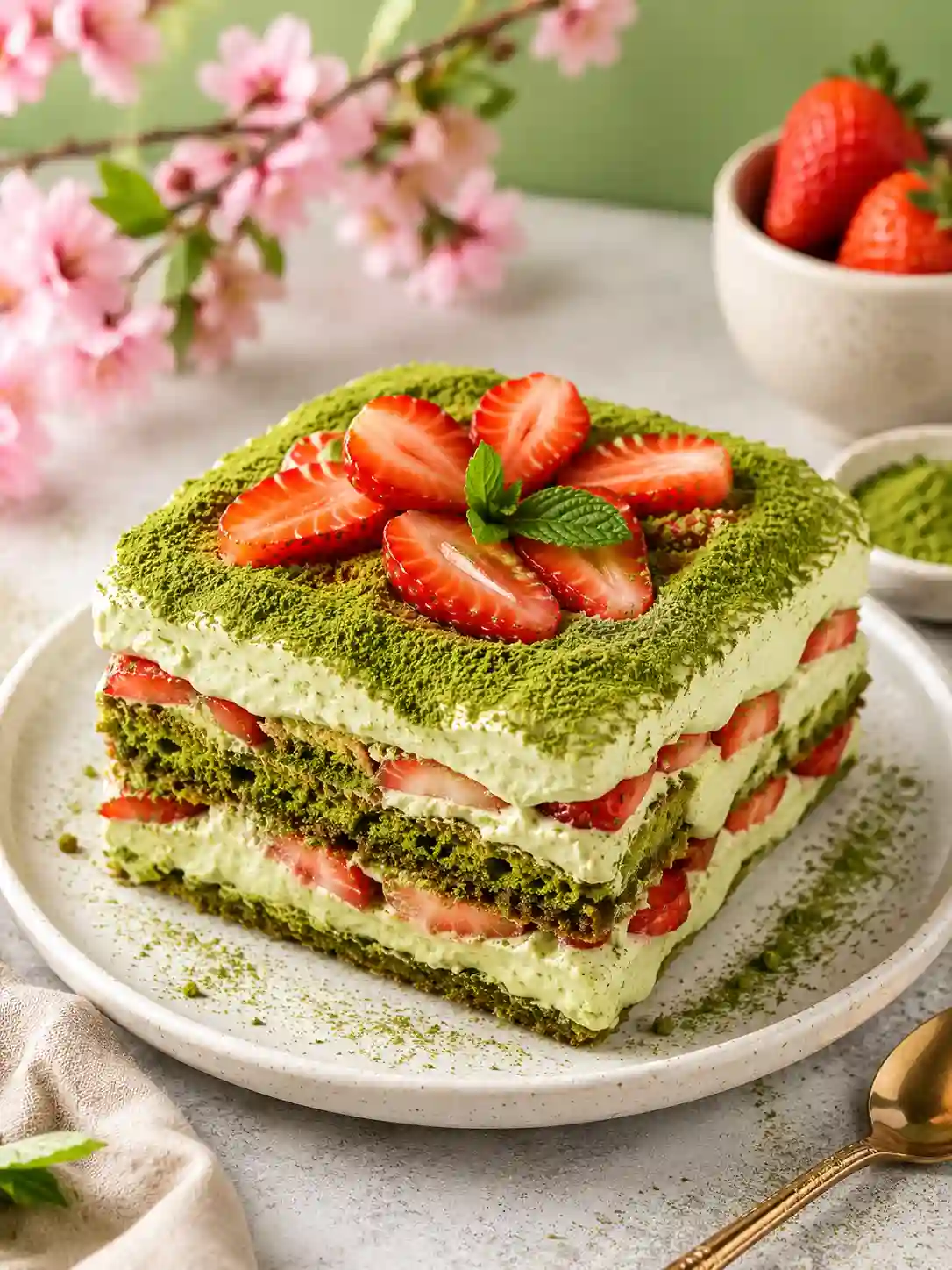
Strawberry Matcha Tiramisu
Notes
- 1 tbsp culinary-grade matcha powder
- ¾ cup (180ml) hot water (not boiling)
- 1 tbsp granulated sugar (optional)
- 2 cups fresh strawberries, chopped
- 3 tbsp granulated sugar
- 1 tsp lemon juice
- 1 tsp cornstarch, dissolved in 1 tbsp cold water
- 1 cup (240ml) cold heavy cream
- ⅓ cup (65g) granulated sugar
- 8 oz (225g) mascarpone, room temperature
- 1 tsp vanilla extract
- 20 to 24 ladyfingers (savoiardi)
- Matcha powder, for dusting
- A few fresh strawberry slices, for garnish
- Cook the chopped strawberries, sugar, and lemon juice over medium heat for about 5 minutes. Whisk in the cornstarch slurry and simmer 1 more minute until thickened. Cool completely.
- Whisk the matcha powder into hot water until no clumps remain. Stir in sugar if using. Let cool to room temperature.
- Whip the cold heavy cream and sugar to soft-medium peaks. Stir the room-temperature mascarpone with vanilla until smooth, then fold in the whipped cream just until combined.
- Dip each ladyfinger in the cooled matcha liquid for 1 to 2 seconds per side and arrange in a single layer in your serving dish.
- Spread half the mascarpone cream over the ladyfingers, then half the cooled strawberry compote. Repeat with a second layer of dipped ladyfingers, remaining cream, and remaining strawberries.
- Cover and refrigerate at least 4 hours, ideally overnight.
- Just before serving, dust with matcha powder and garnish with fresh strawberry slices.