
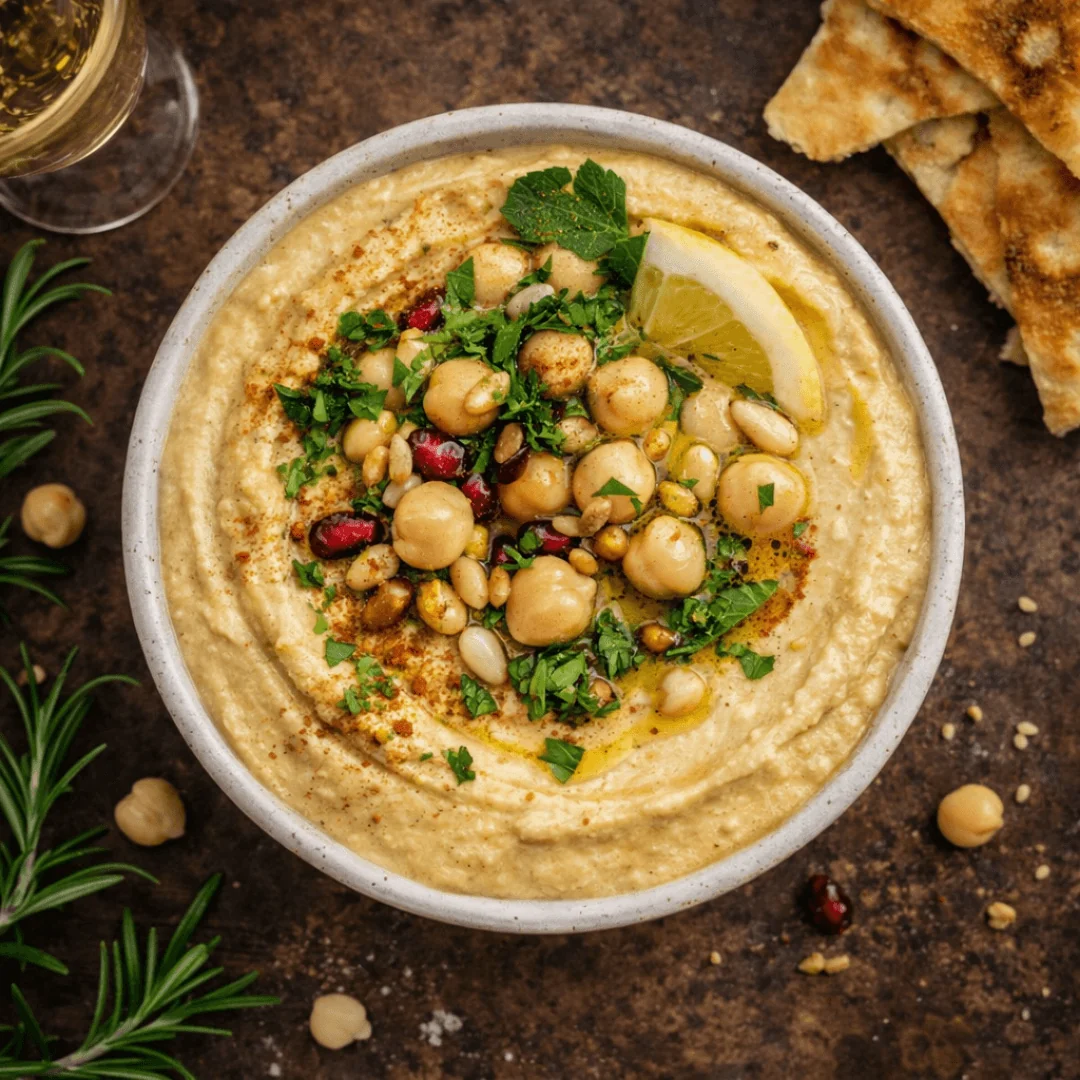
Authentic Greek hummus is a burst of Mediterranean flavor in every bite: a smooth, protein-packed chickpea base crowned with juicy tomatoes, crisp cucumber, briny olives, tangy feta, sharp red onion, and fresh dill. It is the kind of dish that turns a simple snack into a celebration and makes any appetizer spread feel special. Best of all, it comes together in under 15 minutes with no cooking at all, and it delivers that restaurant-quality, mezze-platter flavor right at home. Whether you are making a healthy snack, feeding guests, or meal-prepping for the week, this loaded hummus is impossible to stop dipping into.
Key Takeaways
- The base is classic creamy hummus; the “Greek” magic is in the fresh Mediterranean toppings.
- It comes together in 15 minutes with no cooking, just a food processor and a handful of ingredients.
- For the creamiest texture, blend the tahini and lemon first, and use warm chickpeas (peel them for extra-silky hummus).
- Load it up with feta, cucumber, tomato, olives, red onion, and dill for that authentic mezze flavor.
- It is naturally vegetarian, high in plant protein and fiber, and easy to make vegan by skipping the feta.
Why You’ll Love This Greek Hummus
There is so much to love about this loaded dip. It is fresh and vibrant, with cool, crunchy toppings over a rich, creamy base. It is quick and easy, ready in about 15 minutes with no cooking. It is a guaranteed crowd-pleaser and looks stunning on any appetizer table. It is naturally vegetarian and packed with plant protein and fiber. And it is endlessly customizable, so you can change up the base flavor and the toppings to suit any occasion.
What Makes This Hummus “Greek”?
Hummus itself is a beloved Middle Eastern and Levantine dip of blended chickpeas, tahini, lemon, garlic, and olive oil, and you can read more about the origins of hummus if you are curious about its long history. What makes this version “Greek” or Mediterranean style is the topping: instead of serving the hummus plain, you pile it high with the fresh, briny, herby ingredients of a Greek salad, feta, cucumber, tomato, kalamata olives, red onion, and dill. That combination of creamy, cool, tangy, and salty is what gives every scoop that unmistakable Mediterranean flavor.
Ingredients You’ll Need
Two simple ingredient lists: the hummus base and the toppings.
For the hummus base
- Chickpeas (2 cans / 30 oz), drained and rinsed, the protein-rich foundation of creamy hummus.
- Extra-virgin olive oil, for richness and a silky texture.
- Tahini, the sesame paste that gives hummus its classic, nutty depth. Use a good, fresh, well-stirred one.
- Water, to adjust the consistency to smooth and creamy.
- Fresh lemon juice, to brighten the whole dip with zesty freshness.
- Garlic, for a bold, aromatic kick (add more to taste).
- Ground cumin, for warm, earthy undertones.
- Salt, to enhance and balance all the flavors.
For the Mediterranean toppings
- Cucumber, diced, for a cool, refreshing crunch.
- Tomato, diced, for juicy, vibrant flavor.
- Red onion (purple onion), finely chopped, for color and a mild, sharp bite.
- Feta cheese, crumbled, for a creamy, tangy, salty finish.
- Kalamata and green olives, sliced, for authentic briny Mediterranean flavor.
- Fresh dill, chopped, for herby freshness, plus a drizzle of olive oil to finish.
Ingredient Substitutions
| Ingredient | Swap | Notes |
| Canned chickpeas | Cooked dried chickpeas | Home-cooked, warm chickpeas blend extra creamy. |
| Tahini | Smooth almond or sunflower butter | Changes the flavor slightly; still creamy. |
| Feta | Vegan feta, or omit | Skip the feta to make it fully vegan. |
| Lemon juice | Red wine vinegar (in a pinch) | Fresh lemon is best for brightness. |
| Fresh dill | Parsley, mint, or oregano | Any fresh Mediterranean herb works. |
| Kalamata olives | Green olives or capers | For a different briny note. |
Equipment You’ll Need
Really just one essential tool.
- A food processor or high-speed blender , the key to smooth, creamy hummus. A food processor gives the most control; a high-speed blender makes it especially silky.
- A citrus juicer , for getting every drop of fresh lemon juice without the seeds., for quick, evenly minced garlic (or a fine grater).
- A flexible spatula and a shallow serving bowl , for scraping the processor and spreading the hummus for the toppings.
How to Make Authentic Greek Hummus
Three simple steps and no cooking required.
1. Make the hummus. Add the chickpeas, olive oil, tahini, water, garlic, cumin, salt, and lemon juice to a food processor or high speed blender. Blend until completely smooth and creamy, pausing to scrape down the sides. Add a splash of warm water or a little more olive oil to loosen it to a silky, spreadable consistency, and taste to adjust the salt and lemon.
2. Assemble the Greek hummus. Spread the hummus in a smooth layer over a shallow serving plate or bowl, using the back of a spoon to make swooshes that catch the olive oil. Scatter the cucumber, tomato, red onion, feta, and olives evenly over the top, then finish with fresh dill.
3. Finish and serve. Drizzle with a little extra-virgin olive oil for richness and shine, and serve right away with warm pita, crackers, or fresh vegetable sticks. It is as beautiful as it is delicious, so bring it to the table looking loaded.
Expert Tips for the Creamiest Hummus
The secrets to ultra-smooth, restaurant quality hummus.
Blend the tahini and lemon juice together first, before adding the chickpeas, until they turn pale and fluffy; this is the classic trick for an airy, creamy texture. Use warm chickpeas, since they blend far smoother than cold ones (a quick simmer, or even a rinse in hot water, helps). For the silkiest hummus of all, peel the chickpeas, or simmer them with a little baking soda first to loosen the skins. And do not skimp on blending time; a full couple of minutes, with a splash of ice water or aquafaba, whips it into something luxuriously smooth. Serve this as a starter before a cozy bowl of my creamy tomato soup for an easy, comforting meal.
Common Mistakes (and How to Fix Them)
Most hummus issues are quick to fix.
| Problem | Likely Cause | The Fix |
| Grainy, not smooth | Cold chickpeas or too little blending | Warm the chickpeas, blend longer, add ice water or aquafaba. |
| Tastes bitter | Old or too much tahini, or raw garlic | Use fresh tahini; reduce or roast the garlic. |
| Bland | Under-seasoned | Add more salt, lemon, and a little cumin to taste. |
| Too thick or stiff | Not enough liquid | Blend in warm water or aquafaba a splash at a time. |
| Too runny | Too much liquid | Add more chickpeas or a spoon of tahini and blend. |
Topping & Flavor Variations
The base and the toppings are both easy to make your own.
Change the base with roasted garlic, roasted red pepper, a spoon of harissa or a pinch of cayenne for heat, or blended roasted beets for a vibrant color. Finish with different toppings like za’atar, toasted pine nuts, sumac, or a paprika-oil drizzle. Add extra herbs such as parsley or mint, or a scoop of chopped roasted vegetables. And to turn this into a full Mediterranean spread, serve it alongside my eggplant goat-cheese melt sandwiches and a batch of my honey mustard potatoes for an easy, crowd pleasing table.
What to Serve With Greek Hummus
This loaded dip is made for dipping and sharing. Serve it with warm pita or pita chips, crunchy crackers, and fresh vegetable sticks like carrots, cucumber, and bell pepper. It shines as part of a mezze platter with olives, dolmas, and flatbread. It is also a fantastic partner to grilled proteins; try it alongside my tandoori grilled chicken or with a bright herby Mediterranean salad for a light, Mediterranean-style meal.
Can You Freeze Hummus?
Yes, plain hummus freezes surprisingly well, though the toppings do not. Freeze only the blended hummus base (before adding any toppings) in an airtight container with a thin layer of olive oil on top and a little headspace, for up to 3 months. Thaw it overnight in the fridge, then stir well and blend or whisk in a little water or olive oil to bring back the creamy texture, since it can separate slightly. Add the fresh cucumber, tomato, feta, and olives just before serving.
How Do You Store It?
Store leftover hummus in an airtight container in the fridge for up to 4 days, following general storing hummus safely guidance for prepared dips. For the best texture and freshness, store the plain hummus base and the chopped toppings separately, and assemble just before serving so the toppings stay crisp and the hummus does not get watery. A thin layer of olive oil over the top of stored hummus helps keep it fresh, and a quick stir revives it.
Is Greek Hummus Healthy?
Yes, Greek hummus is a genuinely nutritious choice. It is built on chickpeas, which are rich in plant-based protein and fiber, plus olive oil’s heart-healthy fats and a load of fresh vegetables on top. Legumes like chickpeas are among the foods most associated with better heart and metabolic health, and you can read more about chickpeas and health from Harvard’s Nutrition Source. At roughly 135 calories per serving, it is a satisfying, protein-and-fiber-rich snack or appetizer. Skip the feta to make it fully plant-based. As always, the exact numbers depend on your portions and toppings.
Frequently Asked Questions
How can I make my hummus extra creamy?
Blend the tahini and lemon juice together first until pale and fluffy, then add warm chickpeas and a splash of ice water or aquafaba, and blend for a full couple of minutes. Warm chickpeas blend smoother than cold, and peeling the chickpeas (or simmering them with a little baking soda) gives the silkiest result.
Do I need to peel the chickpeas?
No, peeling is optional. Blending the chickpeas as-is still gives a creamy hummus, especially in a high-speed blender. Peeling the skins, or loosening them with a quick baking-soda simmer, takes the texture from creamy to ultra-silky, so it is worth doing for special occasions but not required.
Can I use flavored hummus as a base?
Absolutely. Roasted garlic, roasted red pepper, or any Mediterranean-style hummus works beautifully as the base for these Greek toppings. You can also stir a flavor booster like harissa or extra lemon right into your batch. Just spread it out and pile on the fresh cucumber, tomato, feta, olives, and dill.
How do I make hummus thicker if it’s too runny?
Add more chickpeas or an extra spoonful of tahini and blend again until it reaches the thickness you want. Both add body without thinning the flavor. Going forward, add liquid a little at a time while blending, so it is easier to control the final consistency.
What toppings go best with Greek hummus?
The classic Greek toppings are diced cucumber and tomato, crumbled feta, sliced kalamata and green olives, finely chopped red onion, and a sprinkle of fresh dill, all finished with a drizzle of olive oil. You can also add za’atar, sumac, toasted pine nuts, or fresh parsley or mint for extra flavor and texture.
Can I make hummus without tahini?
Yes. You can leave the tahini out or replace it with a smooth nut or seed butter like almond or sunflower butter, plus a little extra olive oil for richness. The flavor will be milder and less nutty, but it will still be creamy and delicious, especially once loaded with the Mediterranean toppings.
Final Thoughts
This authentic Greek hummus is creamy, zesty, and bursting with Mediterranean flavor, and it is as easy to blend, spread, and top. Whether you serve it as a quick snack, an appetizer, or the centerpiece of a party platter, it is a fresh, healthy crowd-pleaser that comes together in minutes. Pile on the fresh vegetables, olives, and feta, add some warm pita, and watch it disappear. If you make it, I would love for you to leave a rating and a comment below and tell me how you topped yours.
Authentic Greek Hummus
Notes
- 2 cans (30 oz total) chickpeas, drained and rinsed
- ¼ cup extra-virgin olive oil
- ¼ cup tahini
- ¼ cup water (adjust for creaminess)
- ⅛ cup fresh lemon juice
- 1 garlic clove (or more to taste)
- 1 tsp ground cumin
- 1 tsp salt
- 1 small cucumber, diced
- 1 ripe tomato, diced
- ¼ cup red onion, finely chopped
- ¼ cup feta cheese, crumbled
- Kalamata and green olives, sliced
- Fresh dill, chopped
- Drizzle of extra-virgin olive oil
- Blend the chickpeas, olive oil, tahini, water, lemon juice, garlic, cumin, and salt in a food processor until smooth and creamy, scraping down as needed. Add warm water to loosen.
- Spread the hummus on a shallow plate. Top with cucumber, tomato, red onion, feta, olives, and dill.
- Drizzle with olive oil and serve with pita, crackers, or veggie sticks.
- Blend the tahini and lemon first until fluffy, and use warm chickpeas, for the creamiest hummus.
- Store the plain hummus and toppings separately; assemble before serving.
- Skip the feta to make it vegan.