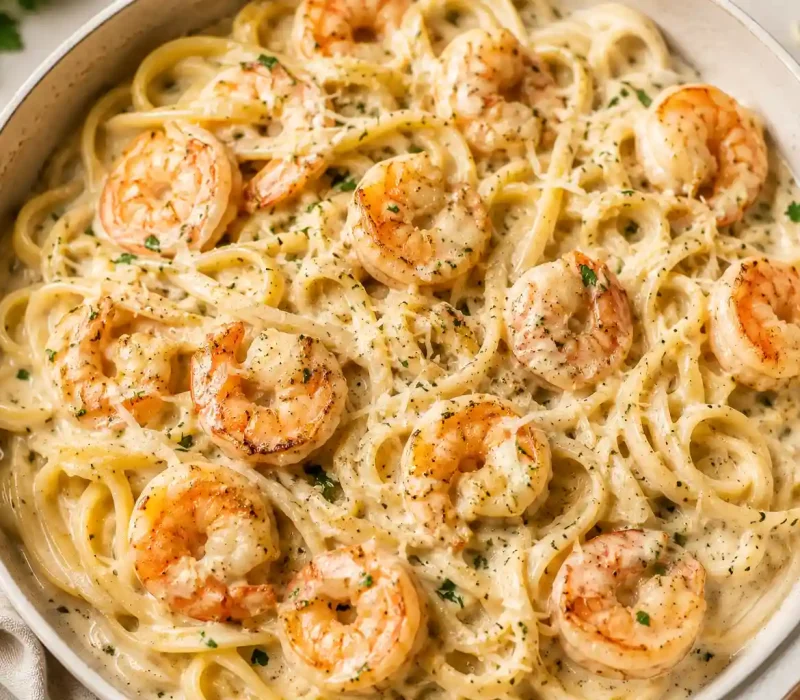
Garlic Shrimp Pasta is the kind of dinner that feels surprisingly elegant for how quickly it comes together. Juicy shrimp, buttery garlic, Parmesan cheese, and silky pasta are tossed in a creamy garlic sauce that tastes restaurant-quality but takes less than 30 minutes from start to finish.
This is one of my favorite quick seafood pasta recipes because it manages to feel rich and comforting without becoming overly heavy. The shrimp cook in just a couple of minutes, the garlic butter builds flavor fast, and the Parmesan creates a smooth, velvety sauce that clings perfectly to the pasta.
I’ve tested this recipe with several pasta shapes over the years, and linguine consistently gives the best texture because the noodles hold onto the creamy garlic Parmesan sauce beautifully. It’s simple enough for busy weeknights but still impressive enough for date night or entertaining friends.
What Is Garlic Shrimp Pasta?
Garlic Shrimp Pasta is a creamy Italian-inspired seafood pasta dish made with shrimp, garlic, butter, Parmesan cheese, cream, and pasta tossed together in a rich savory sauce.
The dish is especially popular because it combines:
- tender shrimp
- buttery garlic flavor
- creamy Parmesan sauce
- perfectly cooked pasta
into a fast, comforting dinner that feels restaurant-style without requiring complicated cooking techniques.
It’s commonly served as:
- a quick shrimp dinner
- a date night pasta recipe
- a seafood pasta meal
- a creamy shrimp linguine recipe
- a comforting weeknight pasta dish
Why You’ll Love This Garlic Shrimp Pasta Recipe
- Ready in about 25 minutes
- Creamy garlic Parmesan flavor
- Restaurant-style pasta at home
- High-protein seafood dinner
- Perfect for weeknights or special occasions
- Easy to customize with vegetables and spices
- Rich and satisfying without feeling too heavy
- Uses simple ingredients you can find almost anywhere
This is one of those reliable pasta recipes that feels much more impressive than the actual effort involved.
Why This Creamy Garlic Shrimp Pasta Works
A few simple techniques completely change the final texture and flavor.
- Shrimp cook very quickly, making this an ideal fast dinner recipe.
- Garlic butter creates the savory flavor base without needing complicated ingredients.
- Fresh Parmesan naturally thickens the sauce while adding rich umami flavor.
- Reserved pasta water emulsifies the sauce, helping it cling beautifully to the noodles.
- Linguine holds the creamy sauce especially well without becoming too heavy.
I tested this recipe once without adding pasta water, and the sauce felt thicker and slightly greasy instead of silky. Just a few spoonfuls completely smooth everything out.
I also noticed freshly grated Parmesan melts far better than pre-shredded cheese, which can sometimes leave the sauce grainy.
Ingredient Breakdown
Shrimp
Large shrimp work best because they stay juicy and tender while cooking quickly.
For best results:
- peeled and deveined shrimp
- thaw frozen shrimp fully
- pat shrimp dry before cooking
Dry shrimp sear properly and develop better flavor.
You can use:
- fresh shrimp
- frozen shrimp
- tail-on or tail-off shrimp
I usually remove the tails because it makes the pasta easier to eat.
Linguine Pasta
Linguine is my favorite pasta for creamy shrimp pasta because it holds onto the sauce beautifully without overpowering the shrimp.
Other great options include:
- spaghetti
- fettuccine
- tagliatelle
- penne
Fresh pasta also works well but cooks much faster.
Garlic
Fresh garlic is essential in this recipe.
Garlic provides:
- aroma
- savory depth
- buttery richness
- classic Italian-style flavor
I found finely minced garlic distributes flavor more evenly than sliced garlic in cream sauces.
Butter and Olive Oil
Using both creates better balance.
Butter adds:
- richness
- silky texture
- flavor
Olive oil helps prevent the butter from browning too quickly while cooking shrimp.
Heavy Cream
Heavy cream creates the rich velvety texture that makes this creamy shrimp pasta feel luxurious.
For lighter options:
- half-and-half
- whole milk with cornstarch
can work, though the sauce won’t feel quite as rich.
Parmesan Cheese
Freshly grated Parmesan adds:
- saltiness
- savory depth
- creaminess
- natural thickening
Avoid pre-shredded Parmesan if possible because it doesn’t melt as smoothly.
Fresh Parsley
Parsley brightens the richness and adds fresh flavor and color.
You can also use:
- basil
- thyme
- chives
depending on the flavor profile you prefer.
Equipment Needed
You only need a few basic kitchen tools:
A wide skillet works especially well because it gives the shrimp enough room to sear instead of steaming.
How to Make Garlic Shrimp Pasta
Step 1: Cook the Pasta
Bring a large pot of heavily salted water to a boil.
Cook the linguine until al dente according to package directions.
Before draining, reserve about 1 cup of pasta water.
The pasta should still have a slight bite because it finishes cooking slightly in the sauce later.
Step 2: Sear the Shrimp
Pat the shrimp completely dry using paper towels.
This step matters more than most people realize because excess moisture prevents proper searing.
Heat olive oil and butter in a large skillet over medium-high heat.
Once the shrimp hit the pan, they should sizzle immediately.
Season with:
- salt
- black pepper
- Cajun seasoning or Old Bay seasoning (optional)
Cook for about 1–2 minutes per side.
The shrimp are ready when they:
- turn pink
- curl slightly
- look opaque
Avoid cooking longer than necessary because shrimp become rubbery quickly.
Transfer the shrimp to a plate and set aside.
Step 3: Build the Garlic Butter Base
Reduce the heat slightly.
Add a little more butter if the skillet looks dry, then stir in the minced garlic.
Cook for about 30 seconds until fragrant.
The garlic should smell aromatic and buttery but not browned. Burnt garlic can make the sauce bitter very quickly.
Step 4: Create the Creamy Garlic Parmesan Sauce
Pour in the heavy cream and gently scrape up any browned bits from the skillet.
Those caramelized bits add a surprising amount of flavor to the final sauce.
Stir in the freshly grated Parmesan cheese.
The sauce should start looking:
- creamy
- silky
- smooth
- lightly thickened
Gradually add reserved pasta water until the sauce reaches your preferred consistency.
If the sauce ever feels too tight or thick, another splash of pasta water fixes it almost instantly.
Step 5: Combine the Pasta and Shrimp
Add the cooked linguine to the skillet and toss gently until fully coated.
Return the shrimp to the pan and stir everything together carefully.
The sauce should cling lightly to the noodles instead of pooling heavily underneath.
Step 6: Garnish and Serve
Top with:
- chopped parsley
- extra Parmesan
- black pepper
- red pepper flakes
- lemon wedges
Serve immediately while the sauce is still creamy and glossy.
Expert Tips for the Best Garlic Shrimp Pasta
Pat the Shrimp Completely Dry
Dry shrimp develop much better color and flavor
Don’t Overcook the Shrimp
Shrimp cook incredibly fast. As soon as they turn pink and opaque, remove them from the heat.
Use Freshly Grated Parmesan
Fresh Parmesan melts smoother and creates silkier sauce.
Salt the Pasta Water Well
Well-seasoned pasta water improves the flavor of the entire dish.
Save Extra Pasta Water
Pasta water is the secret to silky restaurant-style pasta sauce.
Common Mistakes to Avoid
- Overcooking the Shrimp Rubbery shrimp is the most common issue with shrimp pasta recipes.
- Burning the Garlic Garlic burns fast and becomes bitter quickly
- Using Wet Shrimp Moisture prevents proper searing.
- Skipping Pasta Water Pasta water helps emulsify the sauce naturally.
- Using Pre-Shredded Parmesan Pre-shredded cheese often creates grainy sauce texture.
Variations and Customizations
Spicy Garlic Shrimp Pasta
Add:
- Cajun seasoning
- chili flakes
- chili crisp
for heat.
Lemon Garlic Shrimp Pasta
Add:
- lemon zest
- fresh lemon juice
for brighter flavor.
Garlic Butter Shrimp Pasta
Skip the cream entirely for a lighter garlic butter sauce.
Garlic Shrimp Pasta with White Wine
Add a splash of dry white wine before the cream for deeper restaurant-style flavor.
Pinot Grigio or Sauvignon Blanc both work beautifully.
Vegetable Additions
Great additions include:
- spinach
- cherry tomatoes
- mushrooms
- asparagus
- peas
Spinach works especially well because it wilts quickly into the warm sauce.
Low-Carb Garlic Shrimp Pasta
Serve the shrimp and sauce over:
- zucchini noodles
- spaghetti squash
- roasted vegetables
- cauliflower mash
instead of pasta.
What to Serve With Garlic Shrimp Pasta
This creamy shrimp linguine pairs beautifully with lighter side dishes.
Some favorites include:
- Caesar salad
- garlic bread
- focaccia
- roasted asparagus
- broccoli
- green beans
- lemon salad
Garlic bread is especially good for soaking up extra garlic Parmesan sauce.
Is Garlic Shrimp Pasta Healthy?
Garlic Shrimp Pasta can absolutely fit into a balanced meal.
Shrimp provides:
- lean protein
- important minerals
- low fat protein source
To lighten the recipe:
- reduce the pasta portion
- add vegetables
- use half-and-half instead of cream
- reduce butter slightly
It still feels rich and comforting while providing solid protein.
Storage Instructions
Refrigerator
Store leftovers in an airtight container for up to 3 days.
The sauce thickens slightly after chilling.
Reheating Instructions
Stovetop
Reheat gently over medium-low heat with:
- milk
- cream
- or pasta water
to loosen the sauce.
Microwave
Reheat in short intervals while stirring between rounds.
Avoid overheating because shrimp can become rubbery.
Make Ahead Tips
You can prep several ingredients ahead:
- peel shrimp
- grate Parmesan
- mince garlic
- chop parsley
The sauce itself is best made fresh right before serving.
Frequently Asked Questions
Can I use frozen shrimp for Garlic Shrimp Pasta?
Yes. Thaw the shrimp completely and pat them dry before cooking to avoid excess moisture in the sauce.
Why did my shrimp turn rubbery?
Shrimp overcook very quickly. Cook them only until pink and opaque, usually about 1–2 minutes per side.
What pasta works best for Garlic Shrimp Pasta?
Linguine, spaghetti, and fettuccine work especially well because they hold creamy garlic sauces beautifully.
Can I make Garlic Shrimp Pasta without heavy cream?
Yes. Half-and-half or whole milk thickened with cornstarch can create a lighter version of the sauce.
Can I add vegetables to Garlic Shrimp Pasta?
Absolutely. Spinach, mushrooms, asparagus, peas, and cherry tomatoes all work beautifully.
Is Garlic Shrimp Pasta good for meal prep?
It’s best fresh, but leftovers reheat surprisingly well if warmed gently with a splash of cream or milk.
Can I make this recipe dairy-free?
Yes. Use dairy free butter, plant-based cream, and vegan Parmesan alternatives.
Final Thoughts
Garlic Shrimp Pasta is one of those reliable pasta dinners that feels comforting, elegant, and surprisingly easy all at once. The buttery garlic sauce, tender shrimp, silky linguine, and Parmesan create a rich restaurant-style meal without requiring complicated techniques or hours in the kitchen.
What I love most is how flexible it is. Some nights I keep it classic and creamy, while other nights I add lemon, spinach, or Cajun seasoning depending on the mood. Either way, it always feels satisfying and a little special.
If you’re looking for a quick shrimp pasta recipe that’s creamy, flavorful, and genuinely easy to make, this Garlic Shrimp Pasta deserves a permanent spot in your dinner rotation.
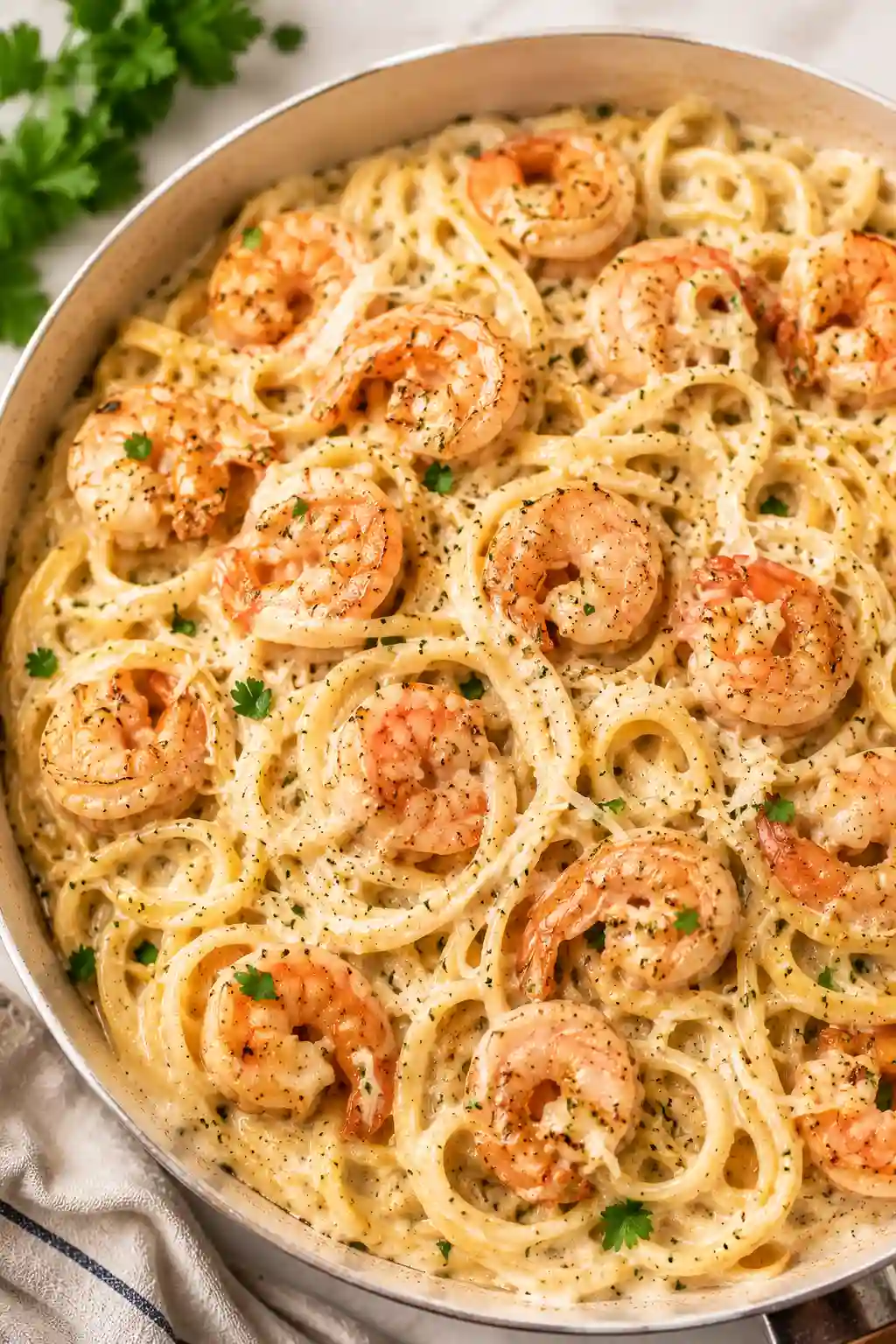
Garlic Shrimp Pasta Recipe
Notes
Ingredients
- 8 oz linguine
- 1 tablespoon olive oil
- 1½ tablespoons butter
- 1 lb large shrimp, peeled, deveined, and patted dry
- ½ teaspoon salt
- ¼ teaspoon black pepper
- 1 tablespoon Cajun seasoning or Old Bay seasoning (optional)
- 4 garlic cloves, finely minced
- ¾ cup heavy cream, room temperature
- ¾ cup freshly grated Parmesan cheese
- ¼ cup chopped parsley
- ½–1 cup reserved pasta water
Optional Garnishes
- Lemon wedges
- Red pepper flakes
- Extra Parmesan cheese
Instructions
- Cook linguine in salted water until al dente. Reserve pasta water before draining.
- Heat olive oil and butter in a skillet over medium-high heat.
- Cook shrimp for 1–2 minutes per side until pink and opaque. Remove and set aside.
- Add garlic to the skillet and cook until fragrant.
- Pour in heavy cream and stir in Parmesan cheese.
- Add reserved pasta water until the sauce becomes silky and smooth.
- Toss pasta into the sauce.
- Return shrimp to the skillet and stir gently.
- Garnish with parsley, Parmesan, and lemon wedges before serving.
Notes
- Pat shrimp dry before cooking for better searing.
- Fresh Parmesan melts much smoother than pre-shredded cheese.
- Avoid overcooking shrimp.
- Pasta water helps create silky restaurant-style sauce texture.