This post contains affiliate links. As an Amazon Associate, I earn from qualifying purchases at no extra cost to you.
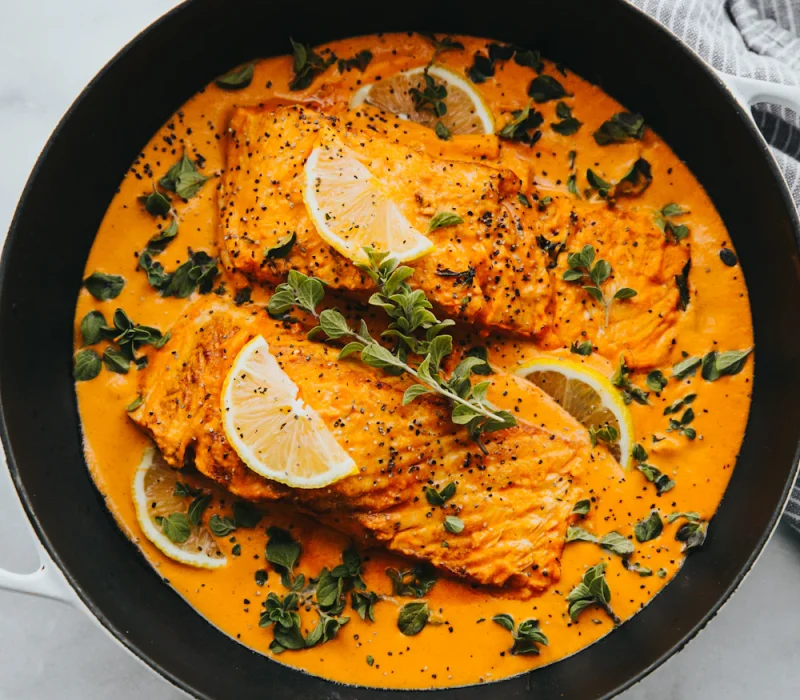
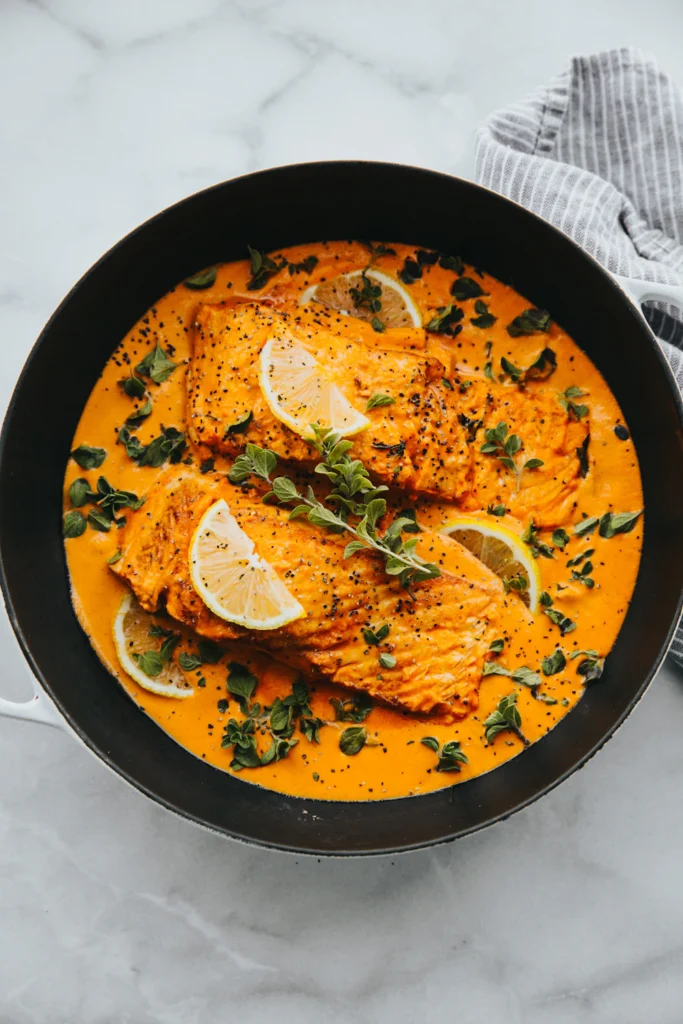
Jump to RecipeThis easy salmon coconut curry is creamy, fragrant and ready in about 30 minutes. Tender chunks of salmon are gently poached in a rich Thai inspired sauce made with red curry paste, coconut milk, garlic, fresh ginger, a splash of fish sauce and a squeeze of lime, along with sweet red bell pepper and baby spinach. The result is a silky, gently spiced curry that tastes like it came from your favorite Thai restaurant.
It is naturally gluten free and dairy free, packed with omega 3s and perfect over jasmine rice. If you love curry nights, try my Thai green curry, chicken tikka masala or coconut curry chicken meatballs.
Why You Will Love This Salmon Curry
- Ready in 30 minutes. Salmon cooks quickly right in the sauce.
- Creamy and aromatic. Coconut milk, curry paste, garlic and ginger.
- Healthy and balanced. Lean protein, healthy fats and vegetables.
- Gluten free and dairy free. No substitutions needed.
- One pan. Simple prep and easy cleanup.
Ingredients You Will Need
Exact amounts are in the recipe card below.
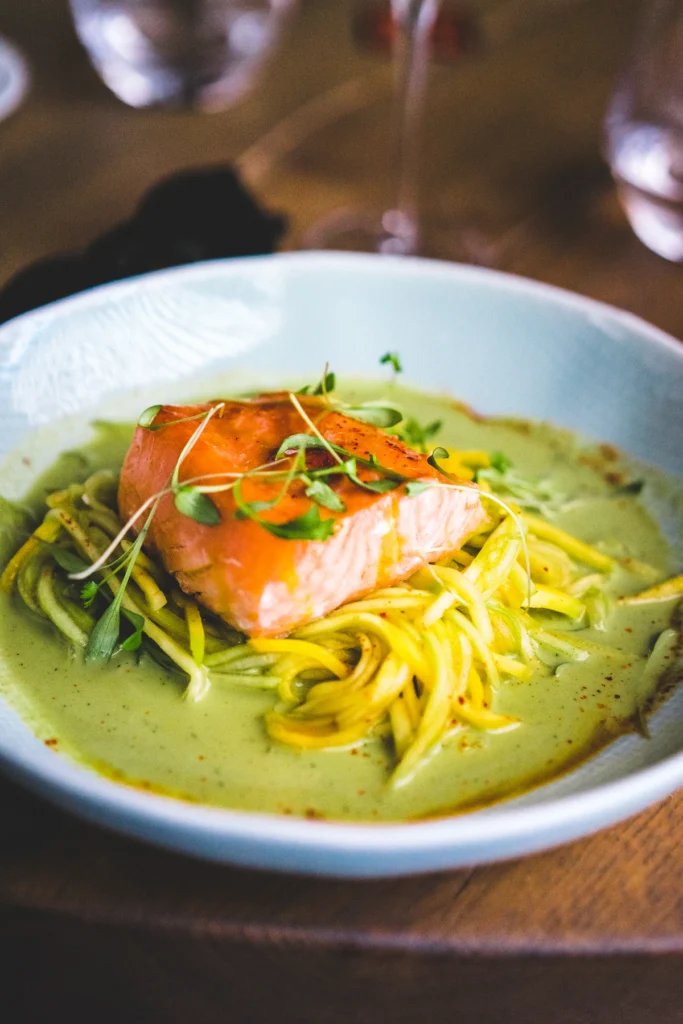
- Salmon fillets: skinless, cut into 1 1/2 inch chunks. Fresh or thawed frozen salmon both work.
- Coconut oil or neutral oil: for cooking the aromatics.
- Onion, garlic and fresh ginger: the fragrant base of the curry.
- Thai red curry paste: brings heat, lemongrass and chili flavor.
- Full fat coconut milk: makes the sauce rich and creamy.
- Chicken or vegetable broth: loosens the sauce.
- Fish sauce: adds savory umami. Use soy sauce if you prefer.
- Brown sugar or honey: balances the heat and saltiness.
- Red bell pepper and baby spinach: add color, sweetness and nutrients.
- Lime, cilantro and Thai basil: for a bright, fresh finish.
How to Make Salmon Coconut Curry
1. Season the salmon
Pat the salmon chunks dry and season lightly with salt. Set aside while you make the sauce.
2. Cook the aromatics
Heat the oil in a large, deep skillet or Dutch oven over medium heat. Add the onion and cook for 4 to 5 minutes until soft. Add the garlic and ginger and cook for 1 minute until fragrant.
3. Bloom the curry paste
Stir in the red curry paste and cook for 1 minute, stirring constantly. Frying the paste briefly in oil releases its aromas and deepens the flavor.
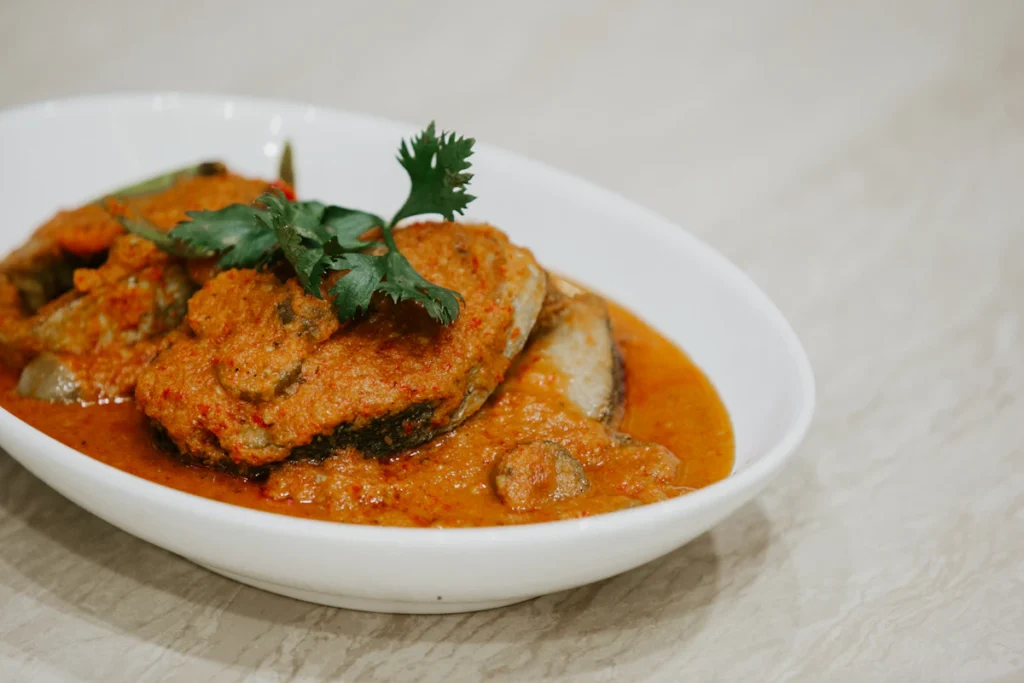
4. Build the sauce
Pour in the coconut milk and broth, then add the fish sauce and brown sugar. Whisk until smooth and bring to a gentle simmer. Add the sliced red bell pepper and simmer for 5 minutes until slightly softened.
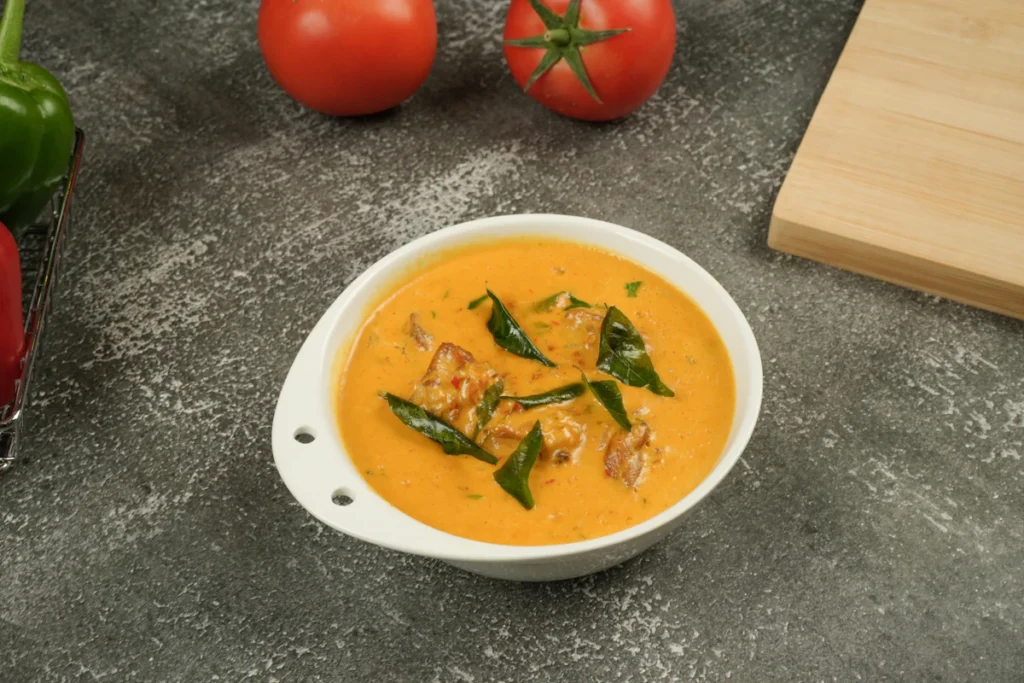
5. Poach the salmon
Nestle the salmon chunks into the sauce in a single layer. Cover and simmer gently for 5 to 7 minutes, until the salmon is opaque and flakes easily, or reaches 145°F on an instant read thermometer. Avoid stirring too much so the salmon stays in nice chunks.
6. Finish and serve
Gently fold in the spinach until wilted. Squeeze in the lime juice and taste for seasoning. Serve over jasmine rice and garnish with cilantro, Thai basil and extra lime wedges.
Tips for the Best Salmon Curry
- Use full fat coconut milk. Light coconut milk makes a thinner sauce.
- Do not boil the sauce hard. Gentle simmering keeps the salmon tender.
- Cut salmon into large chunks. They hold together better as they cook.
- Taste your curry paste. Brands vary in heat, so start with less and add more.
- Finish with lime. Acid brightens the rich coconut sauce.
Choosing the Best Salmon
Any type of salmon works in this curry. Atlantic salmon is mild and buttery with a higher fat content, which keeps it moist in the sauce. Wild salmon such as sockeye or coho has a deeper color and a richer, more pronounced flavor, but it is leaner, so be careful not to overcook it. Look for fillets that are firm, moist and bright, with a fresh, clean smell. Skinless fillets are easiest for curry.
If you only have skin on salmon, place it skin side down on a cutting board and use a sharp knife to slide between the skin and flesh. Frozen salmon is a convenient, budget friendly option. Thaw it overnight in the fridge and pat it dry before cutting.
Is Salmon Curry Healthy?
Yes. Salmon is one of the best sources of omega 3 fatty acids, which support heart and brain health, and it is rich in high quality protein, vitamin D and B vitamins. Coconut milk adds richness and satisfying fats, and bell peppers and spinach contribute vitamin C, fiber and iron. Each serving has about 480 calories without rice. To lighten it, use half light coconut milk and add extra vegetables.
Easy Variations
- Shrimp curry: swap the salmon for shrimp and cook for 3 to 4 minutes.
- Green curry: use green curry paste for a brighter, herbier flavor.
- More vegetables: add snap peas, zucchini, bamboo shoots or broccoli.
- Extra spicy: add sliced Thai chilies or chili flakes.
- Tofu curry: use extra firm tofu for a vegetarian version and soy sauce instead of fish sauce.
Understanding Thai Curry Paste
Thai curry pastes are concentrated blends of aromatics and spices that form the backbone of a curry. Red curry paste is made with dried red chilies, lemongrass, galangal, garlic, shallots, shrimp paste and spices like coriander and cumin. It is warm, savory and moderately spicy. Green curry paste uses fresh green chilies and herbs, so it tastes brighter and often hotter, while yellow curry paste includes turmeric and is milder and sweeter.
Store bought brands vary a lot in heat and saltiness, so it is best to start with 2 tablespoons, taste the sauce and add more if you like. Frying the paste in oil for a minute before adding the coconut milk is an important step, because it releases the fragrant oils and removes any raw, harsh flavor. Once opened, keep curry paste in the fridge, where it lasts for several weeks, or freeze it in tablespoon portions.
How to Keep Salmon From Falling Apart
Salmon is delicate, so a little care keeps the chunks beautiful. Cut the fillets into large, even pieces about 1 1/2 inches wide so they hold together. Make sure the sauce is at a gentle simmer, not a rolling boil, before adding the fish. Nestle the pieces into the sauce in a single layer and spoon some sauce over the top, then cover the pan so the salmon poaches in the steam.
Resist the urge to stir. After 5 to 7 minutes, check one piece. It should be opaque and just flaking. Fold in the spinach gently at the very end with a spatula, lifting from the bottom of the pan rather than stirring in circles.
Make It Ahead for Busy Nights
You can make the curry sauce with the peppers up to 3 days ahead and keep it in the fridge. When you are ready to eat, bring the sauce back to a gentle simmer, add the fresh salmon and finish with spinach and lime. Dinner will be on the table in about 10 minutes, and the salmon will taste freshly cooked.
Common Mistakes to Avoid
- Overcooking the salmon. It turns dry and chalky. Pull it as soon as it flakes.
- Skipping the curry paste bloom. The sauce will taste flat.
- Boiling the coconut milk hard. It can separate and turn oily.
- Adding too much fish sauce. It is very salty, so add it gradually.
What to Serve With Salmon Curry
Fluffy jasmine rice is the classic choice for soaking up the sauce. Coconut rice, brown rice, rice noodles or cauliflower rice also work. Serve it with a cucumber salad, steamed bok choy or warm naan. For another quick seafood dinner, try my easy shrimp stir fry.
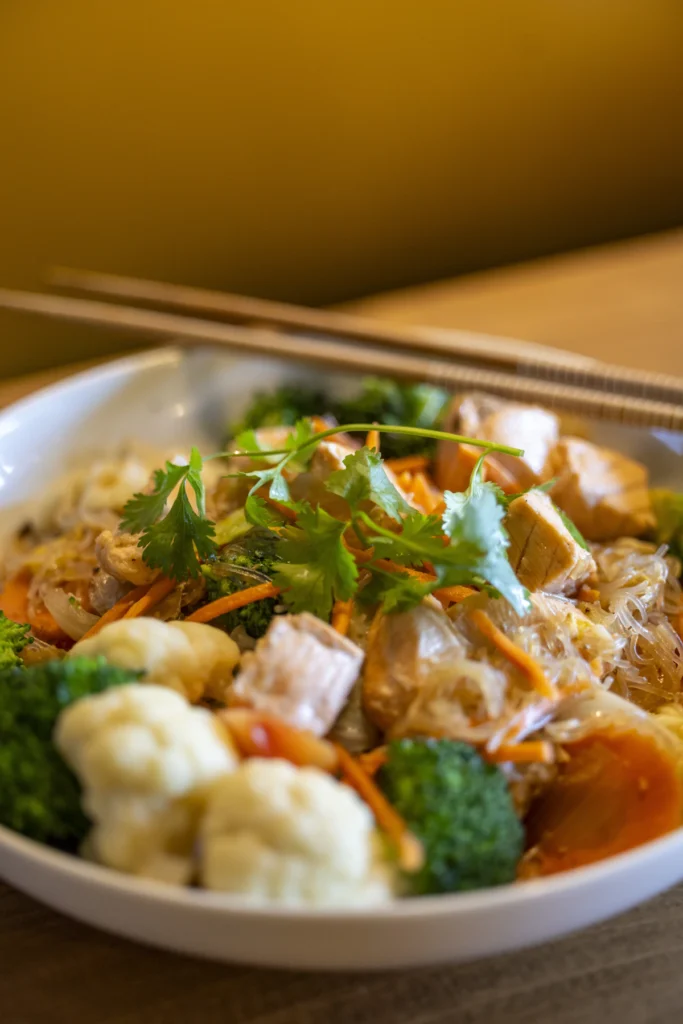
Storage and Reheating
- Refrigerator: store leftovers in glass meal prep containers for up to 2 days.
- Reheating: warm gently on the stovetop over low heat until just hot. Overheating can dry out the salmon.
- Freezing: the sauce freezes well without salmon for up to 3 months. Add fresh salmon when reheating.
- Food safety: cook salmon to 145°F and refrigerate leftovers within 2 hours.
Frequently Asked Questions
Can I use frozen salmon?
Yes. Thaw it in the fridge overnight and pat it dry before cutting and cooking.
How spicy is this salmon curry?
It is mildly spicy. Use more or less curry paste to adjust the heat.
Can I make it without fish sauce?
Yes. Use soy sauce or tamari with a pinch of salt.
What type of curry paste is best?
Thai red curry paste is classic. Green or yellow curry paste also work.
How do I know when salmon is cooked?
It turns opaque and flakes easily with a fork, and it reaches 145°F.
Can I use light coconut milk?
Yes, but the sauce will be thinner. Simmer a little longer to thicken.
Final Thoughts
This easy salmon coconut curry turns everyday salmon into a restaurant quality meal in about 30 minutes. The creamy, aromatic sauce, tender salmon and bright lime make every bite satisfying. Serve it over jasmine rice for a cozy, healthy dinner that everyone will love.
Nutrition Per Serving
| Nutrient | Amount |
|---|---|
| Calories | 480 kcal |
| Protein | 36 g |
| Carbohydrates | 12 g |
| Fat | 33 g |
| Saturated Fat | 19 g |
| Fiber | 2 g |
| Sugar | 6 g |
| Sodium | 760 mg |
Nutrition values are estimates calculated from standard ingredient data and will vary with the brands and exact amounts you use.
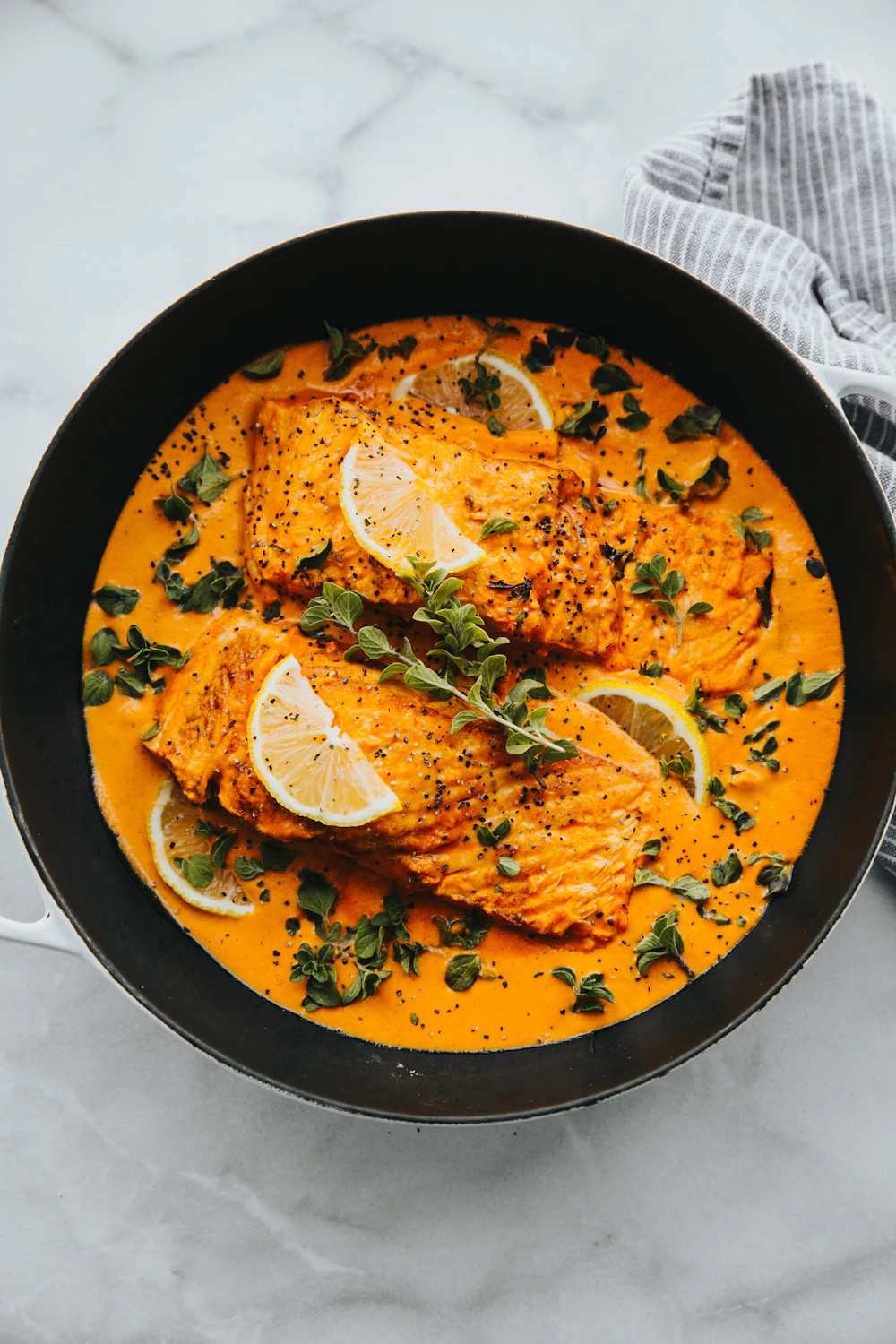
Easy Salmon Coconut Curry
Ingredients
Method
- Pat the salmon dry and season with salt.
- Cook the onion in oil 4 to 5 minutes, then add the garlic and ginger for 1 minute.
- Stir in the curry paste and cook 1 minute.
- Add the coconut milk, broth, fish sauce and sugar, bring to a simmer and add the bell pepper for 5 minutes.
- Add the salmon, cover and simmer gently 5 to 7 minutes until 145°F.
- Fold in the spinach, add lime juice and serve over rice with herbs.