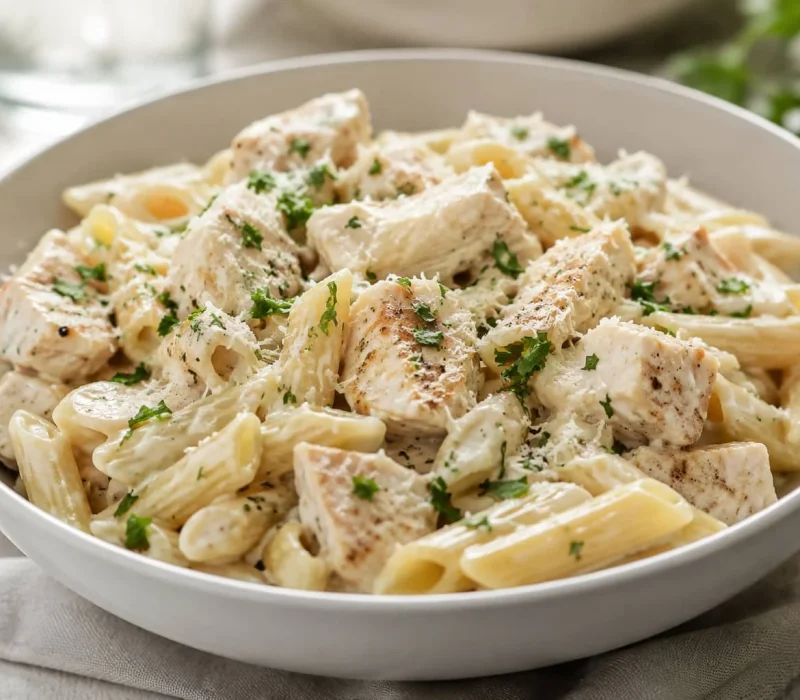
Creamy Philadelphia chicken pasta is seared chicken and pasta tossed in a garlic Parmesan cream cheese sauce, ready in 30 minutes.
This is the kind of weeknight dinner that tastes like it took more effort than it did. Cream cheese stands in for heavy cream, giving the sauce a smooth, slightly tangy richness without needing a separate cream and flour situation. Golden seared chicken, short pasta, and a garlic Parmesan sauce come together in one skillet, and the whole thing is done in about 30 minutes.
KEY TAKEAWAYS
- Cream cheese does the job heavy cream usually would here, cubed and melted gently over medium low heat so it never comes close to a hard boil
- Starchy reserved pasta water isn’t just a way to thin the sauce, it’s what actually helps the fat and liquid bind into something smooth instead of separating
- Brown the chicken in a single, uncrowded layer, a packed pan traps steam and leaves you with pale, boiled looking chicken instead of a golden sear
- Add the Parmesan off the heat, adding it while the pan is still hot and bubbling is the most common reason the sauce turns grainy
- The sauce should look slightly looser in the skillet than you want it on the plate, it keeps thickening as it rests and the pasta keeps absorbing liquid
A Short History of Philadelphia Cream Cheese
Philadelphia cream cheese has a genuinely surprising backstory for something so closely tied to a specific city’s name. According to Wikipedia, it was invented in 1872, not in Philadelphia at all, but by a dairy farmer named William Lawrence in Chester, New York. Lawrence was actually trying to recreate Neufchâtel, a soft French cheese, and ended up adding too much cream by mistake, creating a richer, more spreadable product instead.
It wasn’t marketed under the Philadelphia name until 1880, chosen specifically because the Philadelphia area had a strong reputation for high quality dairy products at the time, even though the cheese itself had nothing to do with the city. That branding decision worked well enough that the product still carries the name more than 150 years later.
Why This Recipe Works
The two things that make or break this dish are heat control and liquid control. Cream cheese, unlike heavy cream, can separate or turn grainy if it hits a hard boil, so it needs to melt gently into warm broth rather than being dumped into a bubbling pan. The second factor, reserved pasta water, is doing more work than it might seem. America’s Test Kitchen explains that starch released into the cooking water helps bridge fat and water based ingredients together into a proper emulsion, which is exactly why a splash of starchy pasta water turns a thick, clumpy sauce into something that clings evenly to every piece of pasta instead of pooling at the bottom of the pan.
Ingredient Notes For Philadelphia Chicken Pasta
Chicken: Boneless, skinless chicken breast works well here, cut into roughly 1 inch pieces so they cook evenly. Chicken thighs are a good substitute if you prefer a richer flavor, they’re more forgiving if slightly overcooked.
Cream cheese: Use full fat, block style Philadelphia (or another plain full fat cream cheese) and cut it into small cubes so it melts smoothly. Let it sit out while you prep everything else, it doesn’t need to be fully room temperature, just not fridge cold.
Pasta: Penne or rigatoni hold the sauce well thanks to their ridges and hollow centers. Fusilli works too. Reserve at least a cup of the starchy cooking water before draining, you’ll need it.
Parmesan: Freshly grated melts far more smoothly than pre shredded, which is often coated with anti caking starch that can leave the sauce slightly grainy.
Broth: Lower sodium chicken broth gives you more control over the final seasoning, since the cream cheese and Parmesan both already carry salt.
How to Make Creamy Philadelphia Chicken Pasta
Step 1: Cook the pasta. Bring a large pot of salted water to a boil and cook the pasta until just al dente, checking a couple minutes before the package’s shortest suggested time. Before draining, scoop out at least a cup of the pasta water. Don’t rinse the pasta.
Step 2: Sear the chicken. While the pasta cooks, season the chicken with salt, pepper, and Italian seasoning. Heat the olive oil in a wide skillet over medium high heat and add the chicken in a single, uncrowded layer. Cook undisturbed for 3 to 4 minutes until golden on the first side, then flip and cook another 2 to 3 minutes, until it reaches 165°F (74°C) internally. Work in batches if needed, an overcrowded pan traps steam and stops the chicken from browning properly. Transfer to a plate.
Step 3: Build the sauce base. Lower the heat to medium and add the onion to the same skillet. Cook 3 to 4 minutes until soft, then add the garlic and cook just 30 seconds, until fragrant, garlic burns fast and turns bitter if it goes any longer.
Step 4: Melt in the cream cheese. Pour in the chicken broth, scraping up any browned bits from the bottom of the pan. Lower the heat to medium low, add the cubed cream cheese, and stir gently until it melts smoothly into the broth. Keep it well below a hard boil the whole time.
Step 5: Add the pasta. Toss the drained pasta into the sauce along with a splash of the reserved pasta water. Toss over low heat, adding more pasta water a tablespoon at a time, until the sauce coats the pasta evenly without pooling at the bottom of the pan.
Step 6: Finish with Parmesan and chicken. Remove the skillet from direct heat before stirring in the Parmesan, this keeps it from turning grainy. Return the seared chicken and any juices from the plate, tossing just until warmed through, further simmering can dry the chicken out.
Step 7: Rest briefly and serve. Let the pasta sit off the heat for a minute or two, the sauce should look a little looser in the pan than you want it on the plate, since it keeps thickening as it sits. Stir in the parsley and serve right away.
Common Problems and Fixes
| Problem | Likely Cause | Fix |
| Sauce turned grainy | Cream cheese or Parmesan hit too much direct heat | Melt cream cheese over medium low heat only; add Parmesan off the heat, not while the pan is bubbling |
| Sauce looks oily or separated | Sauce reached a hard boil | Take the pan off the heat and whisk in a splash of warm pasta water to bring it back together |
| Sauce is too thick | Not enough pasta water added, or it sat too long before serving | Add reserved pasta water a tablespoon at a time until it loosens up |
| Sauce is watery | Too much broth or pasta water added at once | Toss over low heat for a minute or two so the pasta absorbs some of the excess liquid |
| Chicken came out dry | Overcrowded pan, or simmered too long once returned to the sauce | Sear in a single layer, working in batches if needed; only warm the chicken through at the end, don’t re simmer it |
Storage and Food Safety
Refrigerate leftovers within two hours of cooking (one hour if your kitchen is above 90°F), in a shallow, airtight container so it cools quickly and evenly. It keeps well in the fridge for 3 to 4 days. To reheat, warm gently on the stovetop or in the microwave with a splash of broth, milk, or water, stirring frequently, and avoid a hard boil for the same reason you avoided one while cooking. Leftovers containing chicken should be reheated until they reach 165°F (74°C) throughout. This dish isn’t ideal for freezing, the cream cheese sauce tends to look a little grainy after thawing, so the fridge is the better option if you’re planning to eat it within the week.
Variations to Try
- Spinach: Stir in a few cups of fresh baby spinach right after returning the pasta and chicken to the pan, and let it wilt for a minute or two
- Mushrooms: Sauté sliced mushrooms separately until golden before adding them back in with the chicken, adding them raw releases water and prevents proper browning
- Bacon: Cook and crumble bacon first, using a little of the rendered fat in place of some of the olive oil
- Sun dried tomato: A few tablespoons of chopped sun dried tomatoes stirred in with the garlic add a tangy, slightly sweet note
If you like this style of dish, our Creamy Rigatoni with Boursin Cheese uses a similar cheese based sauce approach, and our Creamy Sun Dried Tomato Spinach Pasta is a good next recipe to try if you want to lean further into that variation.
Serving Suggestions
A simple green salad with a sharp vinaigrette or roasted broccoli both cut nicely through the richness of the sauce. Garlic bread is good for scraping up whatever sauce is left in the bowl. If you’re looking for another quick, one pan chicken and pasta option for the rest of the week, our One Pan Tomato Spinach Chicken Pasta follows a similarly easy weeknight structure.
Frequently Asked Questions
Can I use light Philadelphia cream cheese?
Yes, though the sauce will be a bit less rich and slightly softer, since reduced fat cream cheese tends to carry more moisture. Add the broth gradually and judge the consistency once everything is combined rather than adding it all at once.
Why did my sauce turn grainy?
Almost always too much direct heat. Melt the cream cheese over medium low heat only, and always add the Parmesan after taking the pan off the burner rather than while it’s still bubbling.
Can I use rotisserie chicken instead of searing my own?
Yes, shred or chop it and skip the searing step entirely. Add it in at the same point you’d return home seared chicken, just to warm through, since it’s already cooked. Taste before adding extra salt, rotisserie chicken is often well seasoned already.
What’s the best pasta shape for this recipe?
Penne, rigatoni, or fusilli all work well because their shape holds the sauce. Spaghetti works too, but it takes a bit more careful tossing to coat evenly.
Can I make this ahead of time?
The finished dish is best fresh, since the pasta keeps absorbing sauce as it sits. You can prep the chicken, garlic, onion, and grated Parmesan ahead of time and store them separately, then cook everything together shortly before serving.
Can I freeze creamy Philadelphia chicken pasta?
It’s not the best candidate for freezing, the cream cheese sauce can look slightly grainy once thawed. If you do freeze it, thaw overnight in the fridge and reheat gently with a splash of broth or milk, expecting a slightly different texture than when it was fresh.
Conclusion
Two things make this dish work keeping the heat gentle so the cream cheese never gets the chance to split, and using that starchy pasta water to bring everything together into a sauce that actually clings instead of pooling. Once you’ve got those two details down, this comes together fast enough for a regular weeknight, with a sauce that tastes considerably richer than the 30 minutes it takes to make it.
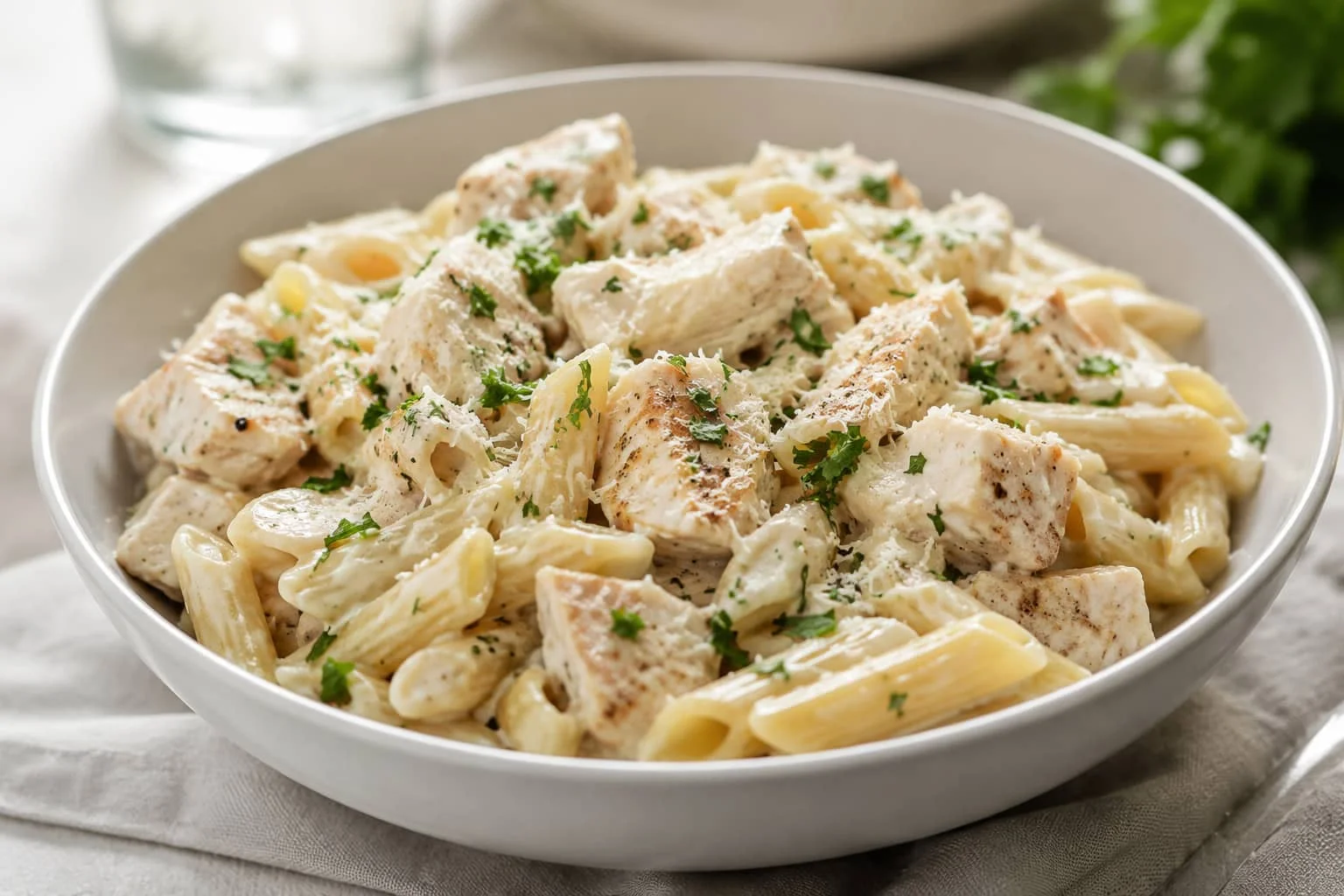
Philadelphia Chicken Pasta Recipe
Notes
- 12 oz (340g) penne, rigatoni, or fusilli
- 1 lb (450g) boneless, skinless chicken breast, cut into 1 inch pieces
- 1 tbsp olive oil
- ½ tsp salt, plus more to taste
- ½ tsp black pepper
- 1 tsp Italian seasoning
- 1 small onion, finely diced
- 3 cloves garlic, minced
- 8 oz (225g) Philadelphia cream cheese, cubed
- ¾ cup (180ml) lower sodium chicken broth
- ½ cup (45g) freshly grated Parmesan
- Up to 1 cup reserved pasta water
- 2 tbsp chopped fresh parsley
- Bring a large pot of salted water to a boil. Cook pasta until just al dente, checking a couple minutes early. Reserve 1 cup of pasta water before draining. Do not rinse.
- Season the chicken with salt, pepper, and Italian seasoning. Heat olive oil in a wide skillet over medium high heat. Sear chicken in a single layer, 3 to 4 minutes per side, until golden and cooked through (165°F / 74°C). Transfer to a plate.
- Lower heat to medium. Add onion and cook 3 to 4 minutes until soft. Add garlic and cook 30 seconds until fragrant.
- Pour in the chicken broth, scraping up browned bits. Lower heat to medium low, add the cream cheese, and stir until melted and smooth. Keep well below a hard boil.
- Add the drained pasta and a splash of pasta water. Toss over low heat, adding more pasta water gradually, until the sauce coats the pasta evenly.
- Remove from heat and stir in the Parmesan. Return the chicken and any juices, tossing just until warmed through.
- Let rest 1 to 2 minutes off the heat. Stir in parsley and serve immediately.