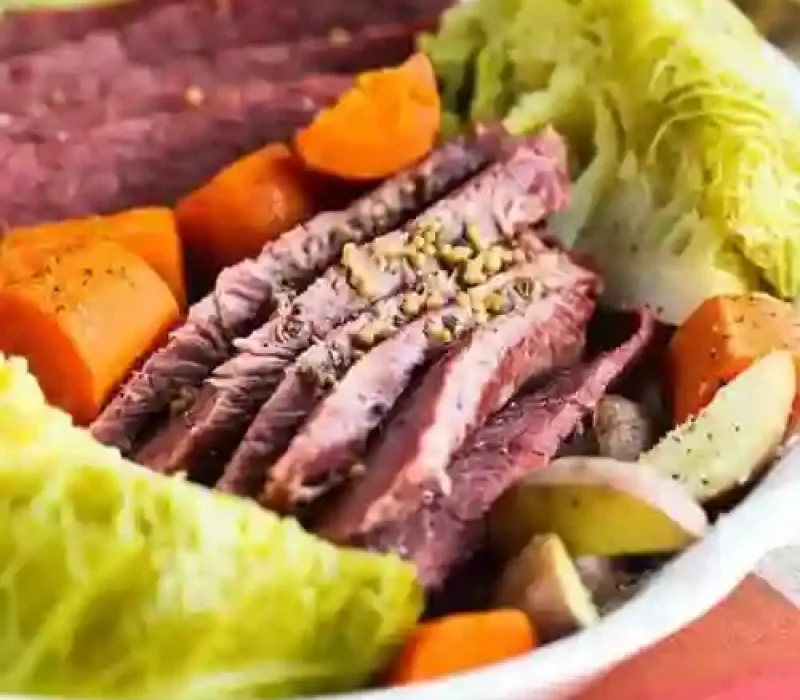
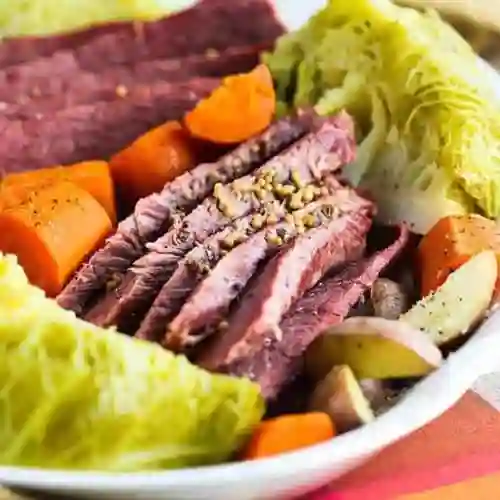
Slow cooker corned beef and cabbage is my favorite kind of dinner: you do about 15 minutes of work, walk away, and the crockpot hands you a fork tender brisket with potatoes, carrots, and cabbage that taste like they simmered all day, because they did. It’s the classic St. Patrick’s Day plate, but it’s too good to save for one day in March. The secret to getting it right isn’t effort, it’s timing: cook the brisket low and slow until it’s truly fork-tender, add the potatoes and carrots early enough to soften, and drop the cabbage in only for the last stretch so it stays silky instead of soggy.
This is a genuine set-and-forget meal. One pot, a handful of ingredients, and a brisket that slices into tender, savory ribbons with almost no babysitting.
Key Takeaways
- Cook to fork-tender, not just to time: corned beef is done when a fork slides in and twists easily, usually 8 hours on low.
- Stage the vegetables: potatoes and carrots need the last 3–4 hours; cabbage only needs the last 1–2 so it doesn’t turn to mush.
- Rinsing is optional: rinse the brisket to tame the salt, or skip it for a brinier, more traditional flavor.
- Slice against the grain after a 10–15 minute rest for tender, not chewy, pieces.
- Swap in a stout like Guinness for part of the water to deepen the broth.
Why You’ll Love This Recipe
This recipe stays in my rotation because it delivers a showpiece dinner with weeknight-level effort, and it’s almost impossible to mess up once you know the timing.
It’s completely hands-off, so the slow cooker does the work while you don’t. It feeds a crowd, which makes it perfect for St. Patrick’s Day, Sunday dinner, or a make-ahead week of lunches. The leftovers are arguably better than the first meal, turning into Reuben sandwiches, corned beef hash, or a quick breakfast skillet. And it’s naturally gluten-free and low-effort enough that even a first-timer can pull it off.
What Is Corned Beef and Cabbage?
Corned beef and cabbage is a hearty dish of salt-cured beef brisket slow-cooked with cabbage and root vegetables. “Corned” refers to the large grains of rock salt, historically called corns, used to cure the beef in a seasoned brine.
Here’s the fun part: it isn’t actually a traditional Irish dish. As its Irish-American corned beef history explains, Irish immigrants in America swapped their traditional bacon for corned beef because it was cheap and plentiful in local markets, and the pairing with cabbage became a St. Patrick’s Day icon in North America rather than in Ireland. Knowing that helps explain the flavor: it’s a briny, peppery, deeply savory cut that rewards long, gentle cooking.
Ingredients You’ll Need
This is a short, forgiving ingredient list. Here’s what each piece brings.
Corned beef brisket. A 3 to 4 pound cured brisket, almost always sold with a seasoning packet. The flat cut slices neatly; the point cut is fattier and more tender. Either works beautifully in a slow cooker.
The spice packet. That little packet is a blend of pickling spices like peppercorns, mustard seed, coriander, and bay. If yours is missing, a tablespoon of pickling spice tied in cheesecloth does the same job.
Potatoes. Baby red or gold potatoes hold their shape through long cooking. Cut them into 2-inch chunks so they cook evenly.
Carrots. Cut into thick 2-inch pieces. Thin coins overcook and disappear into the broth.
Green cabbage. Cut into sixths through the core so the wedges hold together instead of falling apart.
Onion and garlic. They melt into the broth and build the savory base.
Liquid. Water is classic, but a dark stout or beef broth adds real depth. Whole-grain mustard for serving is non-negotiable at my table.
Here’s a quick swap guide for common substitutions:
| Ingredient | Substitute | Notes |
| Missing spice packet | 1 tbsp pickling spice | Tie in cheesecloth for easy removal |
| Water | Stout, beer, or beef broth | Richer, maltier broth; Guinness is classic |
| Red potatoes | Yukon gold or fingerlings | Any waxy potato that holds its shape |
| Green cabbage | Savoy cabbage | Milder, more tender leaves |
| Whole-grain mustard | Horseradish or Dijon | For serving; adds a sharp, bright kick |
Equipment You’ll Need
You need very little, but the right pot matters for a brisket this size.
- A 6-quart or larger oval slow cooker is essential, because a whole brisket plus vegetables needs room to sit in the broth. An oval shape fits the brisket better than a round one.
- A good carving knife makes clean, thin slices against the grain, which is half the battle for tenderness.
- And an instant read thermometer takes the guesswork out of both safety and doneness. If you’re just starting out, any large slow cooker with a lid and a sharp knife you already own will get you there.
How to Make Slow Cooker Corned Beef and Cabbage
The method is simple, and the staging is everything. Here’s how I do it.
Step 1: Prep the brisket. If you want to tame the salt, rinse the corned beef under cold water and pat it dry (more on that below). Set it in the slow cooker fat side up so the rendering fat bastes the meat as it cooks.
Step 2: Season and add liquid. Sprinkle the spice packet over the top, tuck in the quartered onion and garlic cloves, and pour in about 3 cups of water or stout. The liquid should come partway up the brisket, not cover it completely.
Step 3: Cook low and slow. Cover and cook on LOW for about 8 hours (or HIGH for 4–5). Low is worth the wait; it gives you the most tender, evenly cooked meat. Around hour four, your kitchen will start smelling like peppercorns and slow-cooked beef.
Step 4: Add the vegetables in stages. With about 3 to 4 hours left, nestle the potatoes and carrots down into the broth so they have time to soften. With the last 1 to 2 hours to go, add the cabbage wedges on top. This staggered timing is what keeps the potatoes from staying raw and the cabbage from going to mush.
Step 5: Check doneness, rest, and slice. The brisket is ready when a fork slides in and twists with almost no resistance. It will be well past the safe minimum temperature of 145°F for beef, because a tough cut like brisket only turns tender once it climbs much higher and the connective tissue breaks down. Move it to a cutting board, rest 10 to 15 minutes, then slice against the grain into ¼-inch pieces. Serve with the vegetables and a dollop of whole-grain mustard.
When Do You Add the Cabbage?
Add the cabbage during the last 1 to 2 hours of cooking. Cabbage softens quickly, and if it cooks the full 8 hours it turns gray, watery, and mushy instead of tender with a little body.
Potatoes and carrots are the opposite; they’re dense and need more time, so add them with about 3 to 4 hours left. This two-step approach is the single biggest upgrade over dumping everything in at once. If you like your cabbage very soft and melting, add it a little earlier; if you like a slight bite, keep it to the final hour. Either way, layer it on top so it steams in the broth rather than boiling in the bottom.
Do You Rinse Corned Beef Before Cooking?
Rinsing corned beef is optional and comes down to how salty you like it. A quick rinse under cold water washes off the surface brine and any sticky residue and gives you a milder, more balanced result.
If you love that classic, briny, deli-style punch, you can skip the rinse entirely. I usually give it a quick rinse and pat dry, then taste the broth partway through and adjust from there. One thing worth knowing: corned beef is cured, so it’s naturally high in sodium no matter what, and rinsing only takes the edge off rather than making it low-salt.
Why Is My Corned Beef Tough?
Tough corned beef almost always means it’s undercooked, not overcooked. Brisket is a hard-working, collagen-rich cut, and it only turns tender after hours of low, moist heat break that connective tissue down into gelatin. If it’s chewy, it usually needs more time, not less.
Two other culprits matter. Cooking on high too fast can tighten the muscle before the collagen melts, so low and slow wins. And slicing with the grain instead of against it leaves long, stringy fibers that feel tough even when the meat is perfectly cooked. Always cut across the grain, and if a slice still seems firm, return it to the warm broth for another 30 to 60 minutes.
Expert Tips for the Best Results
These are the small habits that make the difference between good and platter-scraping.
Buy a bigger brisket than you think you need, because it shrinks noticeably as it cooks and everyone wants seconds. Keep the lid closed while it cooks; every peek releases heat and adds time. Skim the fat off the broth before serving if you want a cleaner plate, or spoon a little broth over the sliced meat to keep it moist. And if you love set-and-forget slow cooker dinners like this, my slow cooker crack chicken is another dump-and-go favorite for busy weeks.
Common Mistakes to Avoid
Most corned beef problems trace back to a few fixable missteps. Here’s what goes wrong and how to correct it.
| Problem | Cause | Fix |
| Tough, chewy meat | Undercooked or sliced with the grain | Cook longer to fork-tender; slice against the grain |
| Mushy, gray cabbage | Cabbage cooked the full time | Add it only in the last 1–2 hours |
| Underdone potatoes | Added too late | Give potatoes and carrots 3–4 hours in the broth |
| Overly salty result | Brine not rinsed, salty liquid | Rinse the brisket; use water instead of broth |
| Dry slices | Sliced too early or too thin near the fat | Rest 10–15 min; spoon broth over the slices |
Variations to Try
This dish takes well to a few easy twists.
For a stout-braised version, replace up to two cups of the water with Guinness or another dark beer for a maltier, richer broth. For a glazed finish, brush the cooked brisket with a mix of brown sugar and mustard and broil it for a few minutes until the top caramelizes. Prefer a different appliance? The same recipe works in the oven (covered, low and slow) or an Instant Pot (about 90 minutes at high pressure). And don’t forget the leftovers: pile thin slices onto rye with Swiss and sauerkraut for a Reuben, or crisp them with the potatoes into a corned beef hash.
What to Serve With Corned Beef and Cabbage?
The plate is nearly a full meal on its own, so the best sides are simple ones that add freshness or soak up the broth. Crusty bread or Irish soda bread is the traditional partner for sopping everything up.
A crisp, bright side balances the richness beautifully, and my easy cucumber salad is a cool, tangy contrast to the savory beef. For dessert, keep the cozy, spring-holiday mood going with a batch of carrot cake bars. Round out the table with buttered peas, a sharp mustard or horseradish, and plenty of the cooking broth spooned over the top.
How Do You Store and Reheat Leftovers?
Store leftover corned beef and cabbage in an airtight container in the fridge for up to 4 days, and keep a little of the cooking broth to reheat it in. That broth is the trick to leftovers that don’t dry out.
To reheat, warm slices gently in a covered dish in the oven at 300°F or on the stovetop with a splash of broth, which keeps the meat moist and tender. The microwave works in a pinch, in short bursts with a spoonful of broth. For longer storage, freeze the sliced beef in broth for up to 2 months; the cabbage softens after freezing, so it’s best to freeze just the meat and potatoes.
Can You Make It Ahead?
Yes, corned beef is excellent made ahead. You can cook the brisket a day early, cool it in its broth, then slice and reheat it gently the next day, which actually makes for cleaner slices since chilled beef cuts more neatly.
For a make-ahead week, this is a natural fit alongside other batch-friendly meals like my honey garlic chicken or a pot of comforting lentil soup. Prep the vegetables the night before and store them in water in the fridge so assembly the next morning takes just minutes.
Frequently Asked Questions
How long does corned beef take in a slow cooker?
A 3 to 4 pound corned beef brisket takes about 8 hours on low or 4 to 5 hours on high. It’s done when a fork slides in and twists with no resistance. Because it’s a tough, collagen-rich cut, always cook to tenderness rather than strictly to the clock.
Should the corned beef be covered in liquid?
No, the brisket doesn’t need to be fully submerged. About 3 cups of liquid that comes partway up the meat is plenty, since the slow cooker traps steam and the beef releases its own juices. Too much liquid just dilutes the flavor of the broth.
Do you cook corned beef fat side up or down?
Cook it fat side up. As the fat cap slowly renders, it bastes the meat and keeps it moist and tender throughout the long cook. Placing it fat side down can leave the top drier by the time it’s fully cooked.
Can I put the vegetables in at the same time as the beef?
You can, but the cabbage will overcook. For the best texture, add potatoes and carrots with 3 to 4 hours left and the cabbage in only the final 1 to 2 hours so everything finishes tender at the same time.
Is corned beef and cabbage healthy?
It’s protein-rich and packed with vegetables, but corned beef is cured, so it’s high in sodium and fat. Rinsing the brisket, trimming visible fat, and loading up on the cabbage, carrots, and potatoes make it a more balanced plate.
Final Take
Slow cooker corned beef and cabbage proves that the most impressive dinners are often the least fussy. Season the brisket, let it cook low and slow to fork-tender, stage the vegetables so each one finishes just right, and slice against the grain. That’s the whole method. Make it for St. Patrick’s Day or any Sunday you want leftovers worth looking forward to, and come back to leave a rating so I know how yours turned out.
Slow cooker corned beef and cabbage Recipe
Notes
- 3½ lbs cured corned beef brisket, with spice packet
- 1 medium white onion, quartered
- 2 garlic cloves, whole
- 3 cups water (or substitute up to 2 cups with stout)
- 1½ lbs baby red potatoes, cut into 2-inch chunks
- 4 large carrots, cut into 2-inch pieces
- 1 medium green cabbage (about 1¼ lbs), cut into sixths
- Whole-grain mustard, for serving
- Optionally rinse the brisket under cold water and pat dry. Place it fat side up in a 6-quart or larger slow cooker.
- Sprinkle the spice packet over the top. Add the onion and garlic, then pour in the water (or stout). The liquid should come partway up the brisket.
- Cover and cook on LOW for about 8 hours (or HIGH for 4–5 hours), until fork-tender.
- With 3–4 hours remaining, add the potatoes and carrots down in the broth. With the last 1–2 hours, add the cabbage wedges on top.
- Transfer the brisket to a cutting board, rest 10–15 minutes, and slice against the grain into ¼-inch pieces.
- Serve with the vegetables and whole-grain mustard, spooning a little broth over the top.
- Cook to fork-tender, not just to time; brisket needs to cook well past 145°F to soften.
- Rinsing is optional: rinse to reduce salt, or skip for a brinier flavor.
- Add cabbage last so it stays tender, not mushy; potatoes and carrots need more time.
- Slice against the grain for the most tender bite.
- Refrigerate leftovers up to 4 days, ideally in some of the broth.
- Freeze sliced beef in broth up to 2 months (cabbage softens when frozen).
- Reheat gently with a splash of broth to keep the meat moist.
Calories: 600 · Protein: 45 g · Carbohydrates: 30 g · Fat: 35 g · Fiber: 5 g · Sugar: 6 g · Sodium: high (varies with brine; rinsing reduces it)