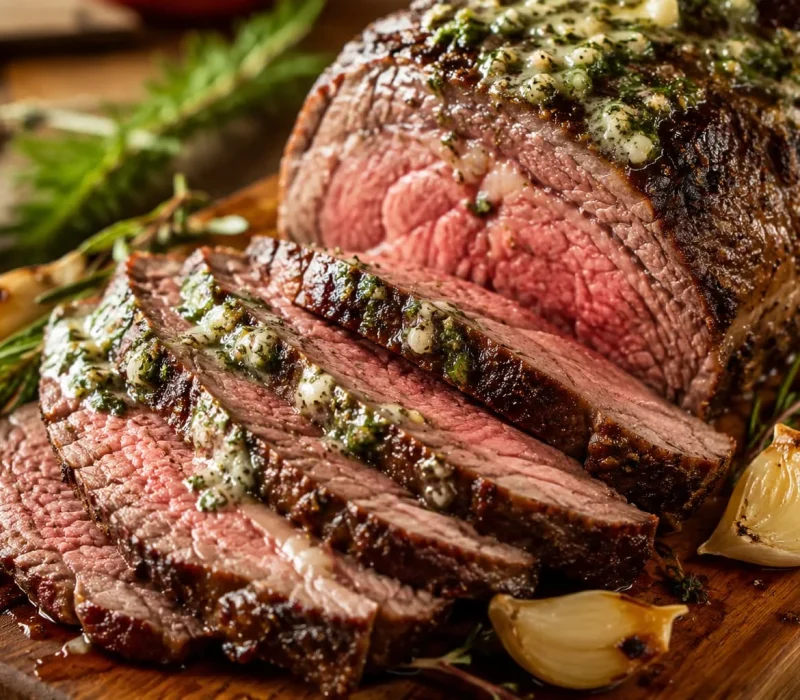
New York Steak Roast Recipe is a delicious way to prepare a tender, juicy beef roast with a flavorful garlic herb butter. This large, boneless cut comes from the same section as New York strip steaks and is roasted low and slow before a quick high-heat sear creates a beautiful golden crust. Perfect for family dinners, holidays, and special occasions, this roast delivers juicy, edge to edge doneness in every slice.
Key Takeaways
- A New York Steak Roast Recipe (also labeled strip loin roast or NY strip roast) is naturally tender; it doesn’t need hours of braising the way a chuck roast does.
- Cooking the roast low and slow first, then searing it hard at the very end, gives more even doneness edge to edge than searing first, which is the more common but less accurate order.
- Pull the roast from the oven several degrees before your target temperature; it keeps rising as it rests.
- 145°F is the food safety minimum for whole beef roasts, followed by a 3-minute rest; your preferred doneness (rare through medium) is a separate, personal choice above that floor.
- Resting for a full 15 to 20 minutes before slicing, and cutting against the grain, both make a real, visible difference in tenderness.
A New York Steak Roast Recipe is one of those cuts that looks like a special occasion showpiece but is genuinely simple to get right: garlic herb butter, a low oven, and a hot finish for a deep golden crust. It’s naturally tender, so unlike a pot roast or chuck steak, the goal here isn’t tenderizing tough connective tissue, it’s just getting the temperature even from edge to center.
The one thing worth changing from how most people learn to roast beef: doing the hot sear last instead of first. It’s a small change in order that makes a real difference in how evenly the whole roast cooks.
What You’ll Need
- A boneless New York strip roast, 3 to 5 pounds, with a thin fat cap and visible marbling.
- Olive oil
- Unsalted butter, softened
- Fresh garlic
- Fresh rosemary and thyme
- Onion powder
- Kosher salt and black pepper
- Dijon mustard, optional, for a mild tang under the butter.
Why Sear at the End Instead of the Beginning?
This is worth understanding, since it changes the whole order of the recipe. When a cold, thick piece of meat hits high heat first, the outer layers race ahead in temperature while the center is still catching up, so by the time the middle reaches your target doneness, a noticeable ring of overcooked, grayish meat has already formed around the edges, according to Harry’s Natural Meats’ guide to reverse searing.
Cooking the roast low and slow first keeps that temperature gradient small, so the whole roast reaches close to your target color, and searing it hard only at the very end (once the surface has also dried out a bit in the low oven) builds a deep, fast crust without pushing the interior past where you want it.
The practical upshot: for a thick roast like this one, low then sear beats sear then low for even, edge to edge doneness, exactly the reverse of what a lot of older recipes, including some very good ones, still recommend.
Equipment That Makes This Easier
- A roasting pan with a rack, so air circulates around the roast for even cooking.
- An oven-safe leave-in thermometer, or an instant-read for frequent checks.
- A cast iron skillet, useful for a stovetop sear as an alternative to a hot oven finish.
- A sharp carving knife, for clean slices against the grain.
How to Make New York Steak Roast Recipe
Season ahead. Pat the roast dry and season generously with salt. If you have time, do this the night before and leave it uncovered in the fridge; even just 45 to 60 minutes at room temperature before cooking helps.
Make the garlic herb butter. Mix the softened butter with minced garlic, rosemary, thyme, onion powder, and black pepper. If using, spread a thin layer of Dijon mustard over the roast first, then coat it with the butter mixture.
Roast low and slow. Preheat the oven to 250°F. Place the roast fat-side up on a rack in a roasting pan. Roast until the internal temperature reads about 10 to 15 degrees below your final target (roughly 115-120°F for a medium-rare finish). This typically takes about 20 to 25 minutes per pound, but check with a thermometer rather than relying on time alone.
Rest briefly, then sear. Remove the roast and let it sit for 5 minutes while you crank the oven to 500°F (or heat a cast iron skillet very hot on the stovetop). Return the roast to the hot oven for 8 to 10 minutes, or sear it in the skillet, until a deep golden-brown crust forms and the internal temperature reaches your final target.
Rest again, then slice. Let the roast rest 15 to 20 minutes before slicing; this is what keeps the juices in the meat instead of on the cutting board. Slice against the grain for the most tender pieces.
Safe Temperature vs. Your Preferred Doneness
These are two separate things, and it’s worth keeping them straight. FSIS recommends cooking whole cuts of beef, including roasts, to a minimum internal temperature of 145°F, followed by a 3-minute rest, according to USDA FSIS guidance on doneness versus safety. That 145°F is the safety floor; how far above it you go is entirely a matter of taste.
| Doneness | Pull Temperature (before searing) |
| Rare | 105-110°F |
| Medium-rare | 115-120°F |
| Medium | 125-130°F |
| Medium-well | 135-140°F |
These are pull temperatures before the final sear; carryover heat during the sear and rest will bring the roast up to its final serving temperature.
Why Did My Roast Cook Unevenly or Turn Out Dry?
A few specific things cause most of the common problems with this cut.
| Problem | Likely Cause | Fix |
| Center is done but edges are gray and overcooked | Seared first instead of last | Use the low-then-sear order; it keeps the temperature gradient much smaller |
| Roast is dry throughout | Cooked well past medium, or too little fat cap left on | Pull it earlier and trust carryover heat; don’t trim off all the fat cap |
| Crust didn’t develop well | Surface was wet, or the final sear wasn’t hot enough | Pat the roast dry before seasoning; make sure the oven or skillet is fully preheated for the sear |
| Roast cooked unevenly from end to end | Roast wasn’t at an even starting temperature | Let it sit out 45-60 minutes before cooking, and use a roast with a fairly even thickness |
| Slices seem tough despite good doneness | Sliced with the grain instead of against it | Look for the muscle fiber direction and always cut across it |
Can You Make This Ahead of Time?
Yes, with some prep done well in advance.
- Seasoning: salt the roast the night before (up to 48 hours ahead) and leave it uncovered in the fridge; this actually improves flavor and texture.
- Garlic herb butter: can be mixed a day ahead and kept refrigerated; let it soften at room temperature before spreading.
- Cooking: best done fresh, right before serving, for the best crust and texture.
How to Store and Reheat Leftovers
| Storage Method | How Long | Notes |
| Refrigerator, airtight container | 3 to 4 days | Refrigerate within 2 hours of cooking |
| Freezer, whole or sliced | Up to 3 months | Wrap tightly; thaw in the fridge before reheating |
| Reheating | 250°F oven, covered, with a little broth | Gentle heat prevents the meat from drying out; avoid high heat |
More Beef Dinners to Try
If you’re building out a rotation of beef dinners, my braised chuck steak uses a completely different, low-and-slow braising approach for a tougher, more affordable cut, worth knowing the difference before you shop. For other comforting, hands-off dinners, my chicken pot roast and lamb keema are both worth trying too. And for dessert afterward, my carrot cake bars round out a holiday table nicely.
What to Serve With New York Strip Roast Recipe
Creamy mashed potatoes are the classic pairing, soaking up any pan juices. Roasted vegetables like carrots, Brussels sprouts, or green beans add color and a nice textural contrast. For something lighter, a simple green salad with a bright vinaigrette balances the richness of the beef.
Frequently Asked Questions
Is a New York steak roast Recipe the same as a New York strip roast?
Yes, these names refer to the same cut. It may also be labeled strip loin roast, New York strip loin roast, or NY strip roast, all boneless roasts from the same section used for New York strip steaks.
Why should I sear the roast at the end instead of the beginning?
Searing first creates a bigger gap between how the edges are versus the center, since the outside races ahead in temperature while the middle is still coming up to temperature. Searing last, after a gentle low-oven cook, keeps that gap much smaller for more even doneness edge to edge.
What temperature should the roast be pulled at?
Pull it 10 to 15 degrees below your final target doneness before searing, since both the sear and the rest will continue raising the internal temperature. For medium-rare, that’s roughly 115-120°F before the final sear.
Do I need to sear this roast at all?
It’s not strictly required for safety, but it makes a real difference in flavor and appearance. The hard sear at the end builds the deep, golden crust that makes this cut feel like a steakhouse roast.
How long should I rest the roast before slicing?
15 to 20 minutes. This lets the juices redistribute through the meat instead of running out on the cutting board the moment you slice into it.
Can I make this ahead of time?
The roast itself is best cooked fresh, but you can salt it up to 48 hours ahead and mix the garlic herb butter a day ahead, both kept refrigerated until you’re ready to cook.
Conclusion
A New York strip roast Recipe is proof that a special-occasion beef dinner doesn’t need a complicated technique, just the right order of operations: low heat first for even doneness, a hard sear at the very end for the crust, and a proper rest before you slice. Get that order right, and this becomes one of the most reliable centerpiece dinners you can put on the table.
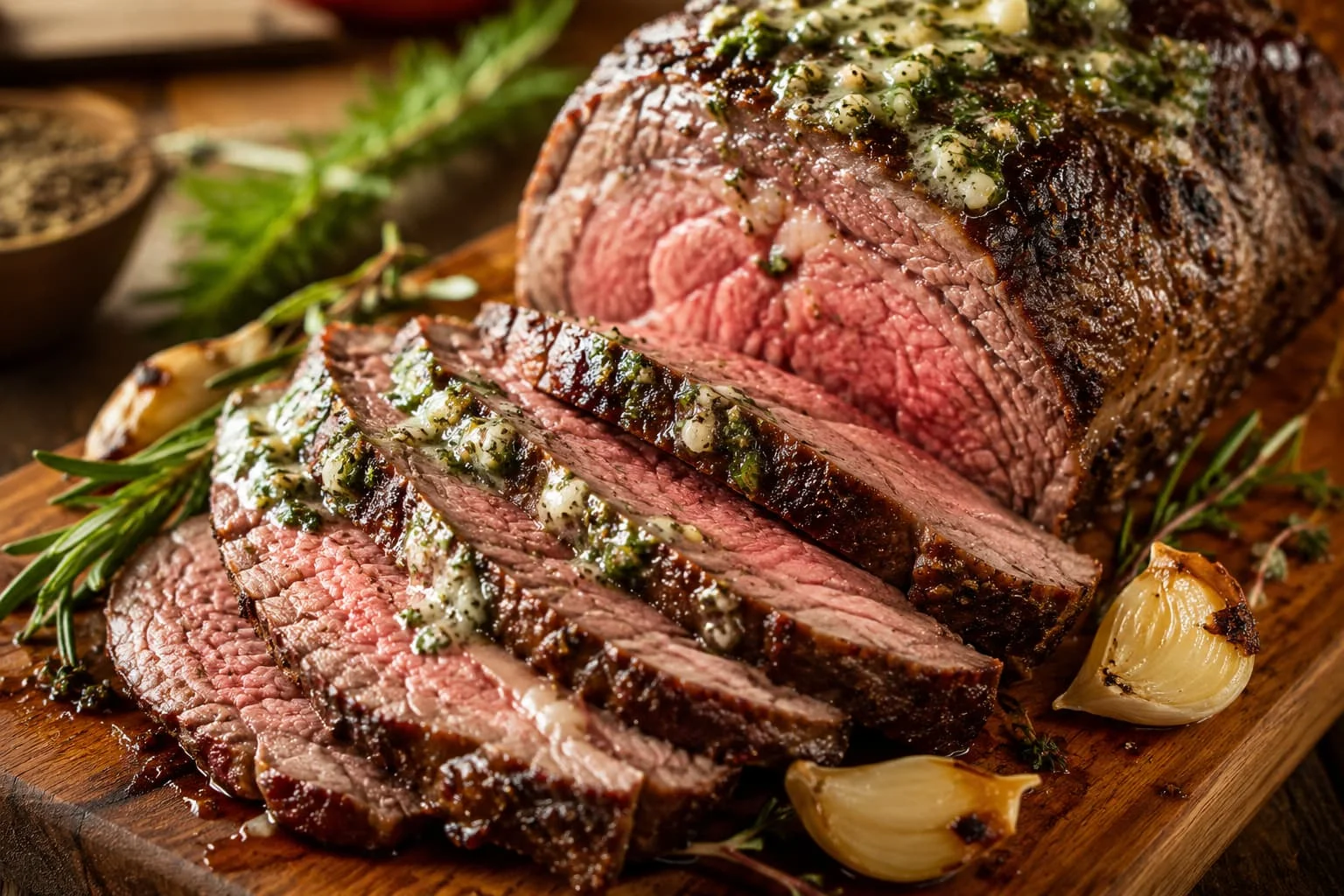
New York Steak Roast Recipe
Notes
- 1 (4-5 lb / 1.8-2.3kg) boneless New York strip roast
- 2 tablespoons olive oil
- 4 tablespoons (½ stick) unsalted butter, softened
- 6 garlic cloves, minced
- 2 tablespoons fresh rosemary, chopped
- 2 tablespoons fresh thyme leaves
- 1 tablespoon onion powder
- 2 teaspoons kosher salt
- 1 teaspoon black pepper
- 1 tablespoon Dijon mustard, optional
- Pat the roast dry and season generously with the salt. Refrigerate uncovered overnight, or let sit at room temperature 45-60 minutes before cooking.
- Mix softened butter with garlic, rosemary, thyme, onion powder, and pepper.
- If using, spread a thin layer of Dijon mustard over the roast, then coat with the garlic herb butter.
- Preheat oven to 250°F (120°C). Place roast fat-side up on a rack in a roasting pan.
- Roast until internal temperature reaches about 10-15 degrees below your target doneness (about 115-120°F for medium-rare), roughly 20-25 minutes per pound.
- Remove roast and rest 5 minutes. Increase oven to 500°F (or heat a cast iron skillet very hot).
- Return roast to the hot oven 8-10 minutes, or sear in the skillet, until deeply browned and at your final target temperature.
- Rest 15-20 minutes before slicing against the grain.