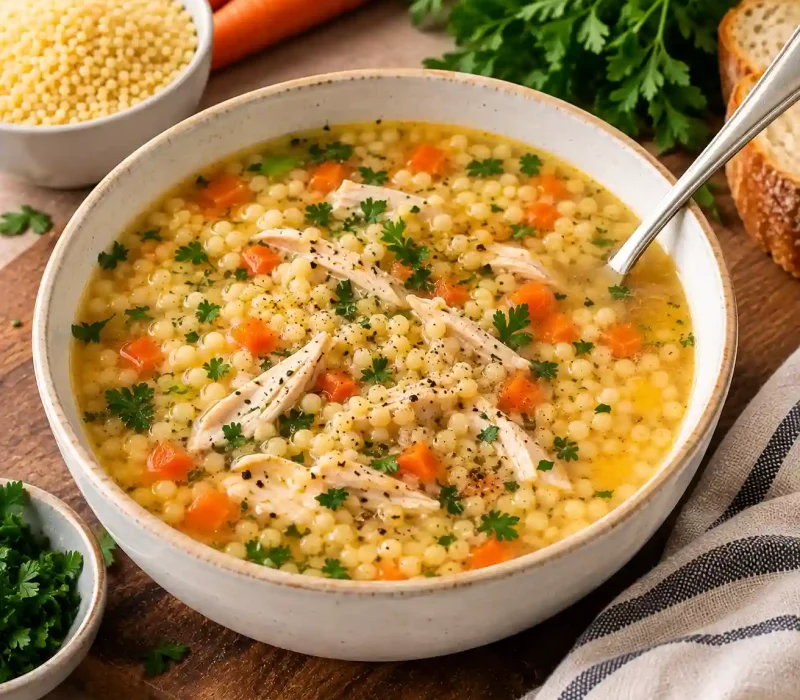
Chicken pastina soup is the bowl I make when someone needs a little looking after, and honestly, when I do too. It is the definition of cozy: tender shredded chicken, tiny star-shaped pastina, and a bright, herby broth that tastes like a hug in a bowl. Italians have called it “Italian penicillin” for generations, because it is gentle on the stomach, deeply soothing, and somehow makes a rough day feel more manageable. Best of all, this easy version comes together in about 30 minutes with everyday ingredients, so comfort is never more than half an hour away.
Key Takeaways
- It is a genuine 30-minute soup: soft pastina, shredded chicken, and a light, herby broth from simple pantry staples.
- Poached chicken keeps it light; rotisserie chicken makes it even faster.
- Pastina absorbs broth quickly, so cook it just until tender, and cook or store it separately if you want leftovers.
- A parmesan rind simmered in the broth and a squeeze of lemon at the end are the two little moves that make it taste special.
- For an extra-cozy, traditional finish, stir in a beaten egg with parmesan at the very end.
Why You’ll Love This Chicken Pastina Soup
This is not just another chicken soup, and there is a reason it has such a devoted following.
It is quick and easy, with minimal prep and simple steps. It is the ultimate comfort-food classic, warm and familiar in a way that never disappoints. It is genuinely family-friendly, since the soft little pasta and mild seasoning are exactly what picky kids will eat. It is the first thing I want on a sick day, light and nourishing and soothing. And it is endlessly customizable with whatever you have on hand. Whether you need comfort, convenience, or a cozy meal on a busy night, this soup checks every box.
What Is Pastina?
Pastina simply means “tiny pasta,” and it is the smallest pasta there is, often shaped like little stars (stelline), dots, or rings. Because the pieces are so small, they cook in just a few minutes and give the soup its signature soft, comforting texture that feels instantly nostalgic. Stelline is the classic choice for this soup, but you can use other tiny pasta shapes like acini di pepe, orzo, or even alphabet pasta if that is what you have. The key is keeping the pasta small so every spoonful has that cozy, tender bite.
Ingredients You’ll Need
Simple, honest ingredients, each with a purpose. Here is the lineup.
- Chicken, poached and shredded. Chicken breasts keep the soup light and lean; thighs add a little extra richness. Both work beautifully, and rotisserie chicken is a great shortcut. My creamy Caesar chicken also shreds nicely into a pot like this.
- Pastina (stelline), the tiny star pasta that makes this soup what it is: soft, comforting, and a little bit fun.
- Onion, carrots, and celery, the classic mirepoix that builds savory-sweet flavor from the very first step.
- Garlic, for warm, aromatic depth.
- Butter or olive oil, to create a rich, smooth base as the vegetables soften.
- Fresh sage and thyme, the herbs that give this soup its cozy, subtly earthy character.
- Chicken or vegetable stock, the heart of the soup. Use one you would happily sip.
- Bay leaves, for gentle background herbal notes.
- Parmesan rind (optional), simmered in the broth for a savory, umami depth you cannot get any other way.
- Lemon juice, added at the end to brighten everything.
- Fresh parsley, for a pop of freshness and color.
Ingredient Substitutions
| Ingredient | Swap | Notes |
| Stelline pastina | Acini di pepe, orzo, ditalini, alphabet pasta | Keep the pasta small; adjust cook time to the package. |
| Poached chicken | Rotisserie or leftover cooked chicken | Stir in near the end just to warm through. |
| Chicken stock | Vegetable stock or water plus bouillon | Vegetable stock keeps it vegetarian-friendly. |
| Fresh sage/thyme | Dried (use one-third as much) | Add dried herbs earlier so they soften and bloom. |
| Parmesan rind | Grated parmesan at serving | The rind adds deeper umami, but grated cheese works. |
| Lemon juice | A splash of white wine vinegar | You still want that final hit of brightness. |
Equipment You’ll Need
Nothing special, just a few basics.
- A large stockpot or Dutch oven roomy enough for the broth and everything in it. A heavy base keeps the vegetables from scorching.
- A fine-mesh strainer handy for cooking the pastina separately and draining it, which is the trick to non-mushy leftovers. A small colander works if the holes are fine.
- A ladle for serving brothy soup cleanly.
- A microplane or fine grater for grating parmesan and zesting lemon. A box grater’s small side does the job too.
How to Make Chicken Pastina Soup
It is genuinely a 30-minute soup once your vegetables are chopped.
1. Prep the vegetables. Finely dice the onion, celery, and carrots, and mince the garlic. Small, even pieces give the soup its smooth, comforting texture and cook through in the time you have.
2. Sauté. Melt the butter (or heat the olive oil) in a large stockpot over medium-high heat. Add the vegetables and cook for 5 to 7 minutes, stirring occasionally, until they are tender, glossy, and smell sweet and fragrant.
3. Season. Stir in the sage, thyme, salt, pepper, and cayenne if using, and cook for about 1 minute, just until the herbs are fragrant. This quick bloom deepens their flavor.
4. Build the broth. Pour in a splash of broth to deglaze, scraping up any browned bits from the bottom of the pot, then add the rest of the stock, the bay leaves, and the parmesan rind if using. Bring it to a boil. (If you are poaching raw chicken here, simmer it gently in the broth until the thickest part reaches 165°F per safe poultry temperature guidance, then lift out and shred.)
5. Simmer. Add the shredded chicken and the pastina, reduce the heat, and simmer for 8 to 12 minutes, until the pasta is tender. Stir now and then so the little pasta does not stick to the bottom, and taste toward the end so you catch it right as it turns soft.
6. Finish. Remove the bay leaves and parmesan rind. Stir in the lemon juice, taste, and adjust the seasoning. The soup should taste bright, savory, and rounded.
7. Serve. Ladle into bowls, top with fresh parsley and a little grated parmesan, and serve warm with crusty bread for dunking.
Expert Tips for the Best Pastina Soup
The small details that make it taste like it came from a nonna’s kitchen.
Dice the vegetables small so the soup has that smooth, spoonable, comforting texture. Cook the pastina just until tender, since it goes from perfect to mushy quickly, and drop in a parmesan rind while the broth simmers for a savory depth that tastes like it cooked all day.
Finish every pot with fresh lemon juice off the heat to brighten the whole bowl. And if you love quick, comforting chicken dinners in general, my creamy tortellini pasta is the same cozy energy in a richer, creamier form.
Common Mistakes (and How to Fix Them)
Nearly every pastina-soup issue comes down to the pasta and the seasoning.
| Problem | Likely Cause | The Fix |
| Pastina turned mushy | Cooked too long, or sat in the broth | Cook just until tender; cook or store it separately for leftovers. |
| Soup got too thick | Pastina kept absorbing the broth | Loosen with extra warm broth or water. |
| Broth tastes flat | Under-seasoned, no acid | Salt in layers, simmer a parmesan rind, finish with lemon. |
| Broth looks cloudy/starchy | Too much pasta boiled in the pot | Use the right ratio, or cook the pastina separately. |
| Chicken is dry | Overcooked | Poach gently just to 165°F, then shred; add rotisserie chicken only to warm. |
Recipe Variations to Try
The classic is perfect, but it welcomes a few twists.
For the traditional Italian finish, beat an egg with a spoon of grated parmesan and stir it in off the heat, so it forms silky ribbons through the broth (think stracciatella). Make it vegetarian by skipping the chicken, using vegetable stock, and adding white beans or extra vegetables for heartiness. Stir in a couple of handfuls of spinach, escarole, or kale at the end for greens.
Keep it gluten free with a small gluten free pasta. Or make the beloved kid version by cooking the pastina in broth and tossing it with a little butter and parmesan. On a night you want something completely different but just as quick, my honey garlic stir fry is another 30-minute chicken dinner worth keeping in the rotation.
What to Serve With Pastina Soup
It is a full meal on its own, but a few sides make it a spread.
Crusty bread or warm focaccia is made for soaking up the last of the broth. A simple green salad with lemon vinaigrette keeps things light and fresh. For a bigger table, a bright lemon chicken salad adds a little more protein alongside, and a bowl of Greek hummus recipe with warm pita makes an easy starter while the pastina cooks.
Can You Freeze Chicken Pastina Soup?
Freezing works best if you freeze the broth without the pastina. Tiny pasta turns soft and bloated after freezing and thawing, so make the soup through the broth-and-chicken stage, cool it, and freeze it for up to 3 months. When you are ready to eat, reheat the broth gently and stir in freshly cooked pastina. If you have already made the full pot, it will still freeze fine, but expect the pasta to be much softer once reheated.
How Do You Store and Reheat It?
For the best texture, store the broth and the pastina separately in the fridge, then combine them when you reheat, following general safe leftover storage guidance for cooked soups. Kept separate, the broth holds for up to 5 days and the pastina stays pleasant instead of soggy (USDA’s general guidance for cooked soups is 3 to 4 days, so use your judgment). Reheat the broth gently on the stove, add extra stock or water to loosen it since pastina drinks up liquid, then stir the pasta back in just before serving.
Why Is It Called “Italian Penicillin”?
Chicken pastina soup earned the nickname “Italian penicillin” because Italian families have long reached for it as the go-to cure-all when someone feels unwell. The warm, easy-to-digest broth, gentle little pasta, and simple chicken are soothing when you are run down, and the ritual of a homemade bowl is comforting in its own right. It is the Italian cousin of the chicken soup so many cultures turn to at the first sign of a cold, less a medicine than a bowl of care.
Frequently Asked Questions
What is the best pasta for pastina soup?
Stelline (tiny stars) is the classic and most-loved choice, but any very small pasta works well. Acini di pepe, orzo, ditalini, or alphabet pasta all give that soft, comforting texture. Just keep the pasta small so it cooks quickly and every spoonful stays cozy, and cook it only until tender.
Can you freeze chicken pastina soup?
Yes, but freeze it without the pastina for the best texture. Tiny pasta turns mushy after freezing and thawing. Freeze the broth with the chicken and vegetables for up to 3 months, then reheat and stir in freshly cooked pastina before serving. This keeps every bowl tasting freshly made.
How do you keep pastina from getting mushy?
Cook the pastina just until tender and avoid letting it sit in the hot broth too long, since it keeps absorbing liquid. For leftovers or make-ahead soup, cook the pastina separately and store it apart from the broth, then combine when serving. Add extra broth when reheating to loosen it.
Is chicken pastina soup good for when you’re sick?
Yes, it is often called “Italian penicillin” for exactly that reason. The warm, easy-to-digest broth is soothing and hydrating, the soft pastina is gentle on an upset stomach, and the chicken adds protein without being heavy. It is light, nourishing, and comforting when you are under the weather.
Can I use rotisserie chicken instead of poaching?
Absolutely. Rotisserie chicken is a great time-saver: just shred about two cups and stir it in near the end, since it is already cooked and only needs to warm through. Leftover roasted or grilled chicken works the same way and makes the soup even faster.
Can I make it vegetarian?
Yes. Skip the chicken, use a good vegetable stock, and add white beans, chickpeas, or extra vegetables to keep it hearty and satisfying. A simmered parmesan rind and a finish of lemon and parsley keep the broth full of flavor even without the meat.
Final Thoughts
This easy chicken pastina soup is proof that the simplest food is often the most comforting. It is quick, gentle, nourishing, and endlessly cozy, the kind of bowl you will find yourself making on sick days, busy nights, and lazy weekends alike. Once you have made it once, you will reach for it on instinct. If you make it, I would love for you to leave a rating and a comment below and tell me which tiny pasta you used.
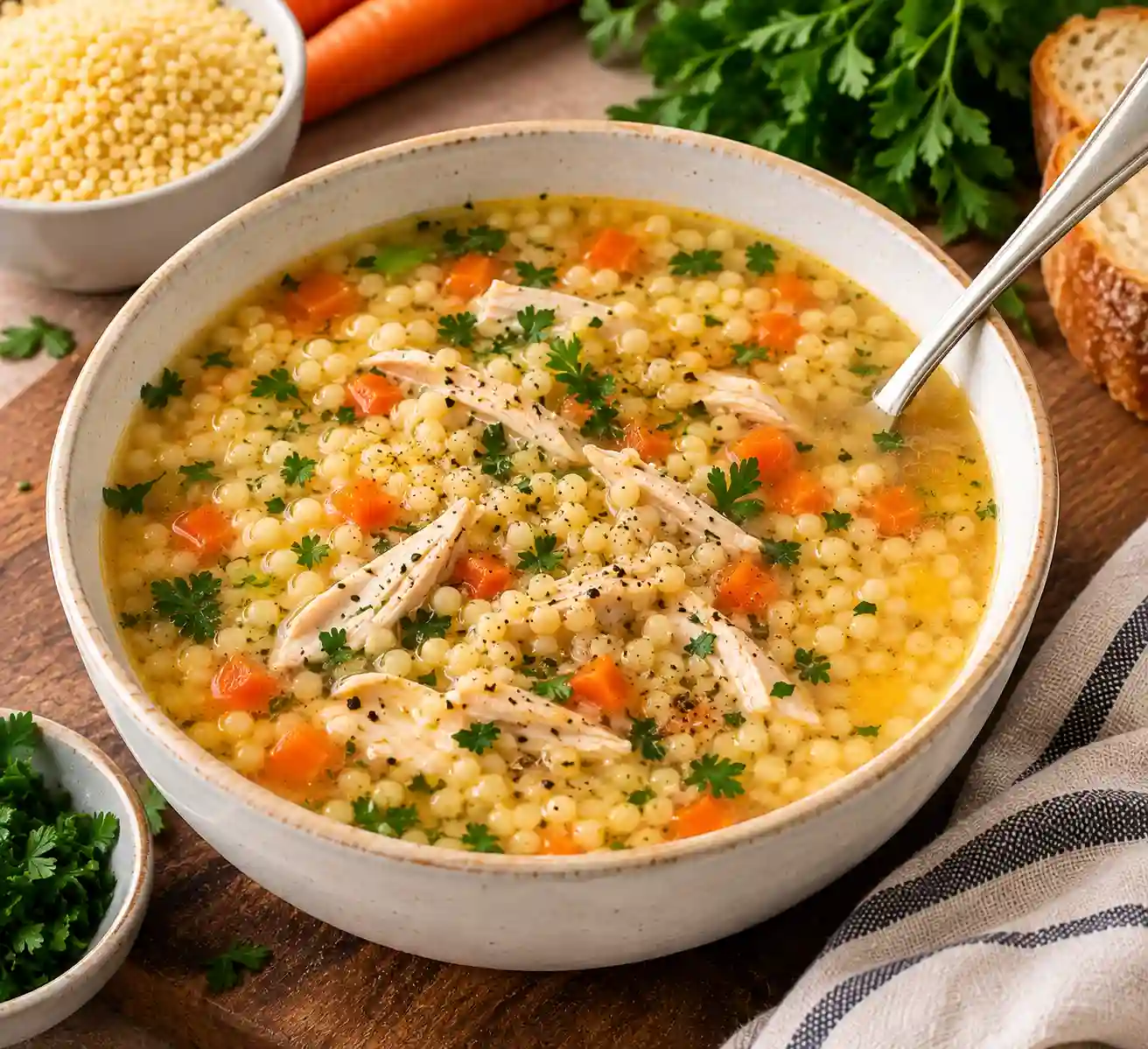
Easy Chicken Pastina Soup
Notes
- 2 Tbsp unsalted butter (or olive oil)
- 1 large onion, diced
- 4 ribs celery, diced
- 4 large carrots, diced
- 3 garlic cloves, minced
- 1 Tbsp fresh sage, chopped
- 2 tsp fresh thyme
- ½ tsp kosher salt, plus more to taste
- ½ tsp black pepper
- ¼ tsp cayenne pepper (optional)
- ½ cup broth, for deglazing
- 6 cups chicken or vegetable stock
- 2 bay leaves
- 1 parmesan rind (optional)
- 2 large poached chicken breasts, shredded
- 1 cup stelline pastina (star pasta)
- 2 tsp lemon juice
- 2 Tbsp fresh parsley, chopped (optional)
- Finely dice the onion, celery, and carrots; mince the garlic.
- Melt the butter in a large stockpot over medium-high heat. Sauté the vegetables 5 to 7 minutes until tender and fragrant.
- Stir in the sage, thyme, salt, pepper, and cayenne; cook 1 minute.
- Deglaze with a splash of broth, then add the stock, bay leaves, and parmesan rind. Bring to a boil.
- Add the shredded chicken and pastina; reduce heat and simmer 8 to 12 minutes until the pasta is tender.
- Remove the bay leaves and rind. Stir in the lemon juice, adjust seasoning, and top with parsley.
- Serve warm with crusty bread.
- For leftovers, cook and store the pastina separately so it does not turn mushy.
- A parmesan rind simmered in the broth adds savory, cooked-all-day depth.
- For a traditional finish, stir a beaten egg with parmesan into the hot broth off the heat.