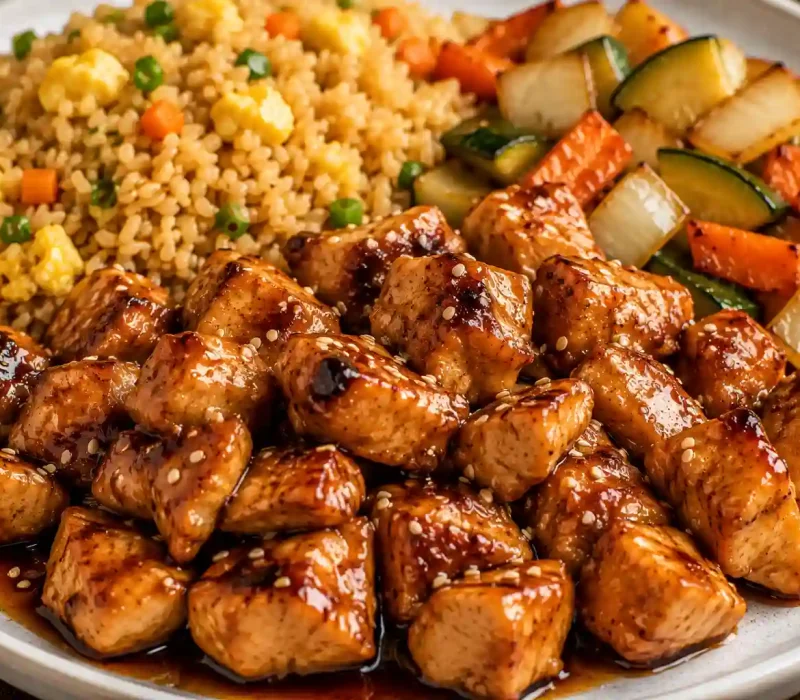
If you’ve ever gone to Benihana or another Japanese steakhouse, you know hibachi chicken is about much more than just dinner. It’s the sizzling sounds from the hot grill, buttery fried rice, smoky chicken, garlic aroma, sautéed vegetables, and those addictive dipping sauces that somehow make everything taste even better.
The best part is you don’t need a teppanyaki grill or restaurant reservation to recreate those flavors at home. This Hibachi Chicken Recipe (Benihana Copycat) delivers juicy chicken, buttery hibachi fried rice, tender-crisp vegetables, and creamy mustard sauce using simple ingredients and one large skillet.
What surprised me most while testing this recipe was how much technique mattered more than fancy ingredients. Cooking the chicken over high heat created those lightly charred edges that taste closest to restaurant-style hibachi chicken, and using cold day-old rice completely changed the fried rice texture. Fresh rice turned soft and clumpy, while chilled rice stayed separate and slightly chewy like authentic Japanese steakhouse fried rice.
Whether you’re craving homemade hibachi chicken, a Benihana chicken recipe, hibachi chicken meal prep, or a restaurant-style dinner at home, this easy hibachi chicken recipe brings classic Japanese steakhouse flavor into your kitchen without much effort.
Hibachi Chicken is a Japanese steakhouse-style meal made with seared chicken, soy sauce, garlic, ginger, sautéed vegetables, fried rice, and creamy mustard sauce cooked on a hot skillet or flat-top grill.
What Is Hibachi Chicken?
Hibachi chicken is a Japanese-inspired steakhouse dish usually made with:
- bite-sized chicken
- soy sauce
- garlic
- butter
- sesame oil
- vegetables
- fried rice
In American Japanese steakhouses like Benihana, hibachi meals are often cooked on a large flat-top teppanyaki grill right in front of guests.
The chicken develops:
- smoky flavor
- browned edges
- savory umami richness
It’s commonly served with:
- hibachi chicken fried rice
- zucchini
- mushrooms
- onions
- yum yum sauce
- mustard sauce
- ginger sauce
Even though restaurant hibachi looks dramatic, the actual cooking process is surprisingly simple once you understand the heat and timing.
Why You’ll Love This Hibachi Chicken Recipe
- Better than takeout
- Easy Benihana copycat recipe
- Restaurant-style hibachi chicken at home
- Ready in under an hour
- Great for meal prep
- Family-friendly dinner
- Packed with umami flavor
- Customizable with different proteins and vegetables
- Complete meal in one recipe
The combination of buttery fried rice, juicy chicken, garlic soy sauce, and creamy mustard sauce creates one of those dinners people immediately want again the next day.
Why Benihana Hibachi Chicken Tastes So Good
One reason restaurant hibachi tastes unique is the cooking method.
Japanese steakhouses use:
- very high heat
- butter finishing
- flat-top grills
- quick cooking techniques
That combination creates:
- lightly smoky flavor
- golden seared edges
- rich garlic butter taste
- better caramelization
I also noticed the balance of butter and soy sauce is what gives homemade hibachi chicken that classic restaurant-style flavor.
Too little butter tastes flat.
Too much soy sauce overwhelms everything.
The goal is rich savory flavor without becoming greasy or salty.
Why This Hibachi Chicken Recipe Works
A few simple techniques completely improve the flavor and texture.
- Higher heat helps the chicken brown instead of steam.
- Day-old rice creates proper fried rice texture without becoming mushy.
- Butter adds classic Japanese steakhouse richness that oil alone can’t fully replicate.
- Sesame oil adds nutty depth without overpowering the dish.
- Cooking ingredients separately keeps textures balanced instead of overcrowded.
I tested one batch where I added the vegetables too early with the chicken, and everything released too much moisture into the skillet. Cooking the chicken separately created much better searing and a more authentic hibachi flavor.
The chicken should develop golden edges while still staying juicy inside.
Why Homemade Hibachi Chicken Tastes Better Than Takeout
Restaurant hibachi is delicious, but homemade hibachi chicken has several advantages.
- Fresher ingredients
- Better control over sodium
- Less greasy texture
- Easier customization
- Larger portions for less money
- Excellent for weekly meal prep
I also noticed homemade fried rice stays fluffier when cooked in smaller batches instead of steaming in crowded takeout containers. Plus, you can add extra garlic butter which honestly makes everything better.
Ingredient Breakdown
Chicken
Boneless skinless chicken breasts or thighs both work well.
Chicken thighs stay:
- juicier
- richer
- more forgiving during cooking
Chicken breasts create:
- leaner texture
- firmer bite
For the best hibachi chicken:
- cut pieces evenly
- pat dry before cooking
- avoid overcrowding the skillet
The chicken should sear instead of steam.
Can You Use Shrimp or Steak?
Absolutely.
This hibachi recipe works beautifully with:
- shrimp
- steak
- salmon
- tofu
Shrimp cooks especially quickly, so it’s best added near the end.
Soy Sauce
Low-sodium Japanese soy sauce creates:
- savory umami flavor
- saltiness
- rich color
- classic hibachi taste
For deeper flavor, a small splash of:
- tamari
- coconut aminos
- dark soy sauce
can also work beautifully.
Sesame Oil
Sesame oil adds:
- nutty flavor
- Japanese steakhouse aroma
- richness
A little goes a long way.
Too much sesame oil can overpower the dish, so I usually balance it with butter and neutral oil.
Garlic and Ginger
Fresh garlic and ginger create the signature hibachi aroma.
Together they add:
- warmth
- sharpness
- savory depth
- restaurant-style flavor
Fresh ginger tastes much brighter than powdered ginger here.
Best Rice for Hibachi Fried Rice
Cold day old jasmine rice works best because:
- grains stay separate
- texture stays chewy
- moisture stays lower
Fresh rice tends to clump and steam instead of fry properly.
I tested:
- jasmine rice
- sushi rice
- long-grain rice
and jasmine rice gave the closest restaurant-style hibachi fried rice texture. Cold rice is one of the biggest secrets behind authentic hibachi chicken fried rice.
Vegetables
Classic hibachi vegetables include:
- zucchini
- mushrooms
- onions
- carrots
The vegetables should stay:
- lightly crisp
- slightly browned
- not overly soft
That contrast balances the buttery fried rice beautifully.
What Is the Difference Between Hibachi and Teppanyaki?
People often use the terms interchangeably, but they’re technically different.
- Hibachi traditionally refers to a Japanese charcoal heating grill.
- Teppanyaki uses a flat iron griddle for cooking meats, vegetables, and rice.
Most American “hibachi restaurants” actually cook teppanyaki style meals.
That said, “hibachi chicken” remains the most common search term online.
Can You Make Hibachi Chicken on a Blackstone Griddle?
Absolutely. A Blackstone griddle works beautifully for restaurant-style hibachi chicken because the flat cooking surface helps create:
- better searing
- smoky flavor
- faster cooking
- crispy fried rice texture
If using a Blackstone:
- preheat fully first
- cook chicken in batches
- use cold rice
- avoid overcrowding
The extra surface area also makes it easier to cook the rice, vegetables, and chicken separately like Japanese steakhouses do.
Equipment Needed
You don’t need a fancy teppanyaki grill.
A few simple tools work perfectly:
A cast-iron skillet works especially well because it holds heat beautifully and helps create better browning.
How to Make Hibachi Chicken
Step 1: Marinate the Chicken
In a bowl, combine:
- soy sauce
- sesame oil
- garlic
- ginger
- hoisin sauce
Add the chicken and toss until evenly coated.
Let it marinate for about 15–20 minutes.
The chicken should smell savory, garlicky, and slightly sweet.
Step 2: Prepare the Mustard Sauce
In a small bowl, whisk together:
- mayonnaise
- Dijon mustard
- soy sauce
- rice vinegar
The sauce should taste:
- creamy
- tangy
- savory
If you want extra heat, add:
- wasabi
- cayenne pepper
- hot mustard
I personally like chilling the sauce briefly before serving because the flavor tastes fresher and sharper.
Step 3: Cook the Chicken
Heat a large skillet over medium high heat. Add oil and cook the chicken in batches for about:
- 8–10 minutes
The chicken should become:
- lightly charred
- golden brown
- juicy inside
Avoid overcrowding the skillet because crowded chicken steams instead of browning.
Transfer cooked chicken to a plate.
Step 4: Sauté the Vegetables
In the same skillet, cook:
- zucchini
- mushrooms
- onions
- carrots
Add:
- soy sauce
- butter
- black pepper
Cook until:
- vegetables soften slightly
- edges brown lightly
- mushrooms become golden
The vegetables should stay tender-crisp instead of mushy.
Step 5: Make the Hibachi Fried Rice
Heat butter in the skillet.
Add:
- garlic
- cold jasmine rice
- soy sauce
Cook for several minutes until the rice becomes lightly toasted.
Push the rice aside and scramble an egg in the empty space.
Mix everything together and finish with green onions.
The rice should smell buttery, savory, and slightly smoky.
Step 6: Assemble and Serve
Serve the hibachi chicken with:
- hibachi fried rice
- sautéed vegetables
- mustard sauce
Finish with:
- sesame seeds
- green onions
- extra soy sauce if desired
The combination of buttery rice, savory chicken, and creamy sauce tastes incredibly close to restaurant hibachi dinners.
Restaurant Tricks for Authentic Hibachi Flavor
Japanese steakhouses use several small tricks that make a huge difference.
Cook Over High Heat
High heat creates:
- seared edges
- smoky flavor
- better browning
Use Butter Generously
Butter creates the signature Japanese steakhouse richness.
Cook Ingredients Separately
This prevents moisture buildup and keeps textures balanced.
Use Cold Rice
Cold rice fries much better than fresh rice.
Finish with Garlic Butter
Garlic butter gives homemade hibachi that classic restaurant aroma.
Best Sauces for Hibachi Chicken
Classic Japanese steakhouse sauces include:
- mustard sauce
- yum yum sauce
- ginger sauce
- garlic butter
- spicy mayo
Mustard sauce works especially well because the tanginess balances the rich fried rice beautifully.
Expert Tips for Restaurant-Style Hibachi Chicken
Use High Heat
Higher heat creates authentic hibachi flavor.
Don’t Crowd the Pan
Crowded ingredients steam instead of sear.
Use Cold Rice
Cold rice creates the best fried rice texture.
Cook Ingredients Separately
This keeps vegetables crisp and chicken juicy.
Finish with Butter
Butter gives the dish classic Japanese steakhouse richness.
Common Mistakes to Avoid
Using Fresh Warm Rice
Fresh rice becomes soft and clumpy.
Overcooking the Chicken
Chicken dries out quickly over high heat.
Cooking Everything Together
Separate cooking creates much better texture.
Using Too Much Soy Sauce
Too much soy sauce can overpower the butter and garlic flavors.
Overcrowding the Skillet
This prevents proper browning.
Variations and Customizations
Spicy Hibachi Chicken
Add:
- sriracha
- chili flakes
- chili oil
- spicy mayo
for extra heat.
Hibachi Steak and Chicken Combo
Use both steak and chicken for restaurant-style combination plates.
Low-Carb Hibachi Chicken
Replace rice with:
- cauliflower rice
- sautéed cabbage
- extra vegetables
for a lighter version.
Hibachi Shrimp
Shrimp cooks quickly and pairs beautifully with garlic butter and soy sauce.
Vegetarian Hibachi
Use:
- tofu
- mushrooms
- broccoli
- snap peas
for a vegetarian version.
What to Serve With Hibachi Chicken
This Benihana copycat recipe pairs perfectly with:
- miso soup
- ginger salad
- edamame
- yum yum sauce
- steamed dumplings
- cucumber salad
For a full Japanese steakhouse style dinner, serve everything family-style with multiple dipping sauces.
Is Hibachi Chicken Healthy?
Hibachi chicken can absolutely fit into balanced meals.
It includes:
- lean protein
- vegetables
- rice
- moderate fats
To make it lighter:
- reduce butter
- use low sodium soy sauce
- increase vegetables
- serve smaller rice portions
Homemade hibachi also gives you much more control over sodium and oil compared to restaurant versions.
Storage Instructions
Refrigerator
Store leftovers in airtight containers for up to 4 days. The flavors actually deepen slightly overnight.
Reheating Instructions
Skillet
Reheat in a skillet for the best texture. This helps restore browning and keeps the rice from becoming soggy.
Microwave
Microwave individual portions for convenience. Add a small splash of water to prevent the rice from drying out.
Can You Freeze Hibachi Chicken?
Yes. Freeze:
- chicken
- fried rice
separately for best texture.
Freeze for up to 3 months.
Thaw overnight before reheating.
Make Ahead Tips
This recipe works especially well for hibachi chicken meal prep.
You can:
- marinate the chicken early
- prep vegetables ahead
- cook rice a day ahead
- portion everything into containers
Best Meal Prep Tip
Store the sauce separately so the vegetables and rice stay fresher longer.
Frequently Asked Questions
What makes hibachi chicken taste like restaurant hibachi?
High heat, butter, soy sauce, garlic, sesame oil, and proper searing create classic Japanese steakhouse flavor.
Can I use fresh rice for hibachi fried rice?
You can, but da old cold rice works much better because it stays fluffy and doesn’t clump together.
What sauce do hibachi restaurants use?
Popular hibachi sauces include yum yum sauce, mustard sauce, ginger sauce, garlic butter, and spicy mayo.
Can I make hibachi chicken without sesame oil?
Yes. Sesame oil adds nutty flavor, but you can still make delicious hibachi chicken using butter and neutral oil.
What’s the best oil for hibachi cooking?
Neutral oils like avocado oil or canola oil work best because they tolerate high heat well.
Why is restaurant fried rice better?
Restaurants use high heat, butter, garlic, soy sauce, and cold rice to create better texture and flavor.
Can I use a Blackstone griddle?
Absolutely. Blackstone griddles work especially well for hibachi cooking because they provide a large hot cooking surface similar to restaurant flat top grills.
Is hibachi chicken actually Japanese?
American hibachi restaurants are more Japanese-American inspired than traditionally Japanese, but many flavors and cooking techniques come from teppanyaki cooking
Final Thoughts
This Hibachi Chicken Recipe (Benihana Copycat) brings the fun and flavor of Japanese steakhouse cooking into your own kitchen without needing special equipment or complicated techniques.
What I personally love most is how balanced the meal feels. The buttery fried rice, seared chicken, tender-crisp vegetables, and creamy mustard sauce create that classic restaurant-style experience while still being practical enough for weeknight dinners and meal prep.
If you’re craving homemade hibachi chicken that tastes surprisingly close to your favorite Japanese steakhouse, this easy Benihana copycat recipe absolutely deserves a place in your regular dinner rotation.
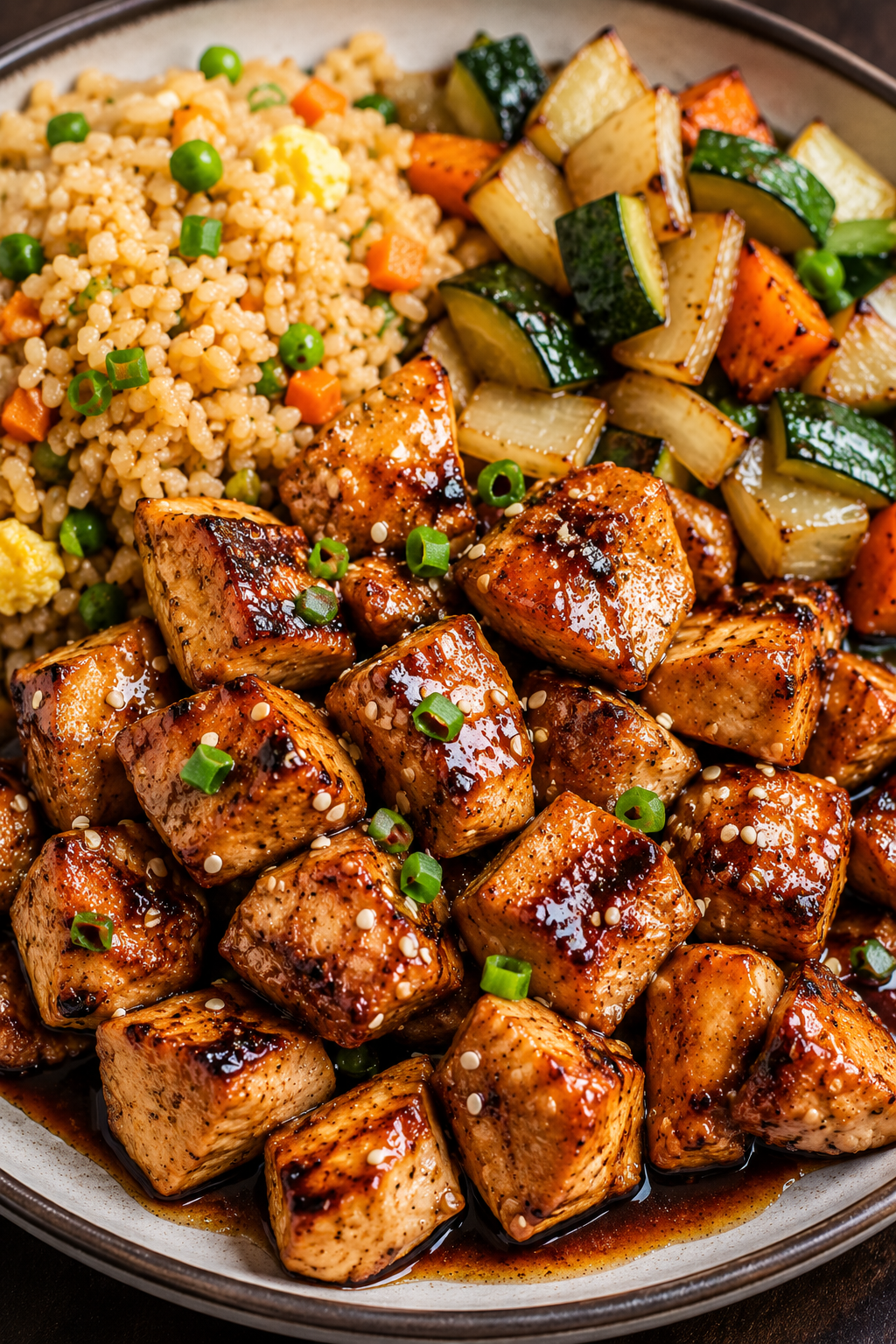
Hibachi Chicken Recipe (Benihana Copycat)
Notes
Ingredients
For the Hibachi Chicken
- 1 pound boneless skinless chicken breasts, cubed
- 1 tablespoon sesame oil
- 2 tablespoons low-sodium Japanese soy sauce
- 2 tablespoons hoisin sauce
- 4 garlic cloves, minced
- 1 teaspoon fresh grated ginger
For the Mustard Sauce
- ½ cup light mayonnaise
- 1 tablespoon soy sauce
- 1 tablespoon rice vinegar
- 1 tablespoon Dijon mustard
For the Vegetables
- 1 tablespoon avocado oil
- 1 carrot, sliced
- 1 cup mushrooms, halved
- 1 yellow onion, chopped
- 1 zucchini, chopped
- 1 tablespoon soy sauce
- Salt and black pepper to taste
For the Fried Rice
- 2 cups cold day-old jasmine rice
- 2 tablespoons butter
- 4 garlic cloves, minced
- 3 tablespoons soy sauce
- 1 egg
- 4 green onions, sliced
Instructions
- Marinate chicken with sesame oil, soy sauce, hoisin sauce, garlic, and ginger.
- Whisk together all mustard sauce ingredients and refrigerate.
- Cook chicken in a hot skillet until golden brown and cooked through.
- Sauté vegetables until tender-crisp.
- Heat butter and garlic in the skillet, then stir in cold jasmine rice and soy sauce.
- Scramble egg into the rice and finish with green onions.
- Serve chicken with fried rice, vegetables, and mustard sauce.
- Garnish with sesame seeds and green onions if desired.
Notes
- Use cold day old rice for best fried rice texture.
- Cook chicken in batches for better browning.
- Don’t overcrowd the skillet.
- Store sauce separately for meal prep.