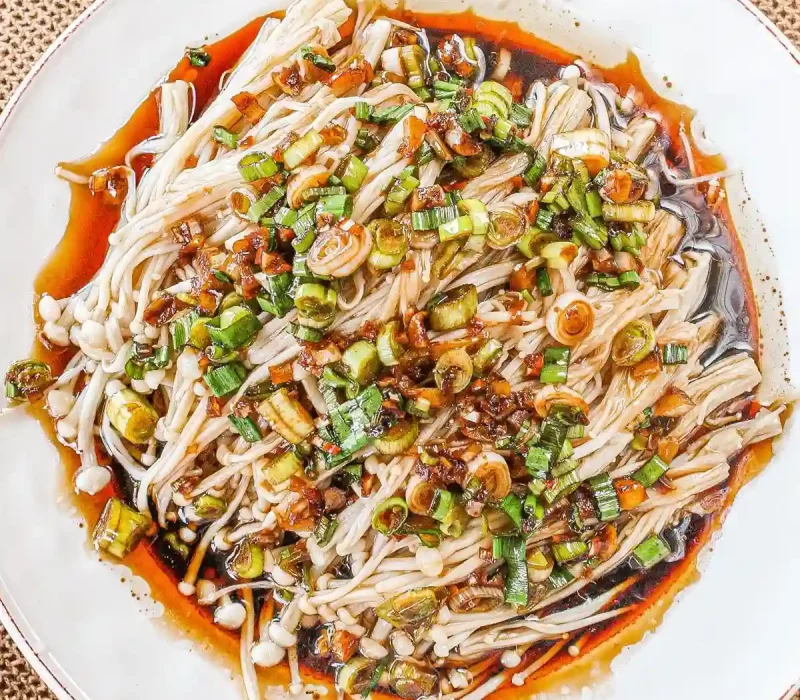
Garlic soy enoki mushrooms are proof that the simplest dishes are often the most crave worthy. Silky, delicate enoki are cooked until tender, then draped in a hot, glossy sauce of sizzled garlic, sweet salty soy, and fresh scallions that soak into every strand. It is naturally vegan, comes together in about 15 minutes, and tastes like a restaurant side you would pay good money for, yet it uses just a handful of pantry ingredients. Serve it as an elegant side, spoon it over steamed rice, or toss it into noodles for a fast, umami-packed meal.
Key Takeaways
- It is a genuine 15-minute dish: cook the enoki, sizzle a quick garlic-scallion soy sauce, and pour it over.
- Enoki should be cooked thoroughly, never eaten raw, since they have been linked to listeria; cook them until steaming hot.
- Trim the root base and pull the strands apart before cooking for the best texture.
- Soy sauce plus a touch of sugar gives that signature sweet-salty umami balance; use tamari to keep it gluten free.
- It is endlessly adaptable: add sesame oil, chili, or butter, and serve it over rice or noodles.
Why You’ll Love This Enoki Mushroom Recipe
This one earns a spot in the weeknight rotation fast.
It is quick and easy, ready in about 15 minutes with minimal prep. It is naturally vegan and gluten-free-friendly, so it fits a lot of tables. It delivers big, savory, umami flavor from a short, affordable ingredient list. It is versatile, working as a side, a light main, or a topping for rice and noodles. And it feels elegant and restaurant-worthy while being genuinely effortless to make at home.
What Are Enoki Mushrooms?
Enoki mushrooms, also called enokitake (Flammulina filiformis), are those clusters of long, thin, white mushrooms with tiny caps that you see in East Asian markets. They have a mild, slightly sweet flavor and a signature crisp, almost noodle-like bite that holds up beautifully in soups, hot pots, and stir-fries. Because they are grown in low light, these delicate enoki mushrooms stay pale and slender rather than developing the broad caps of other mushrooms. Their neutral flavor is exactly why they are so good here: they soak up the garlic-soy sauce like little sponges while keeping their tender-crisp texture.
Ingredients You’ll Need
Just six simple ingredients do all the work. Here is what each one brings.
- Enoki mushrooms, the star. Their mild flavor and crisp, tender strands are the perfect canvas for the sauce. Trim off the root cluster before cooking.
- Neutral oil (canola, vegetable, or avocado), a clean base for sizzling the garlic and carrying its aroma through the sauce.
- Garlic, minced, for that deep, savory, umami backbone. It is the heart of the sauce.
- Soy sauce, the main seasoning, for salty-sweet umami depth. Use tamari to keep the dish gluten-free, or low-sodium soy to control the salt.
- Sugar, just a touch, to balance the saltiness of the soy and round out the flavor.
- Scallions, thinly sliced, stirred in at the end for freshness, a mild onion bite, and vivid green color.
Ingredient Substitutions
| Ingredient | Swap | Notes |
| Soy sauce | Tamari or coconut aminos | Tamari is gluten-free; coconut aminos are soy-free and milder. |
| Neutral oil | Avocado or light olive oil | All work; olive oil adds a slight fruitiness. |
| Sugar | Honey, maple, or mirin | Just enough to balance the soy’s saltiness. |
| Scallions | Chives or thinly sliced onion | For that fresh, oniony finish. |
| Garlic | Garlic plus a little ginger | Ginger adds warmth and extra aroma. |
| Enoki | King oyster or shimeji mushrooms | Adjust cook time; these are meatier. |
Equipment You’ll Need
Nothing special, just a few basics.
- A pot or wok , to cook the enoki (blanch or stir-fry). A wok is handy if you prefer stir-frying.
- A small frying pan or saucepan , for making the quick garlic-scallion soy sauce.
- A sharp chef’s knife for trimming the enoki and mincing the garlic.
- Tongs or a spider strainer , for lifting the delicate mushrooms without breaking them.
How to Make Garlic Soy Enoki Mushrooms
It comes together in three simple steps.
1. Cook the enoki. Bring a pot of water to a boil, add the trimmed, separated enoki, and blanch for 2 to 3 minutes, until tender and steaming hot all the way through. Cooking them fully is important, both for texture and for safety (more on that below). Drain them well and arrange them on a serving plate. (For extra flavor, you can stir-fry them in a little oil instead, until softened and lightly golden.)
2. Make the garlic-scallion soy sauce. Heat the oil in a small frying pan over medium heat. Add the minced garlic and cook for about 1 minute, stirring, until it is fragrant and just lightly golden; watch it closely, since garlic burns fast and turns bitter. Stir in the soy sauce and sugar and bring it to a quick simmer, then pull the pan off the heat and stir in the sliced scallions, which will wilt and turn glossy in the hot sauce.
3. Assemble and serve. Pour the hot garlic-scallion soy sauce evenly over the enoki so it seeps between the strands. Add a drizzle of toasted sesame oil or a pinch of chili flakes if you like, and serve immediately, while everything is warm and aromatic.
How Do You Prep and Clean Enoki Mushrooms?
Preparing enoki takes about a minute. First, cut off the dense root cluster at the base, usually about an inch, since that part is tough and holds the growing medium. Then gently pull the strands apart into smaller, bite-friendly bundles. Give them a quick, thorough rinse under cool running water and drain well, since enoki should always be washed and then cooked before eating. Avoid soaking them for a long time, which can make them waterlogged, and pat or shake off excess water so the sauce is not diluted on the plate.
Expert Tips for the Best Enoki
The small moves that make it taste like a restaurant side.
Do not overcook the enoki 2 to 3 minutes and keep them tender with a pleasant, slightly crisp bite. Cook the garlic gently to golden, not brown, so the sauce stays savory rather than bitter. Balance the sauce to taste, adding a little more sugar if your soy is very salty, and finish with toasted sesame oil for a deeper, nuttier aroma. Serve it right away, since enoki are best warm and fresh. And if you love cooking Asian favorites at home, my honey garlic stir fry chicken is another quick, garlicky, better-than-takeout dish.
Common Mistakes (and How to Fix Them)
Most enoki issues are quick to avoid.
| Problem | Likely Cause | The Fix |
| Mushrooms turned mushy or slimy | Overcooked | Cook just 2 to 3 minutes until tender and steaming. |
| Garlic tastes bitter | Cooked too hot or too long | Keep the heat medium and pull it at lightly golden. |
| Dish is too salty | Too much soy sauce | Use low-sodium soy and balance with a touch of sugar. |
| Watery sauce on the plate | Enoki not drained well | Drain and shake off excess water before saucing. |
| Undercooked mushrooms | Rushed cooking | Always cook enoki fully until steaming hot; never serve raw. |
Recipe Variations to Try
The base is a great starting point for making it your own.
Make a soy-butter version by finishing the sauce with a knob of butter for a richer, glossier coat. Stir-fry the enoki instead of blanching for a slightly caramelized, savory edge, or steam them for an even more delicate result. Turn up the heat with chili oil, chili crisp, gochugaru, or a spoon of doubanjiang. Deepen the umami with a splash of oyster sauce (or a vegetarian version) and a sprinkle of sesame seeds. Or make it a meal by piling the saucy enoki over steamed rice or tossing it through noodles. For more cozy Asian bowls, my creamy Thai soup with coconut is a fragrant favorite, and my cheesy mushroom tortellini is another mushroom-lover’s comfort dish.
What to Serve With Enoki Mushrooms
This dish is light and savory, so it plays well with a spread.
It is a natural over steamed jasmine rice or tossed into noodles, soaking everything in that garlic-soy sauce. It rounds out a bigger meal alongside Benihana hibachi chicken and fried rice, or as a light starter before a bowl of homemade wonton soup. It also makes a lovely banchan-style side next to grilled protein, dumplings, or a simple cucumber salad for an easy Asian-inspired dinner.
Are Enoki Mushrooms Healthy?
Yes, enoki mushrooms are a genuinely nutritious, low-calorie choice. They are very low in calories and fat, add a little plant protein and fiber, and bring B vitamins and antioxidants along with them, which makes this a light, veggie-forward side. The one important thing to know is food safety: enoki have been linked to listeria outbreaks, so health authorities advise you to always cook enoki thoroughly until they are steaming hot and never eat them raw. Store them cold until you cook them, and this dish, which cooks them fully, is a safe and delicious way to enjoy them.
How Do You Store and Reheat It?
This dish is best enjoyed fresh, while the enoki are warm and the sauce is aromatic, but leftovers keep. Store them in an airtight container in the fridge for up to 2 to 3 days, in line with general storing cooked vegetables guidance. Reheat gently in a pan or the microwave until steaming hot again. You can also make the garlic-scallion soy sauce ahead and refrigerate it, then simply cook fresh enoki and pour the warmed sauce over when you are ready to serve, which keeps the texture at its best.
Frequently Asked Questions
What are enoki mushrooms?
Enoki mushrooms are long, thin, white mushrooms with tiny caps and a mild, slightly sweet flavor and delicate, crisp texture. Popular across East Asian cooking, they are used in soups, hot pots, and stir-fries. Their neutral taste makes them perfect for soaking up sauces like this garlic-soy one.
Do I have to blanch the enoki mushrooms?
Blanching is the quickest way to cook them and gives a tender, slightly crisp texture that pairs perfectly with the sauce, but it is not the only option. You can also stir-fry or steam them. What matters is that you cook them fully until steaming hot, rather than serving them raw.
Are enoki mushrooms safe to eat, and do I need to cook them?
Yes, they are safe when cooked properly. Enoki have been linked to listeria outbreaks, so food-safety authorities advise cooking them thoroughly until steaming hot and never eating them raw. Store them refrigerated until you cook them, and rinse them before cooking. This recipe cooks them fully, so it is a safe way to enjoy them.
What can I use instead of soy sauce?
For a gluten-free version, use tamari or coconut aminos; coconut aminos are also soy-free and a little sweeter and milder. For a lower-sodium dish, choose low-sodium soy sauce and adjust the sugar to keep the sweet-salty balance. A splash of oyster sauce can add depth too.
Can I make this dish ahead of time?
It is best served fresh, but you can prepare ahead. Make the garlic-scallion soy sauce in advance and refrigerate it, and trim the enoki. When you are ready to eat, cook the enoki, gently reheat the sauce, and pour it over. This keeps the mushrooms tender and the dish tasting freshly made.
Where can I buy enoki mushrooms?
Enoki are sold in vacuum sealed packs in the refrigerated produce section of many grocery stores and are widely available at Asian markets. Look for firm, white, dry looking clusters, and avoid any that are slimy, brown, or have a sour smell. Keep them cold and use them within a few days.
Final Thoughts
Garlic soy enoki mushrooms are the kind of quick, elegant dish that makes weeknight cooking feel special. With silky enoki, a fragrant garlic-scallion soy sauce, and just 15 minutes of effort, it delivers big umami flavor from the simplest ingredients. Serve it as a side, a light main, or a topping for rice and noodles, and remember to cook the enoki thoroughly for the best texture and safety. If you make it, I would love for you to leave a rating and a comment below and tell me how you served yours.
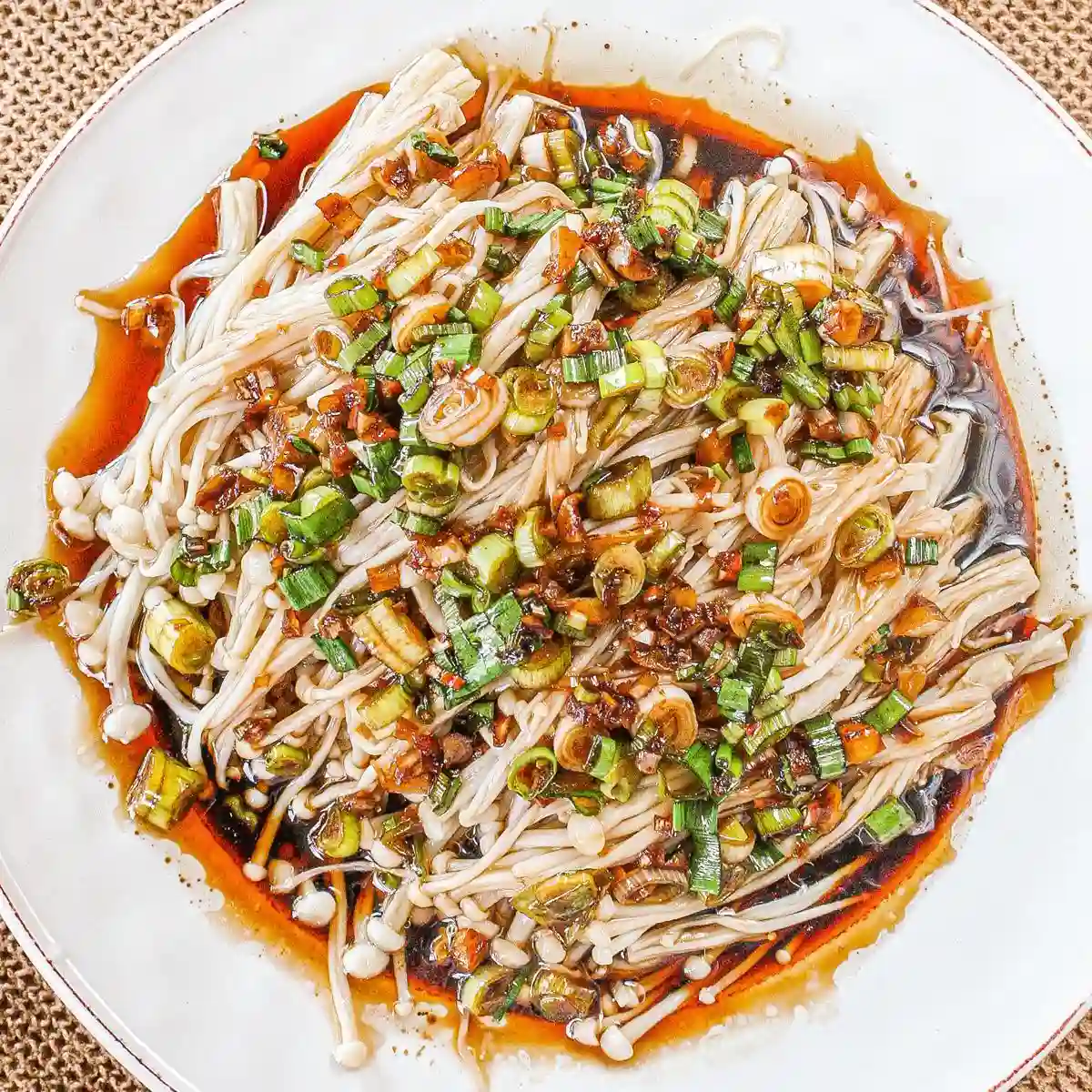
Garlic Soy Enoki Mushrooms Recipe
Notes
- 2 packets (14 oz / 400g) enoki mushrooms, trimmed (remove about 1 inch from the root base)
- 2 Tbsp neutral oil (canola, vegetable, or avocado)
- 4 garlic cloves, finely minced
- 3 Tbsp soy sauce (or tamari for gluten-free)
- 1 tsp sugar
- 2 scallions, thinly sliced
- Optional: toasted sesame oil, chili flakes or chili oil
- Trim the root base of the enoki and pull the strands apart. Rinse and drain well.
- Blanch the enoki in boiling water 2 to 3 minutes until tender and steaming hot; drain and plate. (Or stir-fry until softened.)
- Heat the oil in a small pan over medium. Sauté the garlic for about 1 minute until fragrant and lightly golden.
- Stir in the soy sauce and sugar; bring to a quick simmer. Off the heat, stir in the scallions.
- Pour the hot sauce over the enoki. Add sesame oil or chili if desired. Serve immediately.
- Always cook enoki thoroughly until steaming hot; never eat them raw.
- Do not overcook; 2 to 3 minutes keeps them tender-crisp.
- Cook the garlic to golden, not brown, to avoid bitterness.