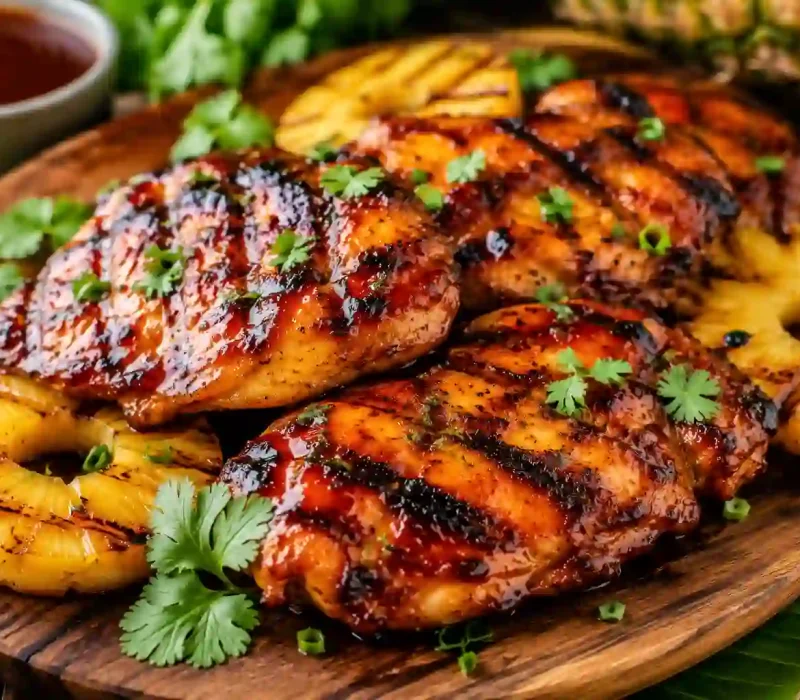
Grilled Hawaiian BBQ Chicken is a summer favorite for a reason. It delivers the perfect balance of sweet, savory, and smoky flavors with a simple marinade that comes together in just five minutes. In this Grilled Hawaiian BBQ Chicken recipe, pineapple juice helps tenderize the chicken, while soy sauce, garlic, and seasonings build a rich, savory base. As the chicken grills, the sugars in the marinade caramelize into beautifully charred edges that give Grilled Hawaiian BBQ Chicken its signature flavor.
I’ve made Grilled Hawaiian BBQ Chicken for backyard barbecues, family dinners, potlucks, and busy weeknights more times than I can count. This marinade-to-grill method is the one that consistently delivers juicy, flavorful chicken every time. A few simple details, like how long you marinate the chicken, when you brush on the glaze, and maintaining the right grill temperature, make all the difference. Once you master these basics, Grilled Hawaiian BBQ Chicken becomes one of those recipes everyone asks you to make again. If you enjoy flavor-packed poultry, you might also love trying our easy crispy chicken fried steak or a comforting chicken marsala recipe for your next weekend meal.
Why You’ll Love This Grilled Hawaiian BBQ Chicken Recipe
- The flavor is genuinely balanced sweet from pineapple, salty savory from soy sauce, with just enough char from the grill to keep it from tasting like plain sweet sauce.
- It’s low effort for how impressive it looks. Five marinade ingredients, one grill, done.
- It works with any cut of chicken breasts, thighs, or drumsticks all take well to this marinade.
- It’s naturally kid friendly. No heat, no strong spices, just sweet and savory flavors most people already like.
- Leftovers hold up well, which makes it a solid choice for meal prep or next day lunches.
- It pairs with almost anything rice, salad, noodles, or a classic plate lunch setup.
What Is Grilled Hawaiian BBQ Chicken?
Grilled Hawaiian BBQ Chicken is made by marinating chicken in a flavorful mixture of pineapple juice, soy sauce, garlic, and ginger before grilling it to perfection. During cooking, the chicken is often basted with extra marinade or glaze, giving Grilled Hawaiian BBQ Chicken its signature sweet, savory, and lightly smoky flavor. The recipe is inspired by Hawaiian plate lunch traditions, which blend Japanese, Chinese, Filipino, and Native Hawaiian culinary influences.
In Grilled Hawaiian BBQ Chicken, the term “BBQ” refers more to the grilling method and flavor profile than to a thick bottled barbecue sauce. Instead, the chicken develops a beautifully caramelized glaze with lightly charred edges. Pineapple juice also serves an important purpose by helping tenderize the chicken while adding natural sweetness, making Grilled Hawaiian BBQ Chicken especially juicy and flavorful.
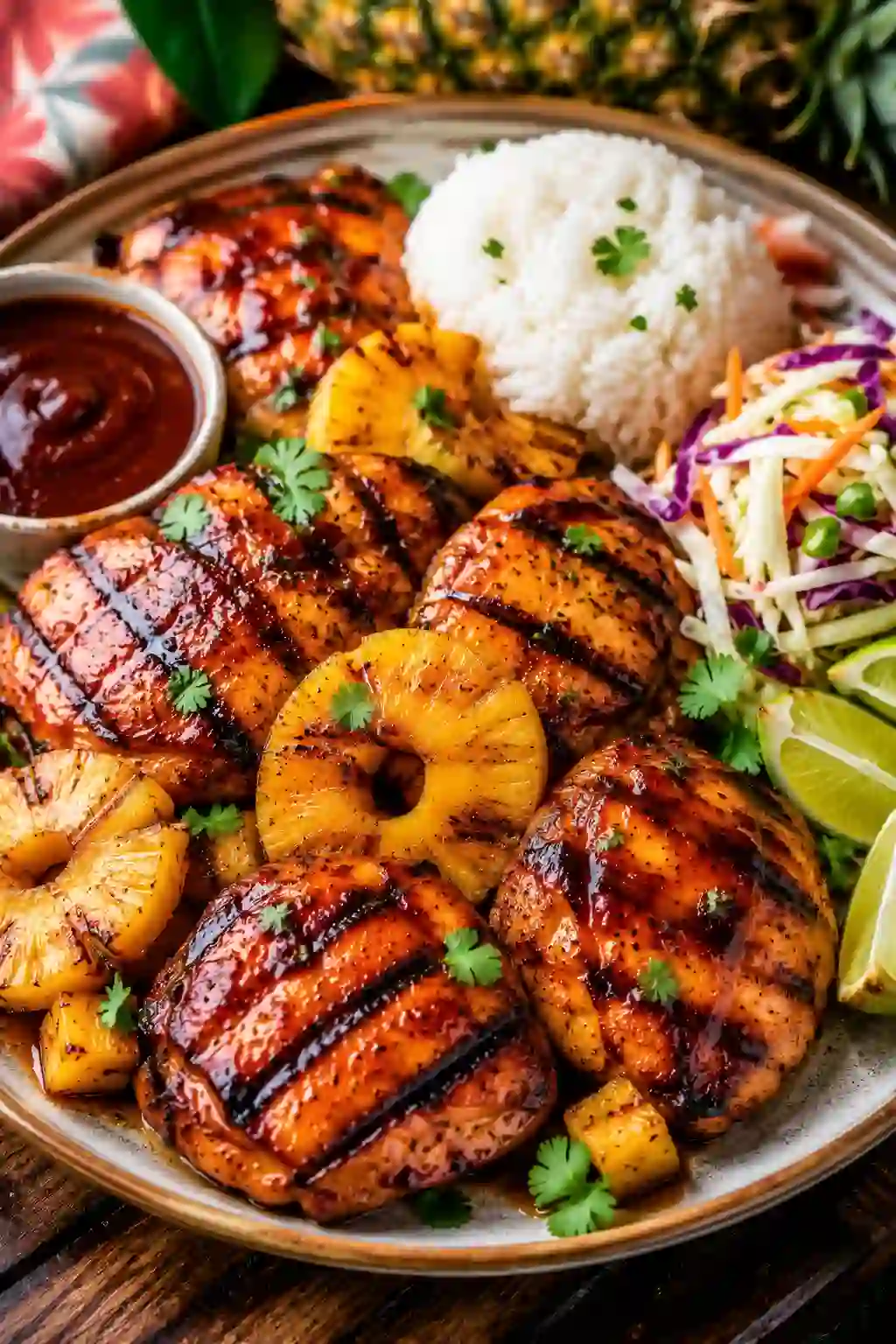
Traditionally, Grilled Hawaiian BBQ Chicken is served as part of a Hawaiian plate lunch with steamed white rice and creamy macaroni saladFor safe handling and preparation of poultry, you can review official poultry preparation guidelines to ensure proper safety standards.
Ingredient For Grilled Hawaiian BBQ Chicken
Chicken (thighs, breasts, or drumsticks) Boneless, skinless thighs are the most forgiving option since their higher fat content keeps them juicy even if they sit on the grill a minute or two longer than planned. Chicken breasts work well too but are less forgiving of overcooking, so a meat thermometer is genuinely useful here. Bone in pieces like drumsticks or thighs add flavor but need slightly longer, gentler cook times.
Pineapple juice The signature ingredient. Use juice from a can of pineapple slices or chunks if you’re also using the fruit in the recipe, or plain 100% pineapple juice otherwise. Fresh pineapple juice has stronger tenderizing enzymes than canned, so canned chicken tends to marinate a bit more gently useful if you’re marinating for a long stretch and want to avoid a mushy texture.
Soy sauce Brings the savory, salty backbone that balances the sweetness of the pineapple. Low sodium soy sauce works well if you’re watching salt intake; just taste and adjust other seasonings accordingly.
BBQ sauce Adds body, sweetness, and a smoky note to the marinade. A basic, not too sweet BBQ sauce works best as a base, since the pineapple juice already contributes plenty of sugar.
Garlic and fresh ginger These two aromatics are what separate a generic sweet and savory marinade from something that actually tastes Hawaiian inspired. Fresh, grated ginger has noticeably more punch than the dried, ground version use fresh if you can.
Brown sugar (optional) A small amount deepens the caramelization on the grill, especially useful if your BBQ sauce is on the milder side.
Sesame oil (optional) A small amount adds a nutty background note that rounds out the marinade, though it’s easy to leave out if you don’t have it on hand.
Fresh pineapple slices (optional, for serving or grilling alongside) Grilling pineapple slices next to the chicken caramelizes their natural sugars and makes for a genuinely great side, both visually and flavor wise.
Equipment Needed For Grilled Hawaiian BBQ Chicken
- A grill (gas or charcoal both work fine)
- A resealable bag or shallow dish for marinating
- A meat thermometer, to avoid over or undercooking
- A basting brush, for adding extra sauce during grilling
How To Make Grilled Hawaiian BBQ Chicken
1. Make the marinade
Whisk together pineapple juice, soy sauce, BBQ sauce, minced garlic, and grated ginger in a bowl. If you’re using brown sugar or sesame oil, add them now. Set aside roughly a third of the marinade separately this reserved portion will be used for basting later and should never touch raw chicken again once it’s been set aside.
2. Marinate the chicken
Place the chicken in a resealable bag or shallow dish and pour the remaining marinade over it, making sure every piece is coated. Refrigerate for at least 30 minutes, though 4 to 8 hours gives noticeably more flavor. Avoid marinating much longer than 8 hours if you’re using fresh pineapple juice the enzymes can start to break down the texture of the chicken and make it mushy rather than tender.
3. Preheat the grill
Heat your grill to medium high, roughly 400–450°F. A properly preheated grill matters more than people expect chicken placed on a grill that isn’t hot enough will stick and steam instead of developing grill marks and char.
4. Grill the chicken
Remove the chicken from the marinade, letting excess drip off, and discard the used marinade (it’s been in contact with raw chicken and shouldn’t be reused or served). Place chicken on the grill and cook for about 5 to 7 minutes per side for boneless pieces, adjusting for thickness. Avoid moving the chicken too often letting it sit undisturbed is what actually creates good grill marks.
5. Baste during the final minutes
In the last few minutes of grilling, brush the chicken with the reserved marinade you set aside earlier. This builds a light glaze without burning, since sugary sauces can scorch quickly if added too early.
6. Check for doneness
Chicken is done when it reaches an internal temperature of 165°F at the thickest part. You can cross-reference proper handling standards via cold food storage charts to manage your pantry staples safely. Boneless thighs and breasts typically take 10–14 minutes total; bone-in pieces will take longer, closer to 20–25 minutes, depending on size.
7. Rest, then serve
Let the chicken rest for about 5 minutes before slicing or serving. This short rest keeps the juices inside the meat rather than running out the moment you cut into it. If grilling pineapple slices alongside, add them to the grill during the last 3–4 minutes of cook time, just long enough to pick up grill marks.
Expert Tips for Best Results
- Never reuse marinade that’s touched raw chicken as a basting or serving sauce always set aside a separate portion before marinating begins.
- Watch the sugar. Because this marinade is naturally sweet, it’s more prone to burning on the grill than a plain savory marinade. Medium high heat, not high heat, keeps that in check.
- Use a thermometer, especially for chicken breast. Sweet marinades can make it hard to judge doneness by color alone.
- Let the chicken come toward room temperature before grilling, about 15–20 minutes out of the fridge, so it cooks more evenly.
- Don’t skip the rest period. It’s a small step but makes a real difference in juiciness.
Common Mistakes to Avoid
- Reusing raw marinade as a sauce. This is a genuine food safety issue always keep a separate portion of the marinade untouched by raw chicken.
- Marinating fresh pineapple based sauce for too long. More than 8 hours can start breaking down the chicken’s texture into something mushy rather than tender.
- Grilling over heat that’s too high. The sugar content in this marinade burns easily; medium high heat gives you char without blackening.
- Skipping the meat thermometer. Sweet, glazed chicken can look done on the outside before it’s actually cooked through, especially with bone in cuts.
- Not letting the chicken rest before cutting. Slicing immediately releases juices that would otherwise stay in the meat.
- Using chicken breast without adjusting for its leaner texture. Breast meat overcooks faster than thighs pull it a few degrees early and let carryover heat finish the job.
Variations For Grilled Hawaiian BBQ Chicken
- Hawaiian BBQ chicken skewers: cube the chicken and thread it onto skewers with pineapple chunks and bell pepper for a kabob style version.
- Spicy Hawaiian BBQ chicken: add a spoonful of sriracha or a pinch of red pepper flakes to the marinade for gentle heat.
- Oven baked version: if grilling isn’t an option, bake at 400°F for about 20–25 minutes, basting halfway through, then finish under the broiler for a couple of minutes to mimic that char.
- Slow cooker version: cook marinated chicken thighs on low for 4–5 hours, then shred and toss with a little extra BBQ sauce for a pulled chicken style dish.
- Coconut Hawaiian twist: add a splash of coconut aminos in place of some of the soy sauce for a slightly different depth of flavor.
- Low sodium version: use low sodium soy sauce and a reduced sugar BBQ sauce to bring the overall sodium and sugar content down without losing the core flavor profile.
Best Side Dishes / What to Serve With It
For the full plate lunch experience, or just a well rounded meal:
- Steamed white rice or coconut rice
- Classic Hawaiian macaroni salad
- Grilled pineapple slices
- A simple cabbage or cucumber slaw for crunch and acidity
- Corn on the cob, grilled alongside the chicken
- A tropical fruit salad for something light and refreshing on the side
How To Store Grilled Hawaiian BBQ Chicken
- Store leftovers in an airtight container within 2 hours of cooking.
- Refrigerate for up to 3–4 days.
- Let the chicken cool completely before freezing.
- Freeze in a freezer safe container or bag for up to 3 months.
Reheating Instructions For Grilled Hawaiian BBQ Chicken
- Skillet (Best): Reheat over medium low heat until warmed through.
- Oven: Bake at 300°F (150°C), loosely covered with foil.
- Microwave: Heat in 30 second intervals until hot.
- Avoid high heat to keep the chicken moist and tender.
FAQS Grilled Hawaiian BBQ Chicken
How long should I marinate Hawaiian BBQ chicken?
At least 30 minutes for light flavor, but 4 to 8 hours gives noticeably better results. If your marinade contains fresh pineapple juice, avoid going much past 8 hours, since the natural enzymes can start breaking down the chicken’s texture and make it mushy instead of tender.
Can I reuse the marinade as a basting or dipping sauce?
Not the portion that touched raw chicken. Always set aside a separate, untouched portion of the marinade before adding raw chicken to the rest that reserved portion is safe to use for basting and serving.
What cut of chicken works best for this recipe?
Boneless, skinless thighs are the most forgiving choice since they stay juicy even if slightly overcooked. Chicken breasts work well too but need closer attention with a meat thermometer, since they dry out faster on the grill.
Can I make this without a grill?
Yes. Bake the marinated chicken at 400°F for about 20–25 minutes, basting partway through, then broil for 1–2 minutes at the end to develop some char. A grill pan on the stovetop also works well as an alternative.
Why did my chicken burn on the outside before cooking through?
This is usually caused by grilling over heat that’s too high. The sugar in the pineapple juice and BBQ sauce caramelizes and burns quickly, so medium high heat, rather than high heat, gives you char without scorching.
Is grilled Hawaiian BBQ chicken healthy?
It can fit well into a balanced diet, especially using boneless, skinless chicken breast and a lower sugar BBQ sauce. The dish is naturally high in protein; using low sodium soy sauce and controlling portion size of the sauce keeps sodium and sugar more moderate.
Can I use canned pineapple juice instead of fresh?
Yes, and it’s actually a common substitution. Canned pineapple juice has milder tenderizing enzymes than fresh, which makes it a safer choice if you plan to marinate for a longer stretch of time without worrying about the texture breaking down.
What should I serve with Hawaiian BBQ chicken for an authentic plate lunch?
A traditional Hawaiian plate lunch includes two scoops of steamed white rice, a scoop of macaroni salad, and the grilled protein in this case, the Hawaiian BBQ chicken. Grilled pineapple on the side is a common and welcome addition.
How do I know when the chicken is fully cooked?
Use a meat thermometer inserted into the thickest part of the chicken; it should read 165°F. Because the marinade caramelizes and browns quickly, color alone isn’t a reliable way to judge doneness, especially with bone in cuts.
Can I freeze grilled Hawaiian BBQ chicken?
Yes. Once fully cooled, store it in a freezer safe container or bag for up to 3 months. Thaw overnight in the refrigerator and reheat gently in a skillet or oven to help preserve the texture.
Final Thoughts
Grilled Hawaiian BBQ Chicken is a recipe you’ll want to make again and again because the marinade does more than add flavor. It tenderizes the chicken, seasons it throughout, and creates the perfect base for a sticky glaze that caramelizes beautifully on the grill. Once you master the simple technique, Grilled Hawaiian BBQ Chicken becomes an easy favorite for both weeknight dinners and summer cookouts.
For the best Grilled Hawaiian BBQ Chicken, remember to reserve part of the marinade for basting, cook over medium-high heat, and use a meat thermometer to ensure perfectly juicy chicken every time. After you’ve made Grilled Hawaiian BBQ Chicken once, you’ll find yourself coming back to this easy, flavorful recipe for family dinners, BBQ parties, and backyard gatherings.
Grilled Hawaiian BBQ Chicken Recipe
Notes
Ingredients
- 1.5–2 lbs boneless, skinless chicken thighs or breasts (or bone in pieces of choice)
- ¾ cup pineapple juice (canned or fresh)
- ½ cup BBQ sauce
- ¼ cup soy sauce (low sodium if preferred)
- 3 cloves garlic, minced
- 1 tablespoon fresh ginger, grated
- 1 tablespoon brown sugar (optional)
- 1 teaspoon sesame oil (optional)
- Fresh pineapple slices, for grilling (optional)
Instructions
- Whisk together pineapple juice, BBQ sauce, soy sauce, garlic, ginger, brown sugar, and sesame oil. Set aside about ⅓ of the mixture for basting; keep it separate from the raw chicken.
- Place chicken in a resealable bag or dish and pour the remaining marinade over it. Refrigerate for at least 30 minutes, up to 8 hours.
- Preheat grill to medium high (400–450°F).
- Remove chicken from marinade (discard used marinade) and grill 5–7 minutes per side for boneless cuts, adjusting for thickness and cut.
- During the final few minutes, baste with the reserved marinade.
- Grill until internal temperature reaches 165°F. If using, grill pineapple slices alongside during the last 3–4 minutes.
- Rest chicken for 5 minutes before serving.
Notes
- Never reuse marinade that touched raw chicken always reserve a separate portion before marinating.
- Bone in cuts will need a longer, gentler cook time than boneless pieces.
- For an oven version, bake at 400°F for 20–25 minutes, then broil briefly to develop char.